Artemisia alba subsp. alba
Artemisia alba subsp. alba · Accepted scientific name
Scientific literature: Sparse (50 studies) · ★★☆☆☆
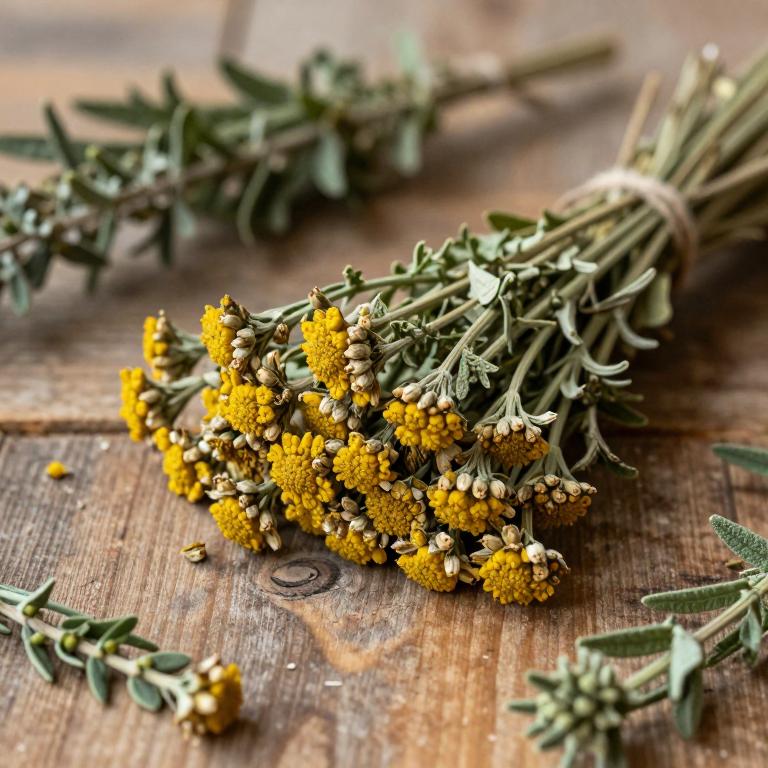
, scientifically known as Artemisia alba subsp. alba, is a distinctive perennial herb valued for its silvery, woolly foliage and aromatic properties. Native to specific Mediterranean habitats, this subspecies is recognized in traditional herbalism for its potential therapeutic applications, offering unique phytochemical profiles useful in studying various medicinal compounds.
- Family
- Asteraceae
- Native range
- Europe
- Parts used
- Leaf
- Common names
- Not available
- Scientific synonyms
- Artemisia Subcanescens · Artemisia Camphorata · 30 more
Names and Synonyms
Scientific Names
Accepted name
Artemisia alba subsp. albaSynonyms
- Artemisia subcanescens
- Artemisia camphorata
- Artemisia suavis
- Artemisia willdenowii
- Artemisia alba var. biasolettiana
- Artemisia alba subsp. lobelii
- Artemisia lobelii var. canescens
- Artemisia alba subsp. saxatilis
- Artemisia alba subsp. suavis
- Artemisia camphorata proles saxatilis
- Artemisia camphorata proles suavis
- Artemisia cinerea
- Artemisia lobelii var. humilis
- Artemisia alba subsp. camphorata
- Absinthium viridiflorum
- Abrotanum brachylobium
- Artemisia camphorata var. canescens
- Absinthium camphoratum
- Absinthium corymbosum
- Absinthium saxatile
- Artemisia achilleifolia
- Artemisia biasolettiana
- Artemisia camphorata var. brachylobia
- Artemisia camphorata subsp. canescens
- Artemisia columnae
- Artemisia camphorata var. saxatilis
- Artemisia corymbosa
- Artemisia garganica
- Artemisia incanescens
- Artemisia intermedia
- Artemisia lobelii
- Artemisia saxatilis
Sources: Wikidata, Catalogue of Life
Taxonomical Classification
This plant belongs to the kingdom Plantae and is classified within the phylum Streptophyta and the class Equisetopsida. Further taxonomic progression places it in the subclass Magnoliidae and the order Asterales. Ultimately, it is a member of the family Asteraceae and falls under the genus Artemisia.
| Rank | Classification |
|---|---|
| Kingdom | Plantae |
| Phylum | Streptophyta |
| Class | Equisetopsida |
| Subclass | Magnoliidae |
| Order | Asterales |
| Family | Asteraceae |
| Genus | Artemisia |
Sources: The World Checklist of Vascular Plants (WCVP)
Distribution
This plant is primarily found across various regions of Middle Europe. Within this geographical range, it can be located in the country of Austria. Its distribution also extends to Belgium, marking a significant part of its presence in the area. Additionally, the species is documented throughout the Czechia-Slovakia region. Finally, it is commonly identified in both Germany and Hungary.
| Region | Area |
|---|---|
| Middle Europe | Austria |
| Middle Europe | Belgium |
| Middle Europe | Czechia-Slovakia |
| Middle Europe | Germany |
| Middle Europe | Hungary |
| Southwestern Europe | France |
| Southwestern Europe | Spain |
| Southeastern Europe | Albania |
| Southeastern Europe | Bulgaria |
| Southeastern Europe | Greece |
Sources: The World Checklist of Vascular Plants (WCVP)
Plant Parts
Artemisia alba subsp. alba has 1 reported plant parts identified across 1 scientific publications and several other databases that are studied for medicinal purposes. The most consistently reported plant part include leaf.
| Plant part | Supporting sources | Consensus |
|---|---|---|
| Leaf | 1 supporting sources | ★☆☆☆☆ |
Leaf
- African health sciences
Chemicals
Artemisia alba subsp. alba has 36 reported phytochemicals identified across 1 scientific publications and several other databases. The most consistently reported chemicals include Germacrene D, 6,7-Dimethylesculetin, As, BA, Br-.
| Chemical | Supporting sources | Consensus |
|---|---|---|
| Germacrene D | 2 supporting sources | ★☆☆☆☆ |
| 6,7-Dimethylesculetin | 1 supporting sources | ★☆☆☆☆ |
| As | 1 supporting sources | ★☆☆☆☆ |
| BA | 1 supporting sources | ★☆☆☆☆ |
| Br- | 1 supporting sources | ★☆☆☆☆ |
| CA | 1 supporting sources | ★☆☆☆☆ |
| CE | 1 supporting sources | ★☆☆☆☆ |
| CO | 1 supporting sources | ★☆☆☆☆ |
| CR | 1 supporting sources | ★☆☆☆☆ |
| CS | 1 supporting sources | ★☆☆☆☆ |
Germacrene D
- Scientific reports
- Environmental science and pollution research international
6,7-Dimethylesculetin
- Journal of natural medicines
As
- Biological trace element research
BA
- Biological trace element research
Br-
- Biological trace element research
CA
- Biological trace element research
CE
- Biological trace element research
CO
- Biological trace element research
CR
- Biological trace element research
CS
- Biological trace element research
Activities
Artemisia alba subsp. alba has 5 reported activities identified across 1 scientific publications and several other databases. The most consistently reported activities include Antioxidant, Anticancer, Antimicrobial, Cytotoxic, Hepatoprotective.
| Activity | Supporting sources | Consensus |
|---|---|---|
| Antioxidant | 5 supporting sources | ★★★☆☆ |
| Anticancer | 1 supporting sources | ★☆☆☆☆ |
| Antimicrobial | 1 supporting sources | ★☆☆☆☆ |
| Cytotoxic | 1 supporting sources | ★☆☆☆☆ |
| Hepatoprotective | 1 supporting sources | ★☆☆☆☆ |
Antioxidant
- Molecules (Basel, Switzerland)
- Biological & pharmaceutical bulletin
- Cellular and molecular biology (Noisy-le-Grand, France)
- Natural product research
- Biomedical chromatography : BMC
Anticancer
- Biomedical chromatography : BMC
Antimicrobial
- Cellular and molecular biology (Noisy-le-Grand, France)
Cytotoxic
- Molecules (Basel, Switzerland)
Hepatoprotective
- Biological & pharmaceutical bulletin
Preparations
Artemisia alba subsp. alba has 8 reported preparations identified across 1 scientific publications and several other databases. The most consistently reported preparations include essential oils, Essential Oils, Essential oils, Methanolic Extract, aqueous extracts.
| Preparation | Supporting sources | Consensus |
|---|---|---|
| Essential oils | 4 supporting sources | ★★☆☆☆ |
| Essential oils | 1 supporting sources | ★☆☆☆☆ |
| Essential oils | 1 supporting sources | ★☆☆☆☆ |
| Methanolic extract | 1 supporting sources | ★☆☆☆☆ |
| Aqueous extracts | 1 supporting sources | ★☆☆☆☆ |
| Ethanolic extracts | 1 supporting sources | ★☆☆☆☆ |
| N-butanol fraction from artemisia campestris leaf methanolic extract (bfacme) | 1 supporting sources | ★☆☆☆☆ |
| Water extract | 1 supporting sources | ★☆☆☆☆ |
Essential oils
- Evidence-based complementary and alternative medicine : eCAM
- Scientific reports
- Natural product research
- Biofouling
Essential oils
- Evidence-based complementary and alternative medicine : eCAM
Essential oils
- Environmental science and pollution research international
Methanolic extract
- African health sciences
Aqueous extracts
- Natural product research
Ethanolic extracts
- Cellular and molecular biology (Noisy-le-Grand, France)
N-butanol fraction from artemisia campestris leaf methanolic extract (bfacme)
- African health sciences
Water extract
- Biological & pharmaceutical bulletin