black chokeberry
Aronia melanocarpa · Accepted scientific name
Scientific literature: Extensive (161 studies) · ★★★★☆
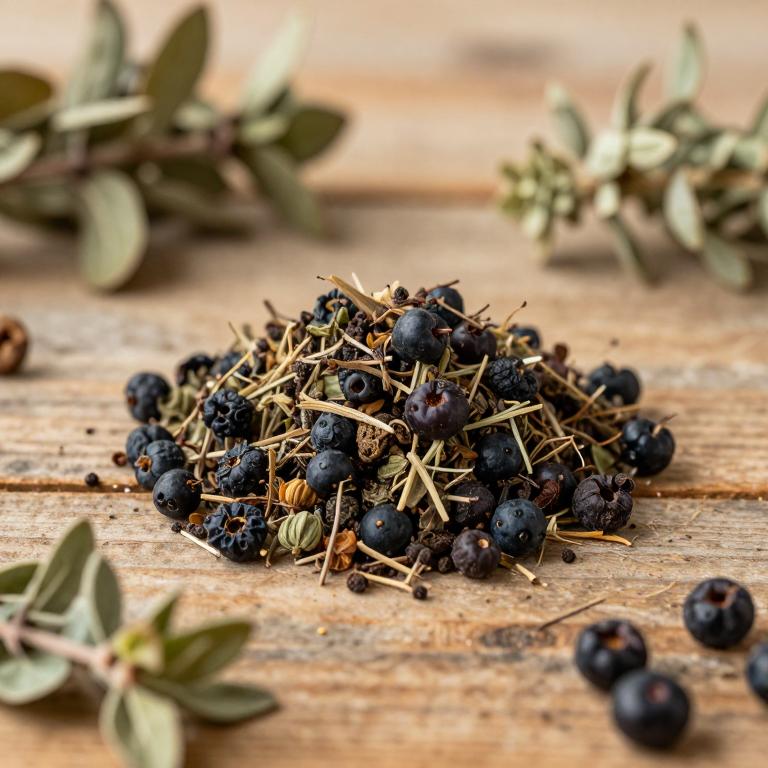
Black chokeberry, scientifically known as Aronia melanocarpa, is a powerhouse of nutrition renowned for its exceptional antioxidant properties. Rich in anthocyanins and vitamins, this resilient shrub offers significant health benefits, including supporting cardiovascular wellness and reducing inflammation. It is highly valued in both herbal medicine and functional superfoods.
- Family
- Rosaceae
- Native range
- Europe
- Parts used
- Fruit · Root
- Common names
- Black Chokeberry · Black Chokecherry
- Scientific synonyms
- Aronia Arbutifolia Var. Melanocarpa · Aronia Grandifolia · 27 more
Names and Synonyms
Common Names
- black chokeberry
- black chokecherry
Scientific Names
Accepted name
Aronia melanocarpaSynonyms
- Aronia arbutifolia var. melanocarpa
- Aronia grandifolia
- Sorbus melanocarpa var. subpubescens
- Mespilus arbutifolia var. melanocarpa
- Aronia arbutifolia var. nigra
- Sorbus pubescens
- Adenorachis melanocarpa
- Adenorachis nigra
- Mespilus arbutifolia var. nigra
- Hahnia arbutifolia var. nigra
- Photinia melanocarpa
- Pyrus angustifolia var. melanocarpa
- Pyrus arbutifolia var. melanocarpa
- Pyrus arbutifolia subsp. nigra
- Aronia melanocarpa var. elata
- Pyrus arbutifolia var. nigra
- Aronia melanocarpa var. grandifolia
- Pyrus grandifolia
- Aronia melanocarpa var. subpubescens
- Aronia melanocarpa var. typica
- Pyrus melanocarpa var. subpubescens
- Pyrus nigra
- Aronia nigra
- Sorbus grandifolia
- Sorbus melanocarpa
- Aronia nigra var. grandifolia
- Pyrus melanocarpa
- Sorbus melanocarpa var. grandifolia
- Aronia nigra pubescens
Regional and Traditional Names
German:
- Schwarze Apfelbeere
- Kahle Apfelbeere
- Schwarze Eberesche
- Apfelbeere
- kahle Apfelbeere
French:
- Aronie à fruits noirs
- aronia gueules-noires
- aronia noir
- aronie à fruit noir
- aronie à fruits noirs
- gueules noires
Sources: Wikidata, Catalogue of Life
Taxonomical Classification
This plant, Aronia melanocarpa, belongs to the kingdom Plantae and the phylum Streptophyta. It is classified under the class Equisetopsida and subclass Magnoliidae within the order Rosales. Finally, it is a member of the Rosaceae family under the genus Aronia.
| Rank | Classification |
|---|---|
| Kingdom | Plantae |
| Phylum | Streptophyta |
| Class | Equisetopsida |
| Subclass | Magnoliidae |
| Order | Rosales |
| Family | Rosaceae |
| Genus | Aronia |
Sources: The World Checklist of Vascular Plants (WCVP)
Distribution
This plant, known as Aronia melanocarpa, exhibits a specific geographical distribution across several northern regions. In Europe, it can be found growing within the borders of Great Britain. Its presence extends significantly into Eastern Canada, where it inhabits the province of New Brunswick. The species is also widely distributed throughout the Atlantic provinces of Newfoundland and Nova Scotia. Additionally, this medicinal plant is commonly located within the province of Ontario.
| Region | Area |
|---|---|
| Northern Europe | Great Britain |
| Eastern Canada | New Brunswick |
| Eastern Canada | Newfoundland |
| Eastern Canada | Nova Scotia |
| Eastern Canada | Ontario |
| Eastern Canada | Prince Edward I. |
| Eastern Canada | Québec |
| North-Central U.S.A. | Illinois |
| North-Central U.S.A. | Iowa |
| North-Central U.S.A. | Minnesota |
Sources: The World Checklist of Vascular Plants (WCVP)
Botanical Identification
Life history
The life history of Aronia melanocarpa is characterized by its status as a perennial species, meaning it lives for many years and undergoes a consistent cycle of seasonal growth and dormancy. As a long-lived woody shrub, it does not follow the rapid, single-season completion of annuals or the two-year cycle of biennials, but instead establishes a permanent root system that allows it to persist through multiple growing seasons. Each year, the plant initiates new vegetative growth in the spring, leading to the development of foliage and flowering structures, followed by the maturation of its characteristic dark berries during the summer or autumn months. Following the reproductive phase, the plant enters a period of senescence and dormancy during the colder months, storing essential carbohydrates in its roots to ensure survival and provide the energy necessary for the subsequent year's growth cycle.
- Lifecycle :
- perennial
Morphology
The morphology of Aronia melanocarpa is characterized by its growth form as a woody shrub, typically reaching an average plant height of 1.8 m. As a terrestrial species, it is non-aquatic and does not function as an epiphyte, instead maintaining an independent lifestyle rather than acting as a parasite. The plant is self-supporting in its structure, lacking the characteristics of a climber, liana, or vine.
- Aquatic :
- terrestrial
- Climber :
- self-supporting
- Epiphyte :
- terrestrial
- Growth form :
- shrub
- Parasite :
- independent
- Plant height mean:
- 1.8 m
- Woodiness :
- woody
Physiology
The physiology of Aronia melanocarpa is characterized by a robust metabolic framework optimized for temperate environments, most notably through its reliance on the C3 photosynthetic pathway. As a C3 plant, it utilizes the Calvin cycle to fix atmospheric carbon dioxide directly via the enzyme RuBisCO, a process that is highly efficient under moderate temperatures and adequate moisture levels typical of its natural habitats. This metabolic strategy supports the plant's significant production of secondary metabolites, particularly polyphenols and anthocyanins, which serve as physiological defense mechanisms against oxidative stress and environmental pathogens. The plant's water-use efficiency and carbon assimilation rates are closely tied to its stomatal conductance, which modulates gas exchange to balance carbon gain against transpirational water loss. Furthermore, its physiological processes include complex nutrient uptake mechanisms and seasonal dormancy patterns that allow it to thrive amidst fluctuating thermal conditions and varying light intensities.
- Photosynthetic pathway :
- C3
Reproduction
The reproduction of Aronia melanocarpa is characterized by a specific seasonal flowering period and a specialized seed dispersal mechanism. The flowering process typically begins in April and concludes in May, marking the primary reproductive window for the species. Following successful pollination, the plant produces seeds that exhibit a very small mass; the average seed mass is approximately 0.00193675 g, with individual seeds ranging from a minimum of 0.00137 g to a maximum of 0.00304 g. The dispersal of these seeds follows a zoochorous syndrome, meaning they are primarily spread through the movement of animals, which plays a crucial role in the plant's ability to colonize new habitats.
- Dispersal syndrome :
- zoochorous
- Flowering time :
- Apr
- Flowering time :
- May
- Seed mass max:
- 0.00304 g
- Seed mass mean:
- 0.00193675 g
- Seed mass min:
- 0.00137 g
Sources: Global Inventory of Floras and Traits (GIFT)
Plant Parts
Aronia melanocarpa has 2 reported plant parts identified across 7 scientific publications and several other databases that are studied for medicinal purposes. The most consistently reported plant part include fruit, root.
| Plant part | Supporting sources | Consensus |
|---|---|---|
| Fruit | 6 supporting sources | ★★★☆☆ |
| Root | 1 supporting sources | ★☆☆☆☆ |
Fruit
- Nutrients
- Frontiers in nutrition
- Methods and findings in experimental and clinical pharmacology
- Scientific reports
- International journal of molecular sciences
View 1 additional sources
- Folia medica
Root
- Antioxidants (Basel, Switzerland)
Chemicals
Aronia melanocarpa has 44 reported phytochemicals identified across 7 scientific publications and several other databases. The most consistently reported chemicals include Anthocyanins, polyphenols, ANTHOCYANIN, Flavonoids, CHLOROGENIC ACID.
| Chemical | Supporting sources | Consensus |
|---|---|---|
| Anthocyanins | 11 supporting sources | ★★★★★ |
| polyphenols | 5 supporting sources | ★★★☆☆ |
| ANTHOCYANIN | 4 supporting sources | ★★☆☆☆ |
| Flavonoids | 4 supporting sources | ★★☆☆☆ |
| CHLOROGENIC ACID | 3 supporting sources | ★★☆☆☆ |
| Cyanidin 3-galactoside | 2 supporting sources | ★☆☆☆☆ |
| Neochlorogenic acid | 2 supporting sources | ★☆☆☆☆ |
| protocatechuic acid | 2 supporting sources | ★☆☆☆☆ |
| (-)-Epicatechin | 1 supporting sources | ★☆☆☆☆ |
| ALUMINUM | 1 supporting sources | ★☆☆☆☆ |
Anthocyanins
- Molecules (Basel, Switzerland)
- Journal of agricultural and food chemistry
- Plants (Basel, Switzerland)
- Food chemistry
- Oxidative medicine and cellular longevity
View 6 additional sources
- Nutrients
- International journal of molecular sciences
- Folia medica
- Antioxidants (Basel, Switzerland)
- Journal of medicinal food
- Ginekologia polska
polyphenols
- Nutrients
- Food chemistry
- Molecules (Basel, Switzerland)
- Journal of medicinal food
- Food & function
ANTHOCYANIN
- Methods and findings in experimental and clinical pharmacology
- Food chemistry
- Plants (Basel, Switzerland)
- Journal of medicinal food
Flavonoids
- Methods and findings in experimental and clinical pharmacology
- Molecules (Basel, Switzerland)
- Antioxidants (Basel, Switzerland)
- Journal of medicinal food
CHLOROGENIC ACID
- Plants (Basel, Switzerland)
- Frontiers in nutrition
- Molecules (Basel, Switzerland)
Cyanidin 3-galactoside
- Frontiers in nutrition
- Molecules (Basel, Switzerland)
Neochlorogenic acid
- Frontiers in nutrition
- Molecules (Basel, Switzerland)
protocatechuic acid
- Antioxidants (Basel, Switzerland)
- Journal of agricultural and food chemistry
(-)-Epicatechin
- Frontiers in nutrition
ALUMINUM
- Plants (Basel, Switzerland)
Activities
Aronia melanocarpa has 8 reported activities identified across 7 scientific publications and several other databases. The most consistently reported activities include Antioxidant, Antiproliferative, Antimicrobial, Gastroprotective, Hepatoprotective.
| Activity | Supporting sources | Consensus |
|---|---|---|
| Antioxidant | 7 supporting sources | ★★★★☆ |
| Antiproliferative | 3 supporting sources | ★★☆☆☆ |
| Antimicrobial | 2 supporting sources | ★☆☆☆☆ |
| Gastroprotective | 2 supporting sources | ★☆☆☆☆ |
| Hepatoprotective | 2 supporting sources | ★☆☆☆☆ |
| Hypoglycemic | 2 supporting sources | ★☆☆☆☆ |
| Antitoxic | 1 supporting sources | ★☆☆☆☆ |
| Hypolipidemic | 1 supporting sources | ★☆☆☆☆ |
Antioxidant
- Plants (Basel, Switzerland)
- Frontiers in nutrition
- Food chemistry
- Journal of agricultural and food chemistry
- Journal of ethnopharmacology
View 2 additional sources
- Acta biochimica Polonica
- Journal of medicinal food
Antiproliferative
- Plants (Basel, Switzerland)
- Food chemistry
- Molecules (Basel, Switzerland)
Antimicrobial
- Plants (Basel, Switzerland)
- Acta biochimica Polonica
Gastroprotective
- Molecules (Basel, Switzerland)
- Folia medica
Hepatoprotective
- Molecules (Basel, Switzerland)
- Folia medica
Hypoglycemic
- Plants (Basel, Switzerland)
- Methods and findings in experimental and clinical pharmacology
Antitoxic
- Biophysical chemistry
Hypolipidemic
- Methods and findings in experimental and clinical pharmacology
Conditions
Aronia melanocarpa has 36 reported investigations on conditions identified across 7 scientific publications and several other databases. The most consistently reported conditions include diabetes mellitus, insulin sensitivity, oxidative stress, Escherichia coli, HDL-cholesterol.
| Condition | Supporting sources | Consensus |
|---|---|---|
| Diabetes mellitus | 2 supporting sources | ★☆☆☆☆ |
| Insulin sensitivity | 2 supporting sources | ★☆☆☆☆ |
| Oxidative stress | 2 supporting sources | ★☆☆☆☆ |
| Escherichia coli | 1 supporting sources | ★☆☆☆☆ |
| Hdl-cholesterol | 1 supporting sources | ★☆☆☆☆ |
| Inflammatory bowel disease | 1 supporting sources | ★☆☆☆☆ |
| Inflammatory bowel disease | 1 supporting sources | ★☆☆☆☆ |
| Ldl-cholesterol | 1 supporting sources | ★☆☆☆☆ |
| Listeria monocytogenes infection | 1 supporting sources | ★☆☆☆☆ |
| Staphylococcus aureus | 1 supporting sources | ★☆☆☆☆ |
Diabetes mellitus
- Methods and findings in experimental and clinical pharmacology
- Journal of medicinal food
Insulin sensitivity
- Nutrients
- Journal of medicinal food
Oxidative stress
- Frontiers in nutrition
- Ginekologia polska
Escherichia coli
- Folia medica
Hdl-cholesterol
- Methods and findings in experimental and clinical pharmacology
Inflammatory bowel disease
- Journal of ethnopharmacology
Inflammatory bowel disease
- Journal of ethnopharmacology
Ldl-cholesterol
- Methods and findings in experimental and clinical pharmacology
Listeria monocytogenes infection
- Food & function
Staphylococcus aureus
- Folia medica
Preparations
Aronia melanocarpa has 11 reported preparations identified across 7 scientific publications and several other databases. The most consistently reported preparations include extracts, fruit juice, Aronia melanocarpa polysaccharide, anthocyanins derived from the fruits, callus tissue.
| Preparation | Supporting sources | Consensus |
|---|---|---|
| Extracts | 2 supporting sources | ★☆☆☆☆ |
| Fruit juice | 2 supporting sources | ★☆☆☆☆ |
| Aronia melanocarpa polysaccharide | 1 supporting sources | ★☆☆☆☆ |
| Anthocyanins derived from the fruits | 1 supporting sources | ★☆☆☆☆ |
| Callus tissue | 1 supporting sources | ★☆☆☆☆ |
| Chokeberry (aronia melanocarpa) extract | 1 supporting sources | ★☆☆☆☆ |
| Dried fruits | 1 supporting sources | ★☆☆☆☆ |
| Ethanol-extract | 1 supporting sources | ★☆☆☆☆ |
| Natural a. melanocarpa | 1 supporting sources | ★☆☆☆☆ |
| Plant extracts | 1 supporting sources | ★☆☆☆☆ |
Extracts
- Folia medica
- Biomeditsinskaia khimiia
Fruit juice
- Methods and findings in experimental and clinical pharmacology
- Folia medica
Aronia melanocarpa polysaccharide
- Scientific reports
Anthocyanins derived from the fruits
- Folia medica
Callus tissue
- International journal of molecular sciences
Chokeberry (aronia melanocarpa) extract
- Journal of clinical pathology
Dried fruits
- Nutrients
Ethanol-extract
- Journal of ethnopharmacology
Natural a. melanocarpa
- Journal of medicinal food
Plant extracts
- Current drug targets