pale Indian-plantain
Arnoglossum atriplicifolium · Accepted scientific name
Scientific literature: Very Sparse (2 studies) · ★☆☆☆☆
Pale Indian-plantain, scientifically known as Arnoglossum atriliifolium, is a distinctive perennial herb native to North American prairies. Characterized by its broad, serrated leaves and striking white composite flowers, this plant holds significant botanical interest. It serves as a vital component of grassland ecosystems, supporting diverse local pollinator populations.
- Family
- Asteraceae
- Native range
- Northern America
- Parts used
- Not available
- Common names
- Pale Indian-Plantain · Pale Indian Plaintain
- Scientific synonyms
- Cacalia Similis · Cacalia Atriplicifolia · 10 more
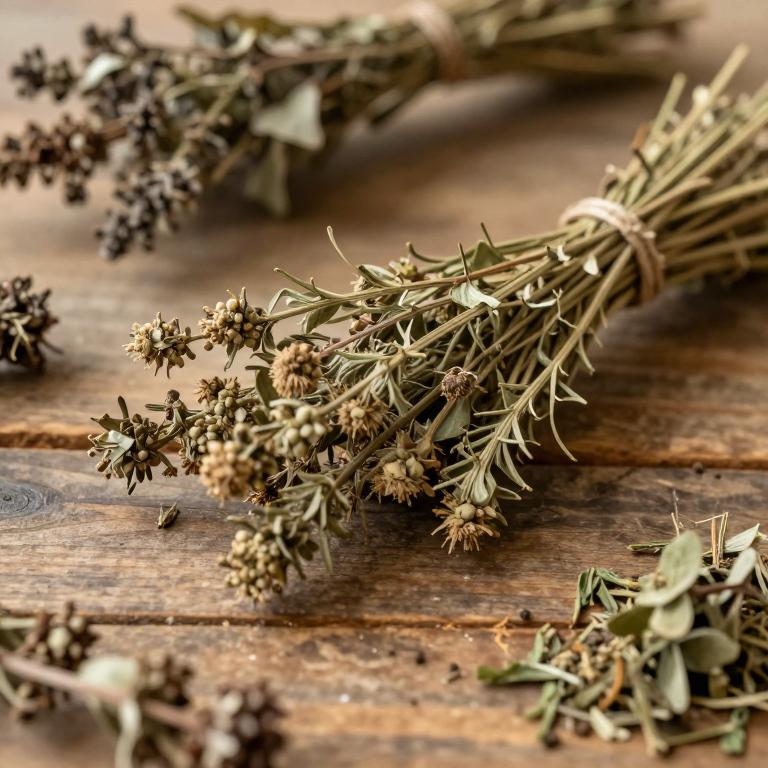
Names and Synonyms
Common Names
- pale Indian-plantain
- pale Indian plaintain
Scientific Names
Accepted name
Arnoglossum atriplicifoliumSynonyms
- Cacalia similis
- Cacalia atriplicifolia
- Cacalia paniculata
- Adenimesa atriplicifolia
- Cacalia atriplicifolia var. angulata
- Conophora atriplicifolia
- Conophora similis
- Mesadenia atriplicifolia
- Mesadenia pulverulenta
- Mesadenia rotundifolia
- Mesadenia similis
- Senecio atriplicifolius
Regional and Traditional Names
French:
- Arnoglosse à feuilles d'arroche
- Cacalie à feuilles d'arroche
Sources: Wikidata, Catalogue of Life
Taxonomical Classification
This plant, Arnoglossum atraticlopifolium, belongs to the kingdom Plantae and the phylum Streptophyta. Within the class Equisetopsida and subclass Magnoliidae, it is classified under the order Asterales and the family Asteraceae. Ultimately, its taxonomic identity is defined by its placement in the genus Arnoglossum.
| Rank | Classification |
|---|---|
| Kingdom | Plantae |
| Phylum | Streptophyta |
| Class | Equisetopsida |
| Subclass | Magnoliidae |
| Order | Asterales |
| Family | Asteraceae |
| Genus | Arnoglossum |
Sources: The World Checklist of Vascular Plants (WCVP)
Distribution
This plant, Arnoglossum atriplicifolium, exhibits a specific geographical distribution within the North-Central United States. It can be found growing across several states located in this particular region. Specifically, its presence has been documented in the state of Illinois. The species also inhabits parts of Kansas and Minnesota. Furthermore, its range extends into Missouri and Nebraska.
| Region | Area |
|---|---|
| North-Central U.S.A. | Illinois |
| North-Central U.S.A. | Kansas |
| North-Central U.S.A. | Minnesota |
| North-Central U.S.A. | Missouri |
| North-Central U.S.A. | Nebraska |
| North-Central U.S.A. | Oklahoma |
| North-Central U.S.A. | Wisconsin |
| Northeastern U.S.A. | Indiana |
| Northeastern U.S.A. | Michigan |
| Northeastern U.S.A. | New Jersey |
Sources: The World Checklist of Vascular Plants (WCVP)
Botanical Identification
Life history
The life history of Arnoglossum atraticliifolium is characterized by its status as a perennial species, allowing the plant to persist in its environment through multiple growing seasons. As a perennial, it establishes a robust root system that supports its development over several years, rather than completing its reproductive cycle within a single season like annuals or biennial species. This long-lived life cycle enables the plant to accumulate sufficient energy reserves to withstand seasonal fluctuations and contribute to the stability of its ecological niche. Over time, the plant undergoes repeated cycles of vegetative growth and flowering, ensuring consistent presence within its habitat through sustained biological persistence.
- Lifecycle :
- perennial
Morphology
The morphology of Arnoglossum atriliplicifolium is characterized by a growth form classified as a non-woody herb and specifically a forb. It functions as an independent organism, exhibiting no parasitic or epiphytic tendencies, and maintains a terrestrial habitat rather than being aquatic or semiaquatic. In terms of its physical structure, the plant is self-supporting, lacking the climbing mechanisms found in lianas or vines, and does not require external structures for verticality.
- Aquatic :
- terrestrial
- Climber :
- self-supporting
- Epiphyte :
- terrestrial
- Growth form :
- herb
- Growth form :
- forb
- Parasite :
- independent
- Woodiness :
- non-woody
Reproduction
The reproduction of Arnoglossum atraticoliifolium is characterized by a specific flowering phenology and precise seed morphology. The plant's flowering period begins in June and continues through until October, though the timing can be variable. Following the pollination phase, the plant produces seeds with highly consistent mass profiles; the seed mass typically averages approximately 0.0025455 g, with individual seeds ranging from a minimum of 0.002421 g to a maximum of 0.00267 g.
- Flowering time :
- Jun
- Flowering time :
- Oct
- Seed mass max:
- 0.00267 g
- Seed mass mean:
- 0.0025455 g
- Seed mass min:
- 0.002421 g
Sources: Global Inventory of Floras and Traits (GIFT)
Activities
Arnoglossum atriplicifolium has 1 reported activities identified across 0 scientific publications and several other databases. The most consistently reported activities include Cytotoxic.
| Activity | Supporting sources | Consensus |
|---|---|---|
| Cytotoxic | 1 supporting sources | ★☆☆☆☆ |
Cytotoxic
- Natural product research
Conditions
Arnoglossum atriplicifolium has 1 reported investigations on conditions identified across 0 scientific publications and several other databases. The most consistently reported conditions include cancer.
| Condition | Supporting sources | Consensus |
|---|---|---|
| Cancer | 1 supporting sources | ★☆☆☆☆ |
Cancer
- Natural product research
Preparations
Arnoglossum atriplicifolium has 1 reported preparations identified across 0 scientific publications and several other databases. The most consistently reported preparations include extract.
| Preparation | Supporting sources | Consensus |
|---|---|---|
| Extract | 1 supporting sources | ★☆☆☆☆ |
Extract
- Natural product research