long-leaved arnica
Arnica longifolia · Accepted scientific name
Scientific literature: Very Sparse (2 studies) · ★☆☆☆☆
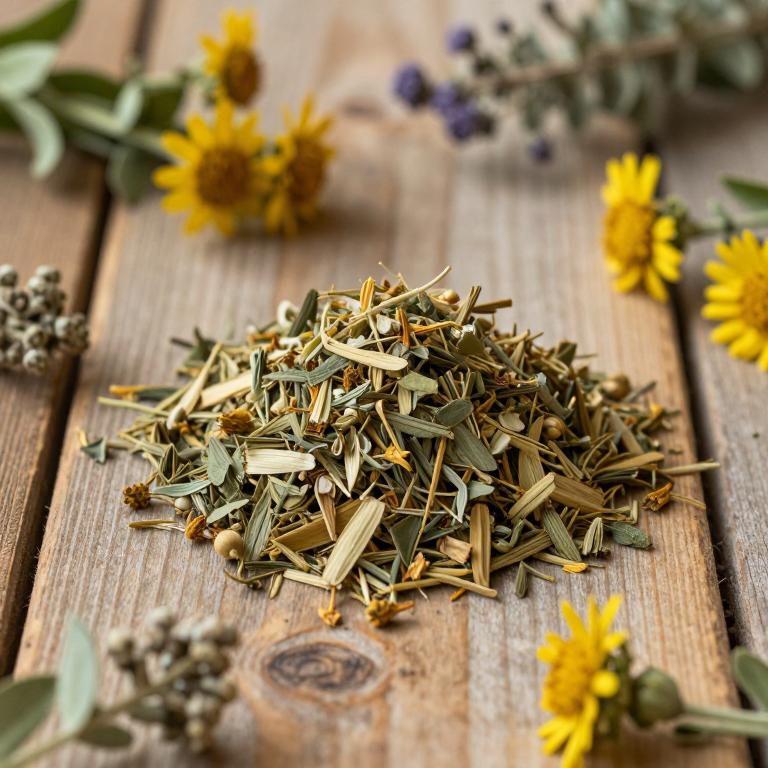
Long-leaved arnica, scientifically known as Arnica longifolia, is a perennial herb native to Western North America. Renowned for its bright yellow, daisy-like blooms, this plant has a storied history in traditional medicine. It is frequently utilized for its potent anti-inflammatory properties to soothe bruises, swelling, and muscle aches.
Names and Synonyms
Common Names
- long-leaved arnica
- seep-spring arnica
- spear-leaved arnica
- spear-leaved leopardbane
- spear-leaf arnica
Scientific Names
Accepted name
Arnica longifoliaSynonyms
- Arnica longifolia subsp. myriadenia
- Arnica myriadenia
- Arnica caudata
- Arnica polycephala
Regional and Traditional Names
French:
- arnica longifoliée
Sources: Wikidata, Catalogue of Life
Taxonomical Classification
This plant belongs to the kingdom Plantae and the phylum Streptophyta. Within the class Equisetopsida and subclass Magnoliidae, it is classified under the order Asterales. Finally, it is a member of the family Asteraceae and the genus Arnica.
| Rank | Classification |
|---|---|
| Kingdom | Plantae |
| Phylum | Streptophyta |
| Class | Equisetopsida |
| Subclass | Magnoliidae |
| Order | Asterales |
| Family | Asteraceae |
| Genus | Arnica |
Sources: The World Checklist of Vascular Plants (WCVP)
Distribution
This plant is primarily distributed across the mountainous regions of Western Canada and the Northwestern United States. In Canada, its presence is noted within the provinces of Alberta and British Columbia. Moving southward into the United States, it can be found in the state of Idaho. The species also extends into the rugged landscapes of Montana. Finally, its geographical range reaches as far south as Colorado.
| Region | Area |
|---|---|
| Western Canada | Alberta |
| Western Canada | British Columbia |
| Northwestern U.S.A. | Colorado |
| Northwestern U.S.A. | Idaho |
| Northwestern U.S.A. | Montana |
| Northwestern U.S.A. | Oregon |
| Northwestern U.S.A. | Washington |
| Northwestern U.S.A. | Wyoming |
| Southwestern U.S.A. | California |
| Southwestern U.S.A. | Nevada |
Sources: The World Checklist of Vascular Plants (WCVP)
Botanical Identification
Life history
The life history of Arnica longifolia is characterized by its status as a perennial, meaning it lives for more than two years and typically maintains a persistent presence in its native habitats. Throughout its life cycle, the plant relies on a robust root system to survive through dormant periods, allowing it to re-emerge and undergo seasonal growth cycles. Each year, the plant allocates energy toward vegetative expansion and the production of flowering stalks, which eventually bear the composite yellow blooms necessary for sexual reproduction. By following a perennial lifecycle, Arnica longifolia can establish itself firmly within its ecosystem, often forming colonies that persist across multiple growing seasons.
- Lifecycle :
- perennial
Morphology
The morphology of Arnica longifolia is characterized by its growth form as a non-woody herb, specifically classified as a forb. The plant is a self-supporting organism that does not function as a climber, liana, or vine, and it maintains an independent lifestyle without being a parasite or an epiphyte. It is a terrestrial species rather than being aquatic or semiaquatic. In terms of stature, it typically reaches an average plant height of 0.61 m.
- Aquatic :
- terrestrial
- Climber :
- self-supporting
- Epiphyte :
- terrestrial
- Growth form :
- herb
- Growth form :
- forb
- Parasite :
- independent
- Plant height mean:
- 0.61 m
- Woodiness :
- non-woody
Reproduction
The reproduction of Arnica longifolia is characterized by the production of small, specialized seeds that facilitate its dispersal and establishment in its natural habitat. Quantitative analysis of its reproductive output reveals a highly consistent seed morphology, with a recorded mean seed mass of 0.000964 g. The variation within the seed population is remarkably narrow, as indicated by both the maximum and minimum measured seed mass values of 0.00092 g. This uniformity in seed mass suggests a stable reproductive strategy aimed at maintaining consistent germination potential across the population.
- Seed mass max:
- 0.00092 g
- Seed mass mean:
- 0.000964 g
Sources: Global Inventory of Floras and Traits (GIFT)
Chemicals
Arnica longifolia has 2 reported phytochemicals identified across 0 scientific publications and several other databases. The most consistently reported chemicals include Carabron, HELENALIN.
| Chemical | Supporting sources | Consensus |
|---|---|---|
| Carabron | 1 supporting sources | ★☆☆☆☆ |
| HELENALIN | 1 supporting sources | ★☆☆☆☆ |
Carabron
- Contact dermatitis
HELENALIN
- Contact dermatitis