Chamisso's arnica
Arnica chamissonis · Accepted scientific name
Scientific literature: Very Sparse (14 studies) · ★☆☆☆☆
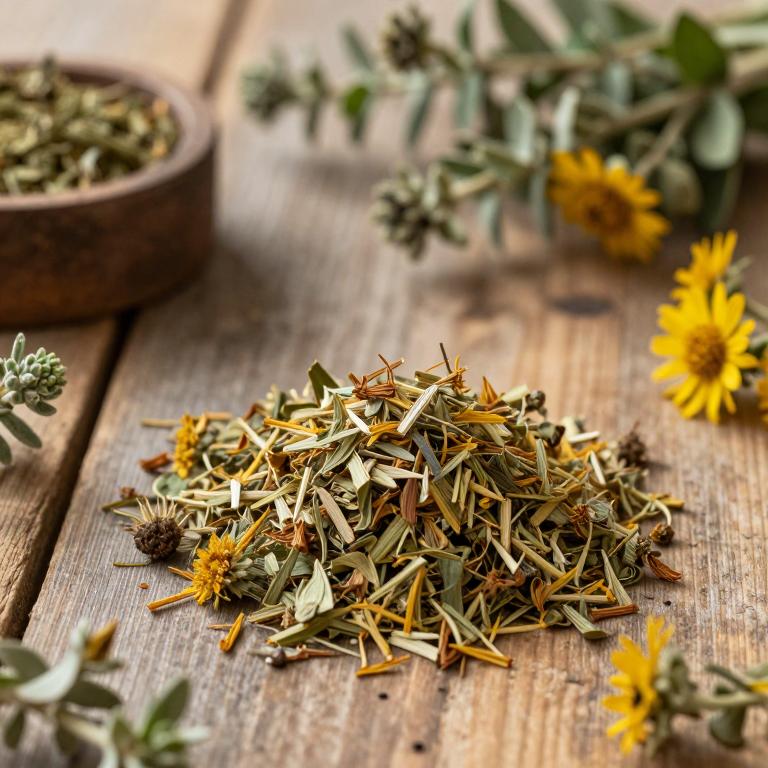
Chamisso's arnica, scientifically known as Arnica chamissonis, is a resilient perennial herb native to the Mediterranean and parts of Europe. Renowned for its bright yellow, daisy-like blooms, this plant is highly valued in traditional herbalism for its potent anti-inflammatory properties, particularly when used topically to soothe bruises and swelling.
Names and Synonyms
Common Names
- Chamisso's arnica
- leafy leopardbane
- meadow arnica
- Chamisso arnica
- leafy leopardsbane
- silver arnica
Scientific Names
Accepted name
Arnica chamissonisSynonyms
- Arnica chamissonis var. foliosa
- Arnica chamissonis subsp. foliosa
- Arnica chamissonis var. andina
- Arnica chamissonis var. incana
- Arnica bernardina
- Arnica chamissonis var. maguirei
- Arnica foliosa
- Arnica foliosa var. andina
- Arnica maguirei
- Arnica chamissonis subsp. incana
- Arnica lanulosa
- Arnica bruceae
- Arnica cana
- Arnica celsa
- Arnica chamissonis var. longinodosa
- Arnica greenei
- Arnica chamissonis f. incana
- Arnica chamissonis var. bernardina
- Arnica foliosa var. bernardina
- Arnica chamissonis var. interior
- Arnica chamissonis var. jepsoniana
- Arnica wilsonii
- Arnica tomentulosa
- Arnica ocreata
- Arnica rhizomata
- Arnica rubricaulis
- Arnica exigua
- Arnica foliosa var. incana
- Arnica kodiakensis
Regional and Traditional Names
Spanish:
- Árnica americana
- Arnica americana
French:
- arnica de Chamisso
- arnica de chamisso sous-espèce multifeuille
Sources: Wikidata, Catalogue of Life
Taxonomical Classification
This plant belongs to the kingdom Plantae within the phylum Streptophyta and the class Equisetopsida. Following the subclass Magnoliidae, it is categorized under the order Asterales and the family Asteraceae. Finally, its specific taxonomic placement is within the genus Arnica.
| Rank | Classification |
|---|---|
| Kingdom | Plantae |
| Phylum | Streptophyta |
| Class | Equisetopsida |
| Subclass | Magnoliidae |
| Order | Asterales |
| Family | Asteraceae |
| Genus | Arnica |
Sources: The World Checklist of Vascular Plants (WCVP)
Distribution
This plant exhibits a wide geographical distribution across several northern regions of the world. In Europe, its presence can be found in Sweden and within the mountainous landscapes of Austria. Moving across the Atlantic, the species is well-established in various parts of Subarctic America. Specifically, it inhabits the vast wilderness of Alaska and the Yukon territory. Additionally, the plant is recorded growing within the remote Northwest Territories.
| Region | Area |
|---|---|
| Northern Europe | Sweden |
| Middle Europe | Austria |
| Subarctic America | Alaska |
| Subarctic America | Northwest Territories |
| Subarctic America | Yukon |
| Western Canada | Alberta |
| Western Canada | British Columbia |
| Western Canada | Manitoba |
| Western Canada | Saskatchewan |
| Eastern Canada | Labrador |
Sources: The World Checklist of Vascular Plants (WCVP)
Botanical Identification
Genetics
The genetics of Arnica chamissonis are characterized by a specific chromosomal configuration that defines its reproductive and evolutionary lineage within the Asteraceae family. Regarding its cytogenetic profile, the plant exhibits a haploid number represented by the ploidy level of n, which serves as the fundamental genetic unit for its gametic cells. This chromosomal basis influences the plant's ability to maintain genetic diversity and facilitates its adaptation to specific alpine or subalpine ecological niches. The inheritance patterns and genomic stability associated with this base number are critical to the plant's phenotypic expression, particularly concerning the biochemical pathways responsible for the synthesis of bioactive secondary metabolites.
- Ploidy :
- n
Life history
The life history of Arnica chamissonis is characterized by its status as a perennial species, meaning it lives for more than two years and maintains a continuous presence in its habitat through multiple growing seasons. As a perennial, the plant typically develops robust underground structures, such as rhizomes, which allow it to survive periods of dormancy and regrow annually. Its life cycle involves a predictable seasonal pattern where it emerges from the soil to invest energy into vegetative growth and leaf development before transitioning into a reproductive phase. During this reproductive stage, the plant produces flowering heads that facilitate sexual reproduction via seed dispersal, ensuring the colonization of new areas and genetic diversity within the population. This long-term survival strategy enables the species to establish stable populations in its native alpine or subalpine environments.
- Lifecycle :
- perennial
Morphology
The morphology of Arnica chamissonis is characterized by its growth form as a non-woody herb, specifically classified as a forb. This self-supporting plant does not exhibit climbing behavior, such as being a liana or vine, and functions as an independent organism rather than a parasite. It is a terrestrial species, not categorized as aquatic, semiaquatic, or an epiphyte. On average, the plant reaches a height of approximately 0.76 m.
- Aquatic :
- terrestrial
- Climber :
- self-supporting
- Epiphyte :
- terrestrial
- Growth form :
- herb
- Growth form :
- forb
- Parasite :
- independent
- Plant height mean:
- 0.76 m
- Woodiness :
- non-woody
Reproduction
Reproduction in Arnica chamissonis is characterized by the production of specialized seeds that exhibit specific physical dimensions essential for its dispersal and establishment. The reproductive output yields seeds with a mean mass of approximately 0.00082575 g, reflecting the energy investment required for each individual propagule. Within the natural variations observed in the species, the seed mass fluctuates between a minimum value of 0.000435 g and a maximum value of 6e-04 g (0.0006 g). These quantitative traits in seed mass are critical indicators of the plant's reproductive strategy and its ability to colonize suitable habitats.
- Seed mass max:
- 6e-04 g
- Seed mass mean:
- 0.00082575 g
- Seed mass min:
- 0.000435 g
Sources: Global Inventory of Floras and Traits (GIFT)
Plant Parts
Arnica chamissonis has 1 reported plant parts identified across 1 scientific publications and several other databases that are studied for medicinal purposes. The most consistently reported plant part include flower.
| Plant part | Supporting sources | Consensus |
|---|---|---|
| Flower | 1 supporting sources | ★☆☆☆☆ |
Flower
- Molecules (Basel, Switzerland)
Chemicals
Arnica chamissonis has 10 reported phytochemicals identified across 1 scientific publications and several other databases. The most consistently reported chemicals include ALPHA-PINENE, BETA-PINENE, CUMENE, Caryophyllene oxide, Decanal.
| Chemical | Supporting sources | Consensus |
|---|---|---|
| ALPHA-PINENE | 1 supporting sources | ★☆☆☆☆ |
| BETA-PINENE | 1 supporting sources | ★☆☆☆☆ |
| CUMENE | 1 supporting sources | ★☆☆☆☆ |
| Caryophyllene oxide | 1 supporting sources | ★☆☆☆☆ |
| Decanal | 1 supporting sources | ★☆☆☆☆ |
| Germacrene D | 1 supporting sources | ★☆☆☆☆ |
| H- | 1 supporting sources | ★☆☆☆☆ |
| P-CYMENE | 1 supporting sources | ★☆☆☆☆ |
| Spathulenol | 1 supporting sources | ★☆☆☆☆ |
| benzene acetaldehyde | 1 supporting sources | ★☆☆☆☆ |
ALPHA-PINENE
- Molecules (Basel, Switzerland)
BETA-PINENE
- Molecules (Basel, Switzerland)
CUMENE
- Molecules (Basel, Switzerland)
Caryophyllene oxide
- Molecules (Basel, Switzerland)
Decanal
- Molecules (Basel, Switzerland)
Germacrene D
- Molecules (Basel, Switzerland)
H-
- Molecules (Basel, Switzerland)
P-CYMENE
- Molecules (Basel, Switzerland)
Spathulenol
- Molecules (Basel, Switzerland)
benzene acetaldehyde
- Molecules (Basel, Switzerland)
Activities
Arnica chamissonis has 1 reported activities identified across 1 scientific publications and several other databases. The most consistently reported activities include Antioxidant.
| Activity | Supporting sources | Consensus |
|---|---|---|
| Antioxidant | 1 supporting sources | ★☆☆☆☆ |
Antioxidant
- Molecules (Basel, Switzerland)
Conditions
Arnica chamissonis has 1 reported investigations on conditions identified across 1 scientific publications and several other databases. The most consistently reported conditions include Alzheimer's disease.
| Condition | Supporting sources | Consensus |
|---|---|---|
| Alzheimer's disease | 1 supporting sources | ★☆☆☆☆ |
Alzheimer's disease
- Current medicinal chemistry