Dutchman's Pipe
Aristolochia trilobata · Accepted scientific name
Scientific literature: Very Sparse (10 studies) · ★☆☆☆☆
Dutchman's Pipe, scientifically known as Aristolochia trilobata, is a perennial climbing vine native to the southeastern United States. Characterized by its distinctive heart-shaped leaves and tubular flowers, this plant holds significant historical importance in ethnobotany, though its use is strictly cautioned due to potential nephrotoxic and carcinogenic properties.
- Family
- Aristolochiaceae
- Native range
- Northern America
- Parts used
- Leaf
- Common names
- Dutchman'S Pipe
- Scientific synonyms
- Passiflora Caloneura · Howardia Trifida · 4 more
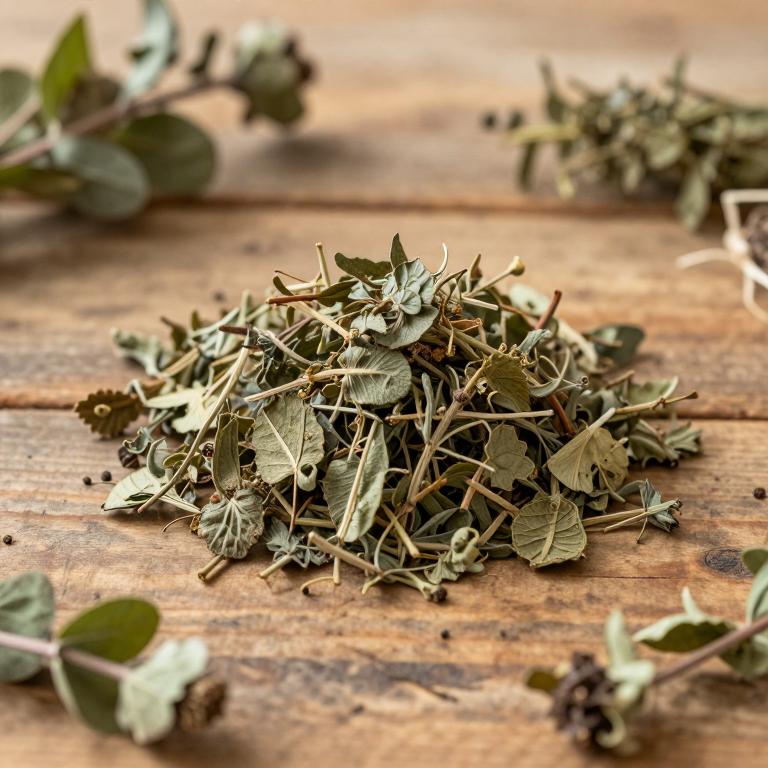
Names and Synonyms
Common Names
- Dutchman's Pipe
Scientific Names
Accepted name
Aristolochia trilobataSynonyms
- Passiflora caloneura
- Howardia trifida
- Aristolochia trifida
- Howardia trilobata
- Aristolochia appendiculata
- Aristolochia caracasana
Regional and Traditional Names
Spanish:
- bejuco de santiago
- cachimbo
Sources: Wikidata, Catalogue of Life
Taxonomical Classification
This plant, Aristolochia trilobata, belongs to the kingdom Plantae and the phylum Streptophyta. Within the class Equisetopsida and subclass Magnoliidae, it is categorized under the order Piperales. Finally, it is classified under the family Aristolochiaceae within the genus Aristolochia.
| Rank | Classification |
|---|---|
| Kingdom | Plantae |
| Phylum | Streptophyta |
| Class | Equisetopsida |
| Subclass | Magnoliidae |
| Order | Piperales |
| Family | Aristolochiaceae |
| Genus | Aristolochia |
Sources: The World Checklist of Vascular Plants (WCVP)
Distribution
This plant exhibits a diverse geographical distribution that spans across parts of North and Central America. In Mexico, it can specifically be found throughout the southeastern region of the country. Its range extends southward into Central America, where it is documented in Belize. The species is also present in the countries of Honduras and Nicaragua. Finally, its natural habitat reaches as far south as Costa Rica.
| Region | Area |
|---|---|
| Mexico | Mexico Southeast |
| Central America | Belize |
| Central America | Costa Rica |
| Central America | Honduras |
| Central America | Nicaragua |
| Central America | Panamá |
| Caribbean | Bermuda |
| Caribbean | Cuba |
| Caribbean | Dominican Republic |
| Caribbean | Haiti |
Sources: The World Checklist of Vascular Plants (WCVP)
Botanical Identification
Ecology
The ecology of Aristolochia trilobata is characterized by its presence in diverse environmental settings, ranging from anthropogenic areas to more preserved natural ecosystems. It is commonly found inhabiting coastal restingas, gallery forests, coastal forests, and floodplain forests (floresta de várzea). In terms of altitudinal distribution, the species is primarily a lowland plant, with a mean elevation of 0 m AMSL and a minimum elevation of 0 m AMSL. However, its ecological range extends upward into higher terrains, reaching a maximum elevation of 1000 m AMSL.
- Elevational range max:
- 1000 m AMSL
- Elevational range mean:
- 0 m AMSL
- Habitat :
- Área Antrópica, Floresta Ciliar ou Galeria, Floresta de Várzea, Restinga
Life history
The life history of Aristolochia trilobata is characterized by its status as a perennial species, allowing it to persist in its habitat through multiple growing seasons. As a long-lived perennial, the plant undergoes seasonal cycles of vegetative growth and reproductive phases, establishing a stable presence within its ecological niche. Its development involves a continuous life cycle that avoids the complete senescence seen in annuals, instead focusing on the accumulation of resources over several years to support its structural complexity and reproductive success. This perennial nature ensures that the plant can withstand environmental fluctuations and maintain its population through sustained growth and recurring flowering periods.
- Lifecycle :
- perennial
Morphology
The morphology of Aristolochia trilobata is characterized by a growth habit that is primarily terrestrial, though it can inhabit semiaquatic environments. It functions as a climbing vine, specifically acting as an obligatory climber to ascend its surroundings. As a terrestrial plant, it does not exhibit epiphytic behavior, such as being a holoepiphyte or hemiepiphyte, nor does it function as a parasite, remaining an independent organism. Furthermore, its structural composition is non-woody, which defines its flexible and herbaceous climbing nature.
- Aquatic :
- terrestrial
- Climber :
- vine
- Climber :
- obligatory
- Epiphyte :
- terrestrial
- Parasite :
- independent
- Woodiness :
- non-woody
Sources: Global Inventory of Floras and Traits (GIFT)
Plant Parts
Aristolochia trilobata has 1 reported plant parts identified across 1 scientific publications and several other databases that are studied for medicinal purposes. The most consistently reported plant part include leaf.
| Plant part | Supporting sources | Consensus |
|---|---|---|
| Leaf | 1 supporting sources | ★☆☆☆☆ |
Leaf
- Journal of ethnopharmacology
Chemicals
Aristolochia trilobata has 5 reported phytochemicals identified across 1 scientific publications and several other databases. The most consistently reported chemicals include Aristolochic acids, LIMONENE, Linalool, P-CYMENE, Sulcatyl acetate.
| Chemical | Supporting sources | Consensus |
|---|---|---|
| Aristolochic acids | 1 supporting sources | ★☆☆☆☆ |
| LIMONENE | 1 supporting sources | ★☆☆☆☆ |
| Linalool | 1 supporting sources | ★☆☆☆☆ |
| P-CYMENE | 1 supporting sources | ★☆☆☆☆ |
| Sulcatyl acetate | 1 supporting sources | ★☆☆☆☆ |
Aristolochic acids
- Toxicon : official journal of the International Society on Toxinology
LIMONENE
- Molecules (Basel, Switzerland)
Linalool
- Molecules (Basel, Switzerland)
P-CYMENE
- Molecules (Basel, Switzerland)
Sulcatyl acetate
- Molecules (Basel, Switzerland)
Activities
Aristolochia trilobata has 2 reported activities identified across 1 scientific publications and several other databases. The most consistently reported activities include Carcinogenic, Nephrotoxic.
| Activity | Supporting sources | Consensus |
|---|---|---|
| Carcinogenic | 1 supporting sources | ★☆☆☆☆ |
| Nephrotoxic | 1 supporting sources | ★☆☆☆☆ |
Carcinogenic
- Toxicon : official journal of the International Society on Toxinology
Nephrotoxic
- Toxicon : official journal of the International Society on Toxinology
Preparations
Aristolochia trilobata has 2 reported preparations identified across 1 scientific publications and several other databases. The most consistently reported preparations include Essential Oil, essential oil.
| Preparation | Supporting sources | Consensus |
|---|---|---|
| Essential oil | 1 supporting sources | ★☆☆☆☆ |
| Essential oil | 1 supporting sources | ★☆☆☆☆ |
Essential oil
- Molecules (Basel, Switzerland)
Essential oil
- Molecules (Basel, Switzerland)