Aristolochia taliscana
Aristolochia taliscana · Accepted scientific name
Scientific literature: Very Sparse (12 studies) · ★☆☆☆☆
Aristolochia taliscana, is a distinctive medicinal plant belonging to the Aristolochiaceae family. Found primarily in tropical regions, it has been utilized in traditional medicine for its potent bioactive compounds. However, careful study is essential due to the presence of aristolochic acids, which pose significant risks to human health.
- Family
- Aristolochiaceae
- Native range
- Northern America
- Parts used
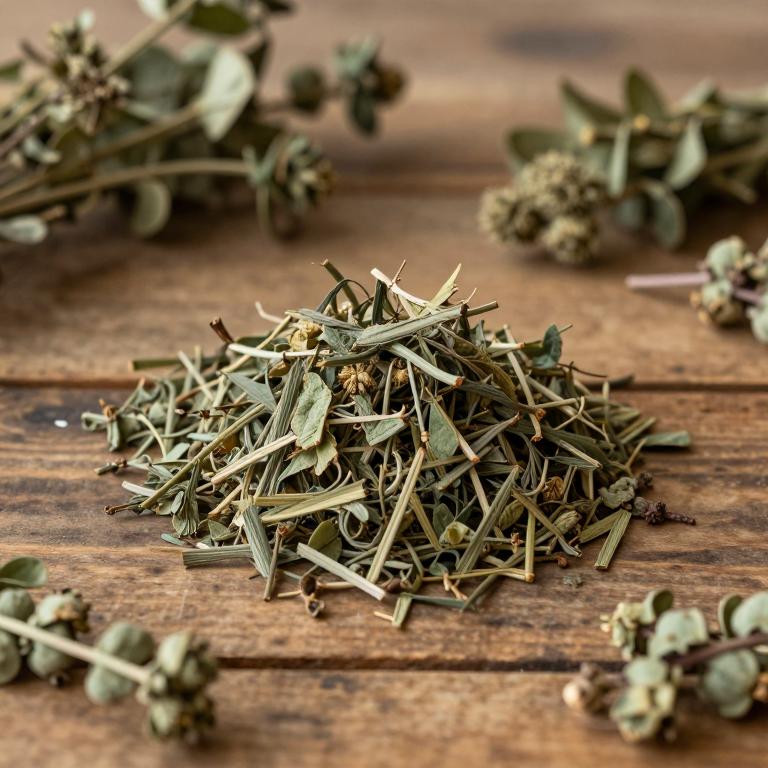
- Root
- Common names
- Not available
- Scientific synonyms
- Aristolochia Galeottii · Aristolochia Pardina
Names and Synonyms
Scientific Names
Accepted name
Aristolochia taliscanaSynonyms
- Aristolochia galeottii
- Aristolochia pardina
Regional and Traditional Names
Spanish:
- Guaco
- Pacueco
- Raíz de guaco
Sources: Wikidata, Catalogue of Life
Taxonomical Classification
This plant belongs to the kingdom Plantae and is classified under the phylum Streptophyta and class Equisetopsida. Within the subclass Magnoliidae, it is organized under the order Piperales and the family Aristolochiaceae. Finally, it is placed in the genus Aristolochia.
| Rank | Classification |
|---|---|
| Kingdom | Plantae |
| Phylum | Streptophyta |
| Class | Equisetopsida |
| Subclass | Magnoliidae |
| Order | Piperales |
| Family | Aristolochiaceae |
| Genus | Aristolochia |
Sources: The World Checklist of Vascular Plants (WCVP)
Distribution
This plant, known as Aristolochia taliscana, exhibits a specific range within the country of Mexico. Its presence is documented across several key regions that define its natural habitat. Specifically, it can be found growing in Mexico Central. Additionally, the species extends its reach into the area of Mexico Northwest. Finally, the plant is also distributed throughout Mexico Southwest.
| Region | Area |
|---|---|
| Mexico | Mexico Central |
| Mexico | Mexico Northwest |
| Mexico | Mexico Southwest |
Sources: The World Checklist of Vascular Plants (WCVP)
Botanical Identification
Morphology
The morphology of Aristolochia taliscana is characterized by its growth habit as a woody vine, functioning as an obligatory climber that utilizes surrounding structures for support. As a terrestrial species, it does not exhibit aquatic or epiphytic tendencies, instead establishing itself within soil-based environments. The plant typically reaches an average height of approximately 2.5 m, maintaining an independent nutritional status without acting as a parasite.
- Aquatic :
- terrestrial
- Climber :
- vine
- Climber :
- obligatory
- Epiphyte :
- terrestrial
- Parasite :
- independent
- Plant height mean:
- 2.5 m
- Woodiness :
- woody
Physiology
The physiology of Aristolochia taliscana is characterized by a standard C3 photosynthetic pathway, utilizing the Calvin cycle to fix carbon dioxide during the light-independent reactions. As a non-specialized carbon fixer, it does not employ C4 or CAM metabolic adaptations, making its photosynthetic efficiency highly dependent on ambient temperature and moisture availability. Furthermore, this species is not a nitrogen fixer, meaning it lacks the specialized symbiotic relationships with nitrogen-fixing bacteria (such as Rhizobium) required to convert atmospheric nitrogen into usable forms; instead, it relies on the uptake of available nitrates and ammonium from the soil through its root system to satisfy its nutritional requirements.
- Nitrogen fixer :
- no
- Photosynthetic pathway :
- C3
Sources: Global Inventory of Floras and Traits (GIFT)
Plant Parts
Aristolochia taliscana has 1 reported plant parts identified across 1 scientific publications and several other databases that are studied for medicinal purposes. The most consistently reported plant part include root.
| Plant part | Supporting sources | Consensus |
|---|---|---|
| Root | 1 supporting sources | ★☆☆☆☆ |
Root
- Biological & pharmaceutical bulletin
Chemicals
Aristolochia taliscana has 6 reported phytochemicals identified across 1 scientific publications and several other databases. The most consistently reported chemicals include LICARIN A, Austrobailignan 7, Eupomatenoid-1, Eupomatenoid-7, Fragransin E1.
| Chemical | Supporting sources | Consensus |
|---|---|---|
| LICARIN A | 3 supporting sources | ★★☆☆☆ |
| Austrobailignan 7 | 1 supporting sources | ★☆☆☆☆ |
| Eupomatenoid-1 | 1 supporting sources | ★☆☆☆☆ |
| Eupomatenoid-7 | 1 supporting sources | ★☆☆☆☆ |
| Fragransin E1 | 1 supporting sources | ★☆☆☆☆ |
| LICARIN B | 1 supporting sources | ★☆☆☆☆ |
LICARIN A
- Toxicology and applied pharmacology
- Biological & pharmaceutical bulletin
- Anais da Academia Brasileira de Ciencias
Austrobailignan 7
- Biological & pharmaceutical bulletin
Eupomatenoid-1
- Biological & pharmaceutical bulletin
Eupomatenoid-7
- Biological & pharmaceutical bulletin
Fragransin E1
- Biological & pharmaceutical bulletin
LICARIN B
- Biological & pharmaceutical bulletin
Conditions
Aristolochia taliscana has 3 reported investigations on conditions identified across 1 scientific publications and several other databases. The most consistently reported conditions include Chagas' disease, obesity, tuberculosis.
| Condition | Supporting sources | Consensus |
|---|---|---|
| Chagas' disease | 1 supporting sources | ★☆☆☆☆ |
| Obesity | 1 supporting sources | ★☆☆☆☆ |
| Tuberculosis | 1 supporting sources | ★☆☆☆☆ |
Chagas' disease
- Biological & pharmaceutical bulletin
Obesity
- Toxicology and applied pharmacology
Tuberculosis
- Anais da Academia Brasileira de Ciencias