Aristolochia serpentaria
Aristolochia serpentaria · Accepted scientific name
Scientific literature: Very Sparse (48 studies) · ★☆☆☆☆
, scientifically known as Aristolochia serpentaria, is a perennial herb native to North America, commonly called Virginia snakeroot. Historically used in traditional medicine to treat various ailments, its potent compounds have sparked significant scientific interest. However, modern caution is essential due to potential toxicity associated with its medicinal use.
- Family
- Not available
- Native range
- Northern America
- Parts used
- Not available
- Common names
- Not available
- Scientific synonyms
- Not available
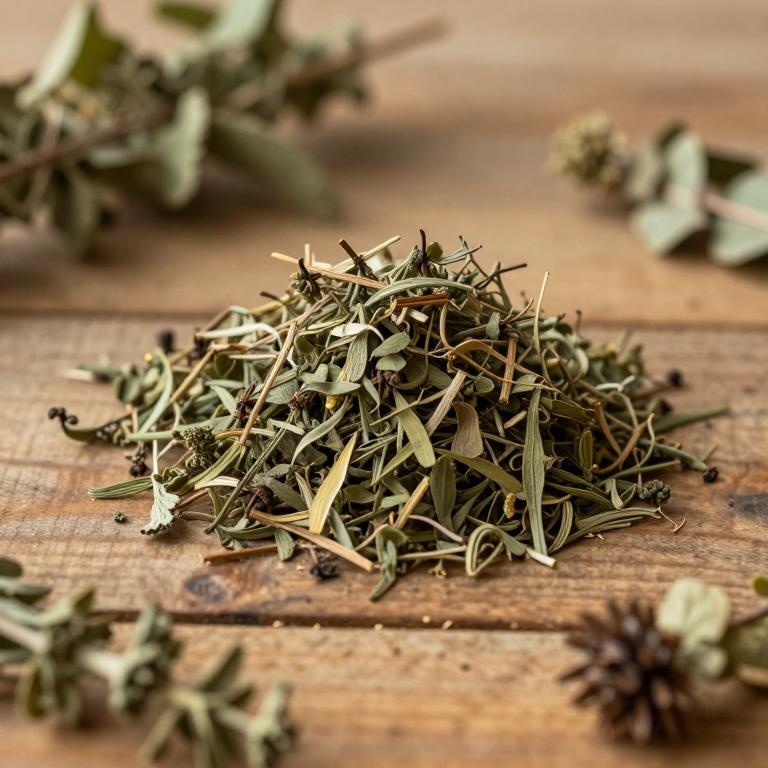
Names and Synonyms
Scientific Names
Accepted name
Aristolochia serpentariaDistribution
This plant, known as Aristolochia serpentaria, exhibits a specific geographical presence within the North-Central United States. Its distribution can be found throughout the state of Illinois. It also grows across the landscape of Iowa. Furthermore, the species is documented within the borders of Kansas. Finally, its range extends into Missouri and Oklahoma.
| Region | Area |
|---|---|
| North-Central U.S.A. | Illinois |
| North-Central U.S.A. | Iowa |
| North-Central U.S.A. | Kansas |
| North-Central U.S.A. | Missouri |
| North-Central U.S.A. | Oklahoma |
| Northeastern U.S.A. | Connecticut |
| Northeastern U.S.A. | Indiana |
| Northeastern U.S.A. | Michigan |
| Northeastern U.S.A. | New Jersey |
| Northeastern U.S.A. | New York |
Sources: The World Checklist of Vascular Plants (WCVP)
Botanical Identification
Life history
The life history of Aristolochia serpentaria is characterized by its status as a perennial herb, meaning it survives for multiple years through successive growing seasons. As a long-lived species, it establishes a stable presence within its ecosystem, often utilizing a creeping rhizomatous root system to spread and persist in the shaded, moist forest floors it inhabits. Its developmental cycle involves seasonal growth patterns where it emerges from its perennial structures to produce foliage and eventually complex, pipe-shaped flowers. This perennial lifecycle allows the plant to invest energy into robust underground storage organs, ensuring its ability to withstand unfavorable periods and emerge reliably each spring to continue its reproductive cycle.
- Lifecycle :
- perennial
Morphology
The morphology of Aristolochia serpentaria is characterized by its growth form as a non-woody herb and a perennial forb. It functions as an independent organism, neither acting as a parasite nor an epiphyte, as it maintains a strictly terrestrial existence. Structurally, the plant exhibits a climbing habit, acting as a self-supporting liana or vine that can navigate its environment through facultative and self-supporting climbing mechanisms.
- Aquatic :
- terrestrial
- Climber :
- self-supporting
- Epiphyte :
- terrestrial
- Growth form :
- herb
- Growth form :
- forb
- Parasite :
- independent
- Woodiness :
- non-woody
Sources: Global Inventory of Floras and Traits (GIFT)
Chemicals
Aristolochia serpentaria has 5 reported phytochemicals identified across 0 scientific publications and several other databases. The most consistently reported chemicals include ARISTOLOCHINE, Aristolactone, Aristolochic acid I, Borneol, EO.
| Chemical | Supporting sources | Consensus |
|---|---|---|
| ARISTOLOCHINE | 1 supporting sources | ★☆☆☆☆ |
| Aristolactone | 1 supporting sources | ★☆☆☆☆ |
| Aristolochic acid I | 1 supporting sources | ★☆☆☆☆ |
| Borneol | 1 supporting sources | ★☆☆☆☆ |
| EO | 1 supporting sources | ★☆☆☆☆ |
ARISTOLOCHINE
- Dr. Duke
Aristolactone
- Dr. Duke
Aristolochic acid I
- Dr. Duke
Borneol
- Dr. Duke
EO
- Dr. Duke
Activities
Aristolochia serpentaria has 43 reported activities identified across 0 scientific publications and several other databases. The most consistently reported activities include (-)-Chronotropic, (-)-Inotropic, Allelochemic, Analgesic, Antiacetylcholine.
| Activity | Supporting sources | Consensus |
|---|---|---|
| (-)-Chronotropic | 1 supporting sources | ★☆☆☆☆ |
| (-)-Inotropic | 1 supporting sources | ★☆☆☆☆ |
| Allelochemic | 1 supporting sources | ★☆☆☆☆ |
| Analgesic | 1 supporting sources | ★☆☆☆☆ |
| Antiacetylcholine | 1 supporting sources | ★☆☆☆☆ |
| Antibacterial | 1 supporting sources | ★☆☆☆☆ |
| Antibronchitic | 1 supporting sources | ★☆☆☆☆ |
| Anticancer | 1 supporting sources | ★☆☆☆☆ |
| Antiescherichic | 1 supporting sources | ★☆☆☆☆ |
| Antifeedant | 1 supporting sources | ★☆☆☆☆ |
(-)-Chronotropic
- Dr. Duke
(-)-Inotropic
- Dr. Duke
Allelochemic
- Dr. Duke
Analgesic
- Dr. Duke
Antiacetylcholine
- Dr. Duke
Antibacterial
- Dr. Duke
Antibronchitic
- Dr. Duke
Anticancer
- Dr. Duke
Antiescherichic
- Dr. Duke
Antifeedant
- Dr. Duke