Aristida funiculata
Aristida funiculata · Accepted scientific name
Scientific literature: Very Sparse (9 studies) · ★☆☆☆☆
Aristida funiculata, scientifically known as Aristida funiculata, is a versatile medicinal herb valued in traditional healing practices. Renowned for its diverse therapeutic properties, this plant is frequently utilized to treat various ailments, ranging from skin conditions to digestive issues, offering significant potential for pharmacological research and natural wellness.
- Family
- Poaceae
- Native range
- Africa
- Parts used
- Not available
- Common names
- Not available
- Scientific synonyms
- Aristida Funiculata Var. Royleana · Aristida Paradoxa · 9 more
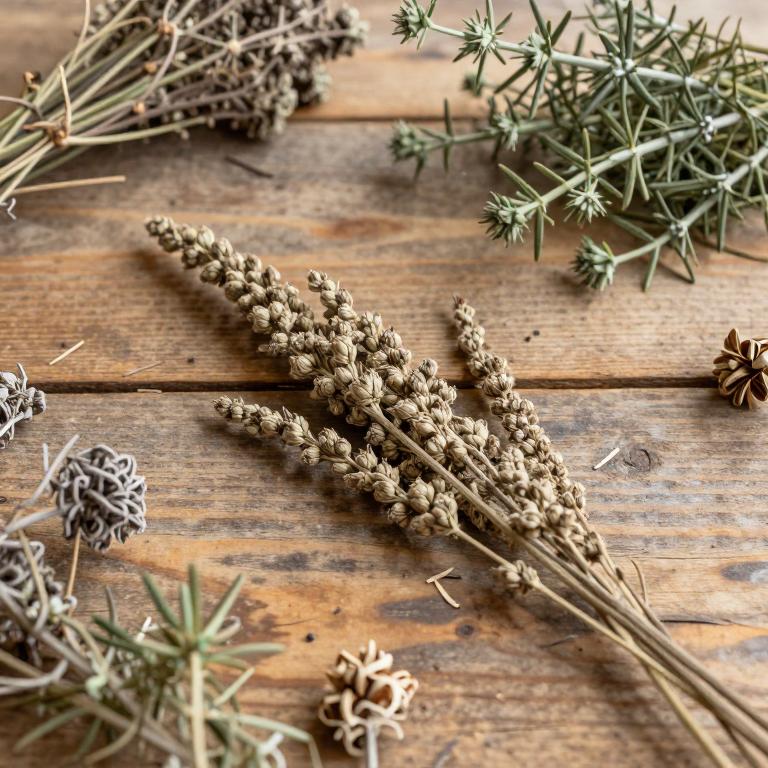
Names and Synonyms
Scientific Names
Accepted name
Aristida funiculataSynonyms
- Aristida funiculata var. royleana
- Aristida paradoxa
- Aristida foenicularis
- Aristida funiculata var. brevis
- Aristida funiculata var. mallica
- Aristida funiculata var. paradoxa
- Aristida macrathera
- Aristida mallica
- Aristida royleana
- Aristida stipacea
- Arthratherum royleanum
Sources: Wikidata
Taxonomical Classification
This plant belongs to the kingdom Plantae and is classified under the phylum Streptophyta and class Equisetopsida. Within the subclass Magnoliidae, it is categorized under the order Poales and the family Poaceae. Finally, its specific taxonomic identity is defined by the genus Aristida.
| Rank | Classification |
|---|---|
| Kingdom | Plantae |
| Phylum | Streptophyta |
| Class | Equisetopsida |
| Subclass | Magnoliidae |
| Order | Poales |
| Family | Poaceae |
| Genus | Aristida |
Sources: The World Checklist of Vascular Plants (WCVP)
Distribution
This plant exhibits a diverse geographical distribution across several distinct regions of the African continent and its surrounding islands. In Northern Africa, its presence is documented within the countries of Egypt and Libya. Moving toward the Atlantic, the species can also be found in the Macaronesian archipelago of Cape Verde. Its range extends further into West Tropical Africa, where it inhabits the landscapes of Burkina. Additionally, the plant is recorded as growing within the borders of Mali.
| Region | Area |
|---|---|
| Northern Africa | Egypt |
| Northern Africa | Libya |
| Macaronesia | Cape Verde |
| West Tropical Africa | Burkina |
| West Tropical Africa | Mali |
| West Tropical Africa | Mauritania |
| West Tropical Africa | Nigeria |
| West Tropical Africa | Niger |
| West Tropical Africa | Senegal |
| Northeast Tropical Africa | Chad |
Sources: The World Checklist of Vascular Plants (WCVP)
Botanical Identification
Life history
The life history of Aristida funiculata is characterized by an annual lifecycle, meaning it completes its entire developmental process from germination to seed production within a single growing season. As a plant that relies on seasonal availability of resources, its survival strategy is defined by its classification as a therophyte, a life form where the plant survives unfavorable periods in the form of seeds. Additionally, it functions as a cryptophyte, indicating that its perennating organs are located underground or at the soil surface, protected from external environmental stressors during its dormant phase.
- Life form :
- therophyte
- Life form :
- cryptophyte
- Lifecycle :
- annual
Morphology
The morphology of Aristida funiculata is characterized by its growth form as a non-woody herb, specifically functioning as a graminoid. This plant is strictly terrestrial in its habitat, lacking aquatic or semiaquatic tendencies, and it does not function as an epiphyte. As a self-supporting organism, it does not exhibit climbing habits such as lianas or vines, nor does it possess any parasitic tendencies, remaining entirely independent. Structurally, the plant is non-woody and reaches a maximum plant height of approximately 0.46 m.
- Aquatic :
- terrestrial
- Climber :
- self-supporting
- Epiphyte :
- terrestrial
- Growth form :
- herb
- Parasite :
- independent
- Plant height max:
- 0.46 m
- Woodiness :
- non-woody
Physiology
The physiology of Aristida funiculata is fundamentally defined by its highly efficient C4 photosynthetic pathway, a specialized metabolic adaptation that distinguishes it from C3 plants. By utilizing the C4 pathway, the plant minimizes photorespiration through a spatial separation of carbon fixation; initial CO2 uptake occurs in the mesophyll cells via PEP carboxylase, which is then transported to the bundle sheath cells for the Calvin cycle. This mechanism allows for a concentrated CO2 environment around the enzyme RuBisCO, significantly enhancing carbon assimilation rates even under high light intensities and elevated temperatures. This physiological efficiency enables the species to maintain high water-use efficiency and thrive in arid or seasonally dry environments where moisture availability may be limiting.
- Photosynthetic pathway :
- C4
Reproduction
The reproduction of Aristida funiculata is characterized by a strategic dispersal mechanism designed to maximize its colonization potential within its habitat. The primary dispersal syndrome employed by this species is anemochorous, meaning it relies heavily on wind currents to transport its seeds or reproductive structures over significant distances. This wind-driven movement allows the plant to effectively spread its progeny away from the parent individual, reducing competition for local resources. While the predominant mode is anemochorous, the reproductive success of the species may also involve elements of other strategies, potentially incorporating zoochorous, autochorous, hydrochorous, or unspecialized dispersal methods depending on environmental conditions and the presence of external vectors.
- Dispersal syndrome :
- anemochorous
Sources: Global Inventory of Floras and Traits (GIFT)
Chemicals
Aristida funiculata has 8 reported phytochemicals identified across 0 scientific publications and several other databases. The most consistently reported chemicals include Anthocyanins, Coumarins, Flavonoids, Glycosides, Phenols.
| Chemical | Supporting sources | Consensus |
|---|---|---|
| Anthocyanins | 1 supporting sources | ★☆☆☆☆ |
| Coumarins | 1 supporting sources | ★☆☆☆☆ |
| Flavonoids | 1 supporting sources | ★☆☆☆☆ |
| Glycosides | 1 supporting sources | ★☆☆☆☆ |
| Phenols | 1 supporting sources | ★☆☆☆☆ |
| Saponins | 1 supporting sources | ★☆☆☆☆ |
| Steroids | 1 supporting sources | ★☆☆☆☆ |
| Tannins | 1 supporting sources | ★☆☆☆☆ |
Anthocyanins
- Journal of traditional Chinese medicine = Chung i tsa chih ying wen pan
Coumarins
- Journal of traditional Chinese medicine = Chung i tsa chih ying wen pan
Flavonoids
- Journal of traditional Chinese medicine = Chung i tsa chih ying wen pan
Glycosides
- Journal of traditional Chinese medicine = Chung i tsa chih ying wen pan
Phenols
- Journal of traditional Chinese medicine = Chung i tsa chih ying wen pan
Saponins
- Journal of traditional Chinese medicine = Chung i tsa chih ying wen pan
Steroids
- Journal of traditional Chinese medicine = Chung i tsa chih ying wen pan
Tannins
- Journal of traditional Chinese medicine = Chung i tsa chih ying wen pan
Activities
Aristida funiculata has 1 reported activities identified across 0 scientific publications and several other databases. The most consistently reported activities include Cytotoxic.
| Activity | Supporting sources | Consensus |
|---|---|---|
| Cytotoxic | 1 supporting sources | ★☆☆☆☆ |
Cytotoxic
- Journal of traditional Chinese medicine = Chung i tsa chih ying wen pan
Preparations
Aristida funiculata has 2 reported preparations identified across 0 scientific publications and several other databases. The most consistently reported preparations include methanol extract, n-hexane extract.
| Preparation | Supporting sources | Consensus |
|---|---|---|
| Methanol extract | 1 supporting sources | ★☆☆☆☆ |
| N-hexane extract | 1 supporting sources | ★☆☆☆☆ |
Methanol extract
- Journal of traditional Chinese medicine = Chung i tsa chih ying wen pan
N-hexane extract
- Journal of traditional Chinese medicine = Chung i tsa chih ying wen pan