Asmachilca
Aristeguietia gayana · Accepted scientific name
Scientific literature: Very Sparse (6 studies) · ★☆☆☆☆
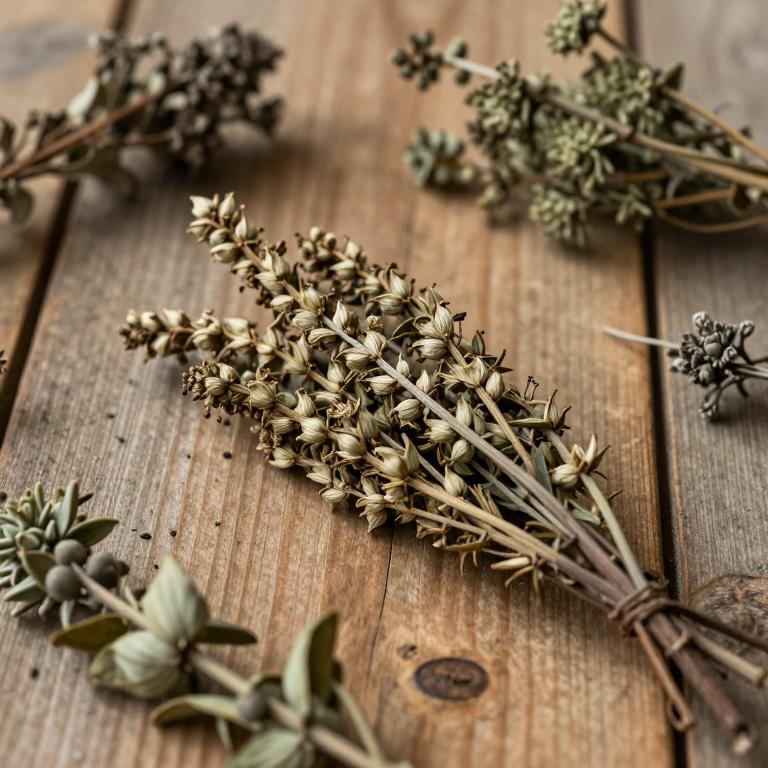
Asmachilca, scientifically known as Aristeguietia gayana, is a remarkable medicinal plant native to the Andean regions. Renowned in traditional folk medicine, it is primarily utilized for its potent respiratory benefits. This botanical specimen is frequently employed to alleviate asthma, coughs, and various bronchial ailments through its natural healing properties.
- Family
- Asteraceae
- Native range
- Southern America
- Parts used
- Not available
- Common names
- Not available
- Scientific synonyms
- Eupatorium Gayanum
Names and Synonyms
Scientific Names
Accepted name
Aristeguietia gayanaSynonyms
- Eupatorium gayanum
Regional and Traditional Names
Spanish:
- Eupatorium gayanum
- Eupatorium triplinerve
- Asmachilca
- Asmachilca
Sources: Wikidata, Catalogue of Life
Taxonomical Classification
This plant belongs to the kingdom Plantae and the phylum Streptophyta, placing it within the class Equisetopsida and the subclass Magnoliidae. It is further classified under the order Asterales and is a member of the family Asteraceae. Specifically, its taxonomic identity is defined by the genus Aristeguietia.
| Rank | Classification |
|---|---|
| Kingdom | Plantae |
| Phylum | Streptophyta |
| Class | Equisetopsida |
| Subclass | Magnoliidae |
| Order | Asterales |
| Family | Asteraceae |
| Genus | Aristeguietia |
Sources: The World Checklist of Vascular Plants (WCVP)
Distribution
This plant, known scientifically as Aristeguietia gayana, exhibits a very specific and limited geographical range. Its natural distribution is primarily concentrated within the region of Western South America. Specifically, the species is documented to grow within the country of Peru. Because of this narrow occurrence, it is considered an endemic element of the local Peruvian flora. Understanding this localized presence is essential for researchers studying its unique ecological niche.
| Region | Area |
|---|---|
| Western South America | Peru |
Sources: The World Checklist of Vascular Plants (WCVP)
Botanical Identification
Morphology
The morphology of Aristeguietia gayana is characterized by a woody growth form, specifically manifesting as a shrub. It functions as an independent organism, exhibiting no parasitic behavior toward other plants. In terms of its ecological positioning and habitat, the plant is primarily terrestrial rather than aquatic or semiaquatic, and it does not exhibit epiphytic characteristics such as being a holoepiphyte or hemiepiphyte. Furthermore, while many plants in similar tropical environments may act as climbers, this species is categorized as self-supporting, lacking the vine, liana, or obligatory climbing habits found in other taxa.
- Aquatic :
- terrestrial
- Climber :
- self-supporting
- Epiphyte :
- terrestrial
- Growth form :
- shrub
- Parasite :
- independent
- Woodiness :
- woody
Sources: Global Inventory of Floras and Traits (GIFT)
Chemicals
Aristeguietia gayana has 4 reported phytochemicals identified across 0 scientific publications and several other databases. The most consistently reported chemicals include Echinatine, Intermedine, Lycopsamine, Supinine.
| Chemical | Supporting sources | Consensus |
|---|---|---|
| Echinatine | 1 supporting sources | ★☆☆☆☆ |
| Intermedine | 1 supporting sources | ★☆☆☆☆ |
| Lycopsamine | 1 supporting sources | ★☆☆☆☆ |
| Supinine | 1 supporting sources | ★☆☆☆☆ |
Echinatine
- Journal of ethnopharmacology
Intermedine
- Journal of ethnopharmacology
Lycopsamine
- Journal of ethnopharmacology
Supinine
- Journal of ethnopharmacology
Conditions
Aristeguietia gayana has 2 reported investigations on conditions identified across 0 scientific publications and several other databases. The most consistently reported conditions include bronchial asthma, common cold.
| Condition | Supporting sources | Consensus |
|---|---|---|
| Bronchial asthma | 1 supporting sources | ★☆☆☆☆ |
| Common cold | 1 supporting sources | ★☆☆☆☆ |
Bronchial asthma
- Journal of ethnopharmacology
Common cold
- Journal of ethnopharmacology