Jacquemont's Cobra-Lily
Arisaema jacquemontii · Accepted scientific name
Scientific literature: Very Sparse (12 studies) · ★☆☆☆☆
Jacquemont's Cobra-Lily, scientifically known as Arisaema jacquemontii, is a striking perennial herb native to the Himalayan regions. Characterized by its unique spathe and spadix, this plant holds significant ethnobotanical interest. While possessing bioactive compounds, it requires careful handling due to the presence of irritating calcium oxalate crystals.
- Family
- Araceae
- Native range
- Asia-Temperate
- Parts used
- Root
- Common names
- Jacquemont'S Cobra-Lily · Jacquemont'S Cobra Lily
- Scientific synonyms
- Arisaema Exile · Arisaema Cornutum
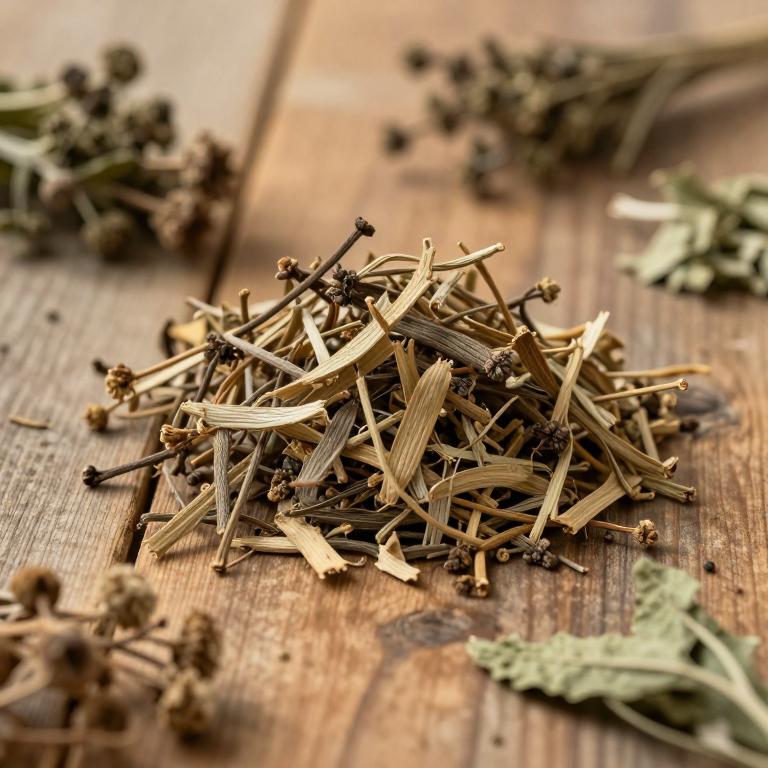
Names and Synonyms
Common Names
- Jacquemont's Cobra-Lily
- Jacquemont's Cobra Lily
Scientific Names
Accepted name
Arisaema jacquemontiiSynonyms
- Arisaema exile
- Arisaema cornutum
Sources: Wikidata, Catalogue of Life
Taxonomical Classification
This plant belongs to the kingdom Plantae and is classified within the phylum Streptophyta and class Equisetopsida. Following its placement in the subclass Magnoliidae and order Alismatales, it is categorized under the family Araceae. Finally, its specific taxonomic identity is defined by the genus Arisaema.
| Rank | Classification |
|---|---|
| Kingdom | Plantae |
| Phylum | Streptophyta |
| Class | Equisetopsida |
| Subclass | Magnoliidae |
| Order | Alismatales |
| Family | Araceae |
| Genus | Arisaema |
Sources: The World Checklist of Vascular Plants (WCVP)
Distribution
This plant exhibits a broad geographical distribution across several key regions of Asia. In Western Asia, its presence has been documented within the borders of Afghanistan. Its range extends significantly into China, specifically spanning the South-Central provinces and the high-altitude regions of Tibet. Within the Indian Subcontinent, the species is found inhabiting the state of Assam. Additionally, the plant can be located within the tropical landscapes of Bangladesh.
| Region | Area |
|---|---|
| Western Asia | Afghanistan |
| China | China South-Central |
| China | Tibet |
| Indian Subcontinent | Assam |
| Indian Subcontinent | Bangladesh |
| Indian Subcontinent | East Himalaya |
| Indian Subcontinent | India |
| Indian Subcontinent | Nepal |
| Indian Subcontinent | Pakistan |
| Indian Subcontinent | West Himalaya |
Sources: The World Checklist of Vascular Plants (WCVP)
Botanical Identification
Ecology
The ecology of Arisaema jacquemontii is strictly defined by its adaptation to high-altitude montane environments, where it occupies a specific vertical niche within its habitat. This species thrives within a significant altitudinal gradient, ranging from a minimum elevation of 2300 m AMSL to a maximum elevation of 4300 m AMSL. Such a broad elevational range suggests a high degree of resilience to varying temperature regimes and atmospheric pressures characteristic of alpine and subalpine zones. Within these altitudes, the plant typically colonizes moist, shaded microhabitats, such as forest understories or rocky crevices, where it can manage the intense UV radiation and fluctuating moisture levels inherent to high-mountain ecosystems.
- Elevational range max:
- 4300 m AMSL
- Elevational range min:
- 2300 m AMSL
Life history
The life history of Arisaema jacquemontii is characterized by a perennial lifecycle, allowing the plant to persist in its habitat through multiple growing seasons. As a geophyte, its survival strategy relies on underground storage organs, which protect the plant during dormant periods and facilitate regrowth when environmental conditions become favorable. This specialized life form enables it to navigate seasonal fluctuations by sequestering nutrients and energy beneath the soil surface, ensuring long-term stability within its ecological niche.
- Life form :
- geophyte
- Lifecycle :
- annual
Morphology
The morphology of Arisaema jacquemontii is characterized by its classification as a non-woody herb, exhibiting a growth form typical of a forb. It is a self-supporting plant that does not function as a climber, liana, or vine, maintaining its structural integrity independently. As a terrestrial species, it is neither aquatic, semiaquatic, nor an epiphyte, instead occupying soil-based habitats. Furthermore, the plant is an independent organism, lacking any parasitic tendencies, and maintains a soft, non-woody tissue structure throughout its vegetative body.
- Aquatic :
- terrestrial
- Climber :
- self-supporting
- Epiphyte :
- terrestrial
- Growth form :
- herb
- Parasite :
- independent
- Woodiness :
- non-woody
Physiology
The physiology of Ariosa jacquemontii is characterized by its specialized metabolic adaptations to shaded, forest-floor environments, where it utilizes a C3 photosynthetic pathway to facilitate carbon fixation. As a C3 plant, it relies on the enzyme RuBisCO to incorporate atmospheric carbon dioxide directly into the Calvin cycle, a process that is highly efficient under the cool, moist, and low-light conditions typical of its natural habitat. This metabolic strategy allows the plant to optimize energy capture in understory settings where light intensity is often limiting. Furthermore, its physiological processes are closely tied to its seasonal life cycle, involving complex carbohydrate translocation to underground structures to support dormancy and subsequent rapid regrowth during favorable environmental periods.
- Photosynthetic pathway :
- C3
Reproduction
The reproduction of Ariosa jacquemontii is characterized by a specific flowering phenology and consistent seed characteristics. The flowering period for this species is concentrated in the month of July, with both the flowering start and flowering end occurring within this same month. Following successful pollination, the plant produces seeds that exhibit remarkable uniformity in size and weight; the seed mass is highly stable, with a mean, maximum, and minimum value all recorded at 0.0109 g.
- Flowering time :
- Jul
- Seed mass mean:
- 0.0109 g
Sources: Global Inventory of Floras and Traits (GIFT)
Plant Parts
Arisaema jacquemontii has 1 reported plant parts identified across 1 scientific publications and several other databases that are studied for medicinal purposes. The most consistently reported plant part include root.
| Plant part | Supporting sources | Consensus |
|---|---|---|
| Root | 1 supporting sources | ★☆☆☆☆ |
Root
- Journal of Asian natural products research
Chemicals
Arisaema jacquemontii has 2 reported phytochemicals identified across 1 scientific publications and several other databases. The most consistently reported chemicals include 30-norlanost-5-ene-3-one, Flavonoids.
| Chemical | Supporting sources | Consensus |
|---|---|---|
| 30-norlanost-5-ene-3-one | 1 supporting sources | ★☆☆☆☆ |
| Flavonoids | 1 supporting sources | ★☆☆☆☆ |
30-norlanost-5-ene-3-one
- Journal of Asian natural products research
Flavonoids
- BMC complementary and alternative medicine
Activities
Arisaema jacquemontii has 6 reported activities identified across 1 scientific publications and several other databases. The most consistently reported activities include Antibacterial, Antifungal, Antimalarial, Antioxidant, Antiviral.
| Activity | Supporting sources | Consensus |
|---|---|---|
| Antibacterial | 1 supporting sources | ★☆☆☆☆ |
| Antifungal | 1 supporting sources | ★☆☆☆☆ |
| Antimalarial | 1 supporting sources | ★☆☆☆☆ |
| Antioxidant | 1 supporting sources | ★☆☆☆☆ |
| Antiviral | 1 supporting sources | ★☆☆☆☆ |
| Cytotoxic | 1 supporting sources | ★☆☆☆☆ |
Antibacterial
- BMC complementary and alternative medicine
Antifungal
- BMC complementary and alternative medicine
Antimalarial
- Frontiers in public health
Antioxidant
- Frontiers in public health
Antiviral
- Frontiers in public health
Cytotoxic
- BMC complementary and alternative medicine
Conditions
Arisaema jacquemontii has 3 reported investigations on conditions identified across 1 scientific publications and several other databases. The most consistently reported conditions include Aspergillus flavus, Micrococcus luteus, viral infections.
| Condition | Supporting sources | Consensus |
|---|---|---|
| Aspergillus flavus | 1 supporting sources | ★☆☆☆☆ |
| Micrococcus luteus | 1 supporting sources | ★☆☆☆☆ |
| Viral infections | 1 supporting sources | ★☆☆☆☆ |
Aspergillus flavus
- BMC complementary and alternative medicine
Micrococcus luteus
- BMC complementary and alternative medicine
Viral infections
- Frontiers in public health
Preparations
Arisaema jacquemontii has 1 reported preparations identified across 1 scientific publications and several other databases. The most consistently reported preparations include roots.
| Preparation | Supporting sources | Consensus |
|---|---|---|
| Roots | 1 supporting sources | ★☆☆☆☆ |
Roots
- Journal of Asian natural products research