Arisaema consanguineum
Arisaema consanguineum · Accepted scientific name
Scientific literature: Extensive (178 studies) · ★★★★☆
, scientifically known as Arisaema consanguineum, is a fascinating medicinal plant belonging to the Araceae family. Native to specific Asian regions, it is valued in traditional medicine for its unique bioactive properties. While used cautiously due to its toxicity, it holds significant potential for pharmacological research and therapeutic applications.
- Family
- Not available
- Native range
- Asia-Temperate
- Parts used
- Not available
- Common names
- Not available
- Scientific synonyms
- Not available
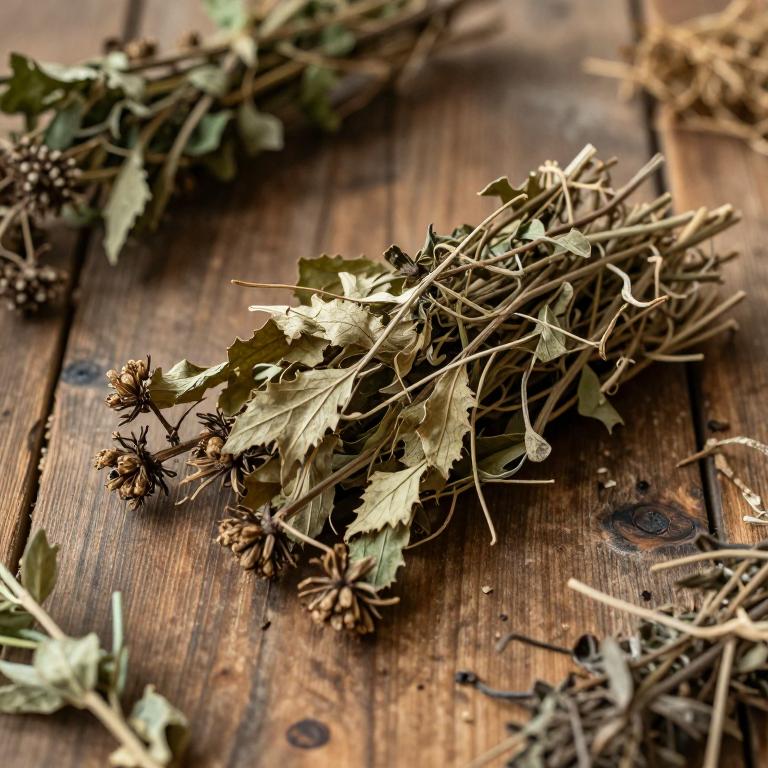
Names and Synonyms
Scientific Names
Accepted name
Arisaema consanguineumDistribution
This plant exhibits a diverse range of locations across various regions of China. Its presence is documented in the South-Central part of the country, highlighting its adaptability to different climates. Additionally, the species can be found as far north as Inner Mongolia and throughout China North-Central. It also extends into the high-altitude environments of Qinghai. Finally, the distribution continues into the humid landscapes of China Southeast.
| Region | Area |
|---|---|
| China | China South-Central |
| China | Inner Mongolia |
| China | China North-Central |
| China | Qinghai |
| China | China Southeast |
| China | Tibet |
| Eastern Asia | Taiwan |
| Indian Subcontinent | Assam |
| Indian Subcontinent | East Himalaya |
| Indian Subcontinent | Nepal |
Sources: The World Checklist of Vascular Plants (WCVP)
Botanical Identification
Ecology
The ecology of Arisaema consanguineum is defined by its specific niche within montane environments, where it thrives across a distinct vertical gradient. This species is predominantly found in high-altitude habitats, occupying an elevational range that extends from a minimum of 1400 m AMSL to a maximum of 2900 m AMSL. Within these altitudinal belts, the plant adapts to the varying climatic conditions and moisture levels characteristic of mountain ecosystems, playing a role in the understory vegetation of its native range.
- Elevational range max:
- 2900 m AMSL
- Elevational range min:
- 1400 m AMSL
Life history
The life history of Arisaema consanguineum is characterized by its specialized survival strategies and seasonal growth cycles. As a perennial herb, its existence is defined by its status as a geophyte, meaning it relies on underground storage organs, such as corms or tubers, to endure unfavorable environmental conditions and periods of dormancy. This underground architecture further classifies it as a cryptophyte, as its vital regenerative tissues are concealed beneath the soil surface to protect them from external stressors like freezing temperatures or drought. During the favorable growing seasons, the plant emerges from its subterranean state to produce foliage and inflorescences, but it spends a significant portion of its life cycle in a protected, dormant phase, utilizing its stored energy reserves to ensure successful regrowth in subsequent years.
- Life form :
- geophyte
- Life form :
- cryptophyte
Morphology
The morphology of Arisaema consanguineum is characterized by its growth form as a herb, exhibiting a non-woody structure throughout its vegetative development. As a terrestrial species, it grows directly in the soil rather than as an epiphyte, maintaining an independent existence without acting as a parasite on other organisms. While it possesses a climbing tendency, it functions as a self-supporting plant, requiring no external structures for its primary upright posture.
- Climber :
- self-supporting
- Epiphyte :
- terrestrial
- Growth form :
- herb
- Parasite :
- independent
- Woodiness :
- non-woody
Sources: Global Inventory of Floras and Traits (GIFT)
Chemicals
Arisaema consanguineum has 12 reported phytochemicals identified across 0 scientific publications and several other databases. The most consistently reported chemicals include ARSENIC, CALCIUM, COPPER, D-mannitol, IRON.
| Chemical | Supporting sources | Consensus |
|---|---|---|
| ARSENIC | 1 supporting sources | ★☆☆☆☆ |
| CALCIUM | 1 supporting sources | ★☆☆☆☆ |
| COPPER | 1 supporting sources | ★☆☆☆☆ |
| D-mannitol | 1 supporting sources | ★☆☆☆☆ |
| IRON | 1 supporting sources | ★☆☆☆☆ |
| MAGNESIUM | 1 supporting sources | ★☆☆☆☆ |
| MANGANESE | 1 supporting sources | ★☆☆☆☆ |
| POTASSIUM | 1 supporting sources | ★☆☆☆☆ |
| SAPONIN | 1 supporting sources | ★☆☆☆☆ |
| SODIUM | 1 supporting sources | ★☆☆☆☆ |
ARSENIC
- Dr. Duke
CALCIUM
- Dr. Duke
COPPER
- Dr. Duke
D-mannitol
- Dr. Duke
IRON
- Dr. Duke
MAGNESIUM
- Dr. Duke
MANGANESE
- Dr. Duke
POTASSIUM
- Dr. Duke
SAPONIN
- Dr. Duke
SODIUM
- Dr. Duke
Activities
Arisaema consanguineum has 166 reported activities identified across 0 scientific publications and several other databases. The most consistently reported activities include ACE-Inhibitor, Allergenic, Analgesic, Anesthetic, Angiotensin-Receptor-Blocker.
| Activity | Supporting sources | Consensus |
|---|---|---|
| ACE-Inhibitor | 1 supporting sources | ★☆☆☆☆ |
| Allergenic | 1 supporting sources | ★☆☆☆☆ |
| Analgesic | 1 supporting sources | ★☆☆☆☆ |
| Anesthetic | 1 supporting sources | ★☆☆☆☆ |
| Angiotensin-Receptor-Blocker | 1 supporting sources | ★☆☆☆☆ |
| Anorexic | 1 supporting sources | ★☆☆☆☆ |
| AntiBPH | 1 supporting sources | ★☆☆☆☆ |
| AntiCFS | 1 supporting sources | ★☆☆☆☆ |
| AntiCrohn's | 1 supporting sources | ★☆☆☆☆ |
| AntiHIV | 1 supporting sources | ★☆☆☆☆ |
ACE-Inhibitor
- Dr. Duke
Allergenic
- Dr. Duke
Analgesic
- Dr. Duke
Anesthetic
- Dr. Duke
Angiotensin-Receptor-Blocker
- Dr. Duke
Anorexic
- Dr. Duke
AntiBPH
- Dr. Duke
AntiCFS
- Dr. Duke
AntiCrohn's
- Dr. Duke
AntiHIV
- Dr. Duke