Mexican-poppy
Argemone ochroleuca · Accepted scientific name
Scientific literature: Very Sparse (10 studies) · ★☆☆☆☆
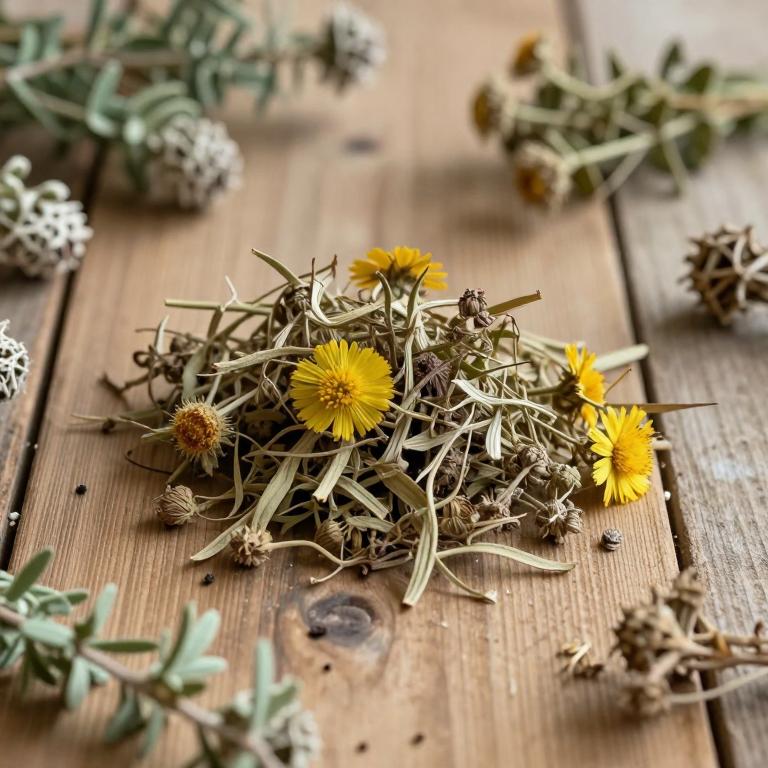
Mexican-poppy, scientifically known as Argemone ochroleuca, is a versatile medicinal herb found across tropical regions. Renowned for its bright yellow blooms, this plant contains bioactive alkaloids used traditionally to treat skin ailments, inflammation, and respiratory issues. Understanding its potent chemical properties is essential for exploring its therapeutic potential.
Names and Synonyms
Common Names
- Mexican-poppy
- pale Mexican-poppy
- prickly-poppy
- white-flower Mexican-poppy
- Mexican Poppy
- White-Flowered Mexican
Scientific Names
Accepted name
Argemone ochroleucaSynonyms
- Argemone mexicana var. ochroleuca
- Argemone mexicana subsp. ochroleuca
- Papaver mexicanum var. barclayana
- Argemone mexicana var. alba
- Argemone ochroleuca subsp. stenopetala
- Argemone ochroleuca var. stenopetala
- Argemone intermedia var. stenopetala
- Argemone barclayana
- Argemone intermedia
- Argemone sulphurea
- Argemone stenopetala
Regional and Traditional Names
Spanish:
- chicalote
- Cardo santo
German:
- Bleicher Stachelmohn
Sources: Wikidata, Catalogue of Life
Taxonomical Classification
This plant belongs to the kingdom Plantae and the phylum Streptophyta, falling under the class Equisetopsida and subclass Magnoliidae. It is classified within the order Ranunculales and the family Papaveraceae. Ultimately, its taxonomic identity is defined by its placement in the genus Argemone.
| Rank | Classification |
|---|---|
| Kingdom | Plantae |
| Phylum | Streptophyta |
| Class | Equisetopsida |
| Subclass | Magnoliidae |
| Order | Ranunculales |
| Family | Papaveraceae |
| Genus | Argemone |
Sources: The World Checklist of Vascular Plants (WCVP)
Distribution
This plant exhibits a diverse geographical range that spans across two distinct major regions. Within the Macaronesia archipelago, its presence is documented in both the Canary Islands and Madeira. Moving toward the African continent, the species is widely distributed throughout Southern Africa. Specifically, it can be found growing in the landscapes of Botswana and the Cape Provinces. Furthermore, its natural habitat extends into the mountainous terrain of Lesotho.
| Region | Area |
|---|---|
| Macaronesia | Canary Is. |
| Macaronesia | Madeira |
| Southern Africa | Botswana |
| Southern Africa | Cape Provinces |
| Southern Africa | Lesotho |
| Southern Africa | Namibia |
| Southern Africa | KwaZulu-Natal |
| Southern Africa | Free State |
| Southern Africa | Eswatini |
| Southern Africa | Northern Provinces |
Sources: The World Checklist of Vascular Plants (WCVP)
Botanical Identification
Ecology
The ecology of Argemone ochroleuca is characterized by its ability to thrive across a broad altitudinal gradient, ranging from sea level (0 m AMSL) up to an elevation of 1850 m AMSL. This species is primarily found in lowland habitats, where it adapts to various environmental conditions within these lower-lying regions. To navigate survival pressures within its ecosystem, the plant possesses active defense mechanisms, allowing it to withstand herbivory and environmental stressors.
- Defense :
- yes
- Elevational range max:
- 1850 m AMSL
- Elevational range min:
- 0 m AMSL
- Habitat :
- Lowland
Life history
The life history of Argemone ochroleuca is characterized by an annual lifecycle, meaning the plant completes its entire developmental sequence—from germination to seed production—within a single growing season. As a therophyte, its survival strategy relies on the production of a large number of resistant seeds that remain dormant in the soil during unfavorable conditions, allowing the species to reappear when environmental triggers become optimal. This life history pattern enables the plant to rapidly colonize disturbed habitats and open spaces, utilizing its seasonal growth spurt to maximize reproductive output before the onset of senescence.
- Life form :
- therophyte
- Lifecycle :
- annual
Morphology
The morphology of Argemone ochroleuca is characterized by its growth form as a non-woody herb and forb. It is a self-supporting plant that does not function as a climber or a liana, maintaining an independent life cycle without acting as a parasite or an epiphyte. As a terrestrial species, it grows in non-aquatic environments. The plant exhibits significant variability in its stature, with heights ranging from a minimum of 0.2 m to a maximum of 1.5 m, maintaining an average plant height of approximately 0.4 m.
- Aquatic :
- terrestrial
- Climber :
- self-supporting
- Epiphyte :
- terrestrial
- Growth form :
- herb
- Growth form :
- forb
- Parasite :
- independent
- Plant height max:
- 1.5 m
- Plant height mean:
- 0.4 m
- Plant height min:
- 0.2 m
- Woodiness :
- non-woody
Physiology
The physiology of Argemonne ochroleuca is characterized by a C3 photosynthetic pathway, which dictates its carbon fixation processes and metabolic efficiency. The vegetative structure is defined by its leaf morphology, featuring narrow-elliptic leaf forms that optimize light interception and gas exchange. These leaves exhibit consistent dimensional parameters, maintaining a uniform leaf width of 3.5 cm (ranging from a minimum to a maximum of 3.5 cm) and reaching a maximum leaf length of 12 cm. These morphological traits work in conjunction with its C3 metabolism to support the plant's growth and physiological functions.
- Leaf form :
- narrow-elliptic
- Leaf length max:
- 12 cm
- Leaf width mean:
- 3.5 cm
- Photosynthetic pathway :
- C3
Reproduction
The reproduction of Argemone ochroleuca is characterized by a continuous flowering cycle that can span the entire year, starting as early as January and extending through December. The plant produces distinct yellow flowers, which typically range in length from a minimum of 2 cm to a maximum of 2.5 cm. Following pollination, the plant develops dry, capsule-type fruits. These capsules vary in size, with an average length of 2.3 cm (ranging from 2 cm to 5 cm) and an average width of 1.1 cm (ranging from 1 cm to 1.8 cm). The fruit is dehiscence-based, meaning it opens at maturity to release its seeds. The seeds themselves are quite small, maintaining a consistent length of 1.5 mm. They possess a mean mass of approximately 0.002733333 g (ranging from 0.0025 g to 0.0032 g) and a mean volume of 1.8 mm³. These seeds are dispersed via a hydrochorous syndrome, utilizing water as a primary medium for movement and colonization.
- Dehiscence :
- dehiscent
- Dispersal syndrome :
- hydrochorous
- Flower colour :
- yellow
- Flower length max:
- 2.5 cm
- Flower length min:
- 2 cm
- Flowering time :
- Jan
- Flowering time :
- Dec
- Fruit dryness :
- dry
- Fruit length max:
- 5 cm
- Fruit length mean:
- 2.3 cm
- Fruit length min:
- 2 cm
- Fruit type :
- capsule
- Fruit width max:
- 1.8 cm
- Fruit width mean:
- 1.1 cm
- Fruit width min:
- 1 cm
- Seed length mean:
- 1.5 mm
- Seed mass max:
- 0.0032 g
- Seed mass mean:
- 0.002733333 g
- Seed mass min:
- 0.0025 g
- Seed volume max:
- 1.8 mm³
Sources: Global Inventory of Floras and Traits (GIFT)
Chemicals
Argemone ochroleuca has 4 reported phytochemicals identified across 0 scientific publications and several other databases. The most consistently reported chemicals include Dihydromyrcenol, TERPINENE-4-OL, toluene, trans-Chrysanthenyl acetate.
| Chemical | Supporting sources | Consensus |
|---|---|---|
| Dihydromyrcenol | 1 supporting sources | ★☆☆☆☆ |
| TERPINENE-4-OL | 1 supporting sources | ★☆☆☆☆ |
| toluene | 1 supporting sources | ★☆☆☆☆ |
| trans-Chrysanthenyl acetate | 1 supporting sources | ★☆☆☆☆ |
Dihydromyrcenol
- Plants (Basel, Switzerland)
TERPINENE-4-OL
- Plants (Basel, Switzerland)
toluene
- Plants (Basel, Switzerland)
trans-Chrysanthenyl acetate
- Plants (Basel, Switzerland)
Activities
Argemone ochroleuca has 1 reported activities identified across 0 scientific publications and several other databases. The most consistently reported activities include Antifungal.
| Activity | Supporting sources | Consensus |
|---|---|---|
| Antifungal | 1 supporting sources | ★☆☆☆☆ |
Antifungal
- Plants (Basel, Switzerland)
Conditions
Argemone ochroleuca has 5 reported investigations on conditions identified across 0 scientific publications and several other databases. The most consistently reported conditions include asthma, cancer, germination, hypertension, infertility.
| Condition | Supporting sources | Consensus |
|---|---|---|
| Asthma | 1 supporting sources | ★☆☆☆☆ |
| Cancer | 1 supporting sources | ★☆☆☆☆ |
| Germination | 1 supporting sources | ★☆☆☆☆ |
| Hypertension | 1 supporting sources | ★☆☆☆☆ |
| Infertility | 1 supporting sources | ★☆☆☆☆ |
Asthma
- African journal of traditional, complementary, and alternative medicines : AJTCAM
Cancer
- Journal of Cancer
Germination
- Plants (Basel, Switzerland)
Hypertension
- African journal of traditional, complementary, and alternative medicines : AJTCAM
Infertility
- African journal of traditional, complementary, and alternative medicines : AJTCAM
Preparations
Argemone ochroleuca has 2 reported preparations identified across 0 scientific publications and several other databases. The most consistently reported preparations include M6LFr extract, essential oil.
| Preparation | Supporting sources | Consensus |
|---|---|---|
| M6lfr extract | 1 supporting sources | ★☆☆☆☆ |
| Essential oil | 1 supporting sources | ★☆☆☆☆ |
M6lfr extract
- Plants (Basel, Switzerland)
Essential oil
- Plants (Basel, Switzerland)