Lesser Burdock
Arctium minus · Accepted scientific name
Scientific literature: Very Sparse (8 studies) · ★☆☆☆☆
Lesser Burdock, scientifically known as Arctium minus, is a versatile perennial herb renowned for its therapeutic properties. Historically utilized in traditional medicine, this plant offers significant antioxidant and anti-inflammatory benefits. Often used to support skin health and detoxification, it remains a vital subject in botanical and pharmacological studies.
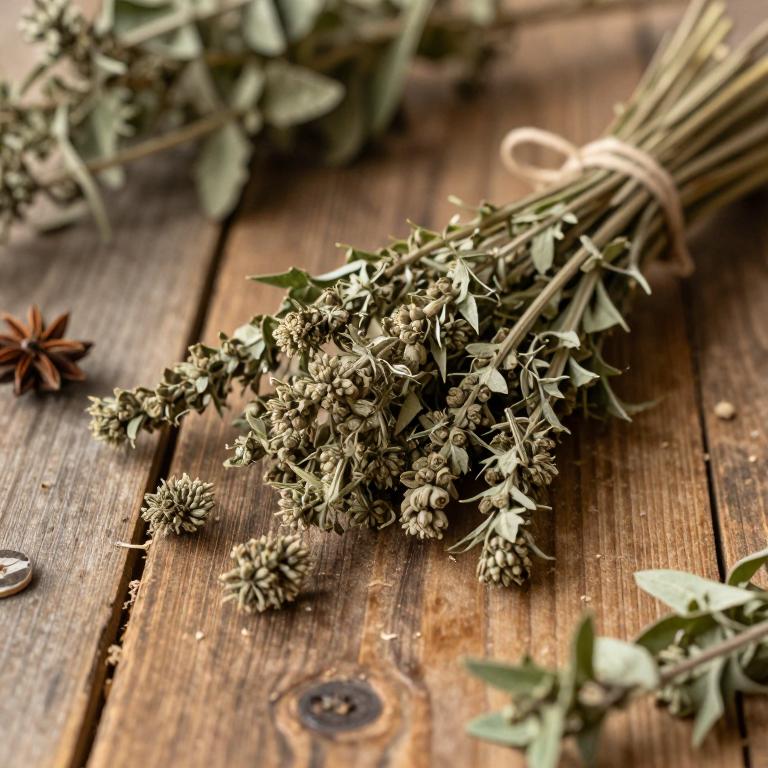
Names and Synonyms
Common Names
- lesser burdock
- common burdock
- cuckoo-button
- llepassa
Scientific Names
Accepted name
Arctium minusSynonyms
- Lappa minor subsp. pubens
- Arctium minus subsp. tibidatensis
- Arctium lappa var. pubens
- Arctium lappa subsp. pubens
- Lappa minor var. pubens
- Arctium degenii var. tibidatensis
- Arctium chabertii subsp. balearicum
- Lappa minor
- Arctium nemorosum subsp. tchihatchefii
- Arctium montanum
- Arctium nemorosum subsp. pubens
- Bardana minor
- Arctium minus subsp. mediterraneum
- Lappa conglomerata
- Lappa bardana subsp. minor
- Lappa major subsp. pubens
- Arctium tomentosum subsp. pubens
- Arctium lappa var. minus
- Arctium nemorosum var. pubens
- Arctium minus f. laciniatum
- Arctium minus f. leucocephalum
- Arctium minus f. pallidum
- Arctium minus var. corymbosum
- Arctium batavum
- Arctium degenii
- Lappa vulgaris var. minor
- Arctium minus subsp. batavum
- Lappa pubens
- Arcion minus
- Arctium conglomeratum
- Arctium pubens
- Arctium melanoceps
- Arctium minus subsp. pubens
- Arctium minus var. melanoceps
Regional and Traditional Names
Spanish:
- Lappa bardana ssp minor
- Lappa bardana ssp. minor
- Barbana
- Lappa minor
- Hierba de los amores
- bardana
- lampazo
- bardana menor
- lampazo menor
German:
- Kleine Klette
- Flaum-Klette
- kleine Klette
- Gewöhnliche Kleine Klette
French:
- Petite bardane
- petite bardane
- artichaut
- bardane
- bardane mineure
- bourrier
- chou bourache
- cibourroche
- graquias
- petite bardane
- rapace
- rhubarbe sauvage
- tabac du diable
- toques
- Bardane a petits capitules
- Bardane à petites têtes
- Bardane à petits capitules
Sources: Wikidata, Catalogue of Life
Taxonomical Classification
This plant, known as Arctium minus, belongs to the kingdom Plantae and the phylum Streptophyta. Within the class Equisetopsida and subclass Magnoliidae, it is classified under the order Asterales. Finally, it is a member of the family Asteraceae and falls under the genus Arctium.
| Rank | Classification |
|---|---|
| Kingdom | Plantae |
| Phylum | Streptophyta |
| Class | Equisetopsida |
| Subclass | Magnoliidae |
| Order | Asterales |
| Family | Asteraceae |
| Genus | Arctium |
Sources: The World Checklist of Vascular Plants (WCVP)
Distribution
This plant, known as Arctium minus, exhibits a specific distribution across various regions of Northern Europe. Its presence is well-documented in the coastal and inland areas of Denmark. Furthermore, the species can be found growing within the landscapes of Finland. It is also widely distributed throughout the territories of Great Britain and Ireland. Finally, its range extends further north into the natural environments of Norway.
| Region | Area |
|---|---|
| Northern Europe | Denmark |
| Northern Europe | Finland |
| Northern Europe | Great Britain |
| Northern Europe | Ireland |
| Northern Europe | Norway |
| Northern Europe | Sweden |
| Middle Europe | Austria |
| Middle Europe | Belgium |
| Middle Europe | Czechia-Slovakia |
| Middle Europe | Germany |
Sources: The World Checklist of Vascular Plants (WCVP)
Botanical Identification
Ecology
The ecology of Arctium minus is characterized by its broad adaptability across varying altitudes and landscapes, primarily thriving in lowland environments. This species demonstrates a significant vertical distribution, occupying an elevational range that begins at sea level (0 m AMSL) and extends up to a maximum altitude of 2200 m AMSL. This wide altitudinal tolerance allows the plant to colonize diverse topographical zones, provided the fundamental habitat requirements of lowland or mid-altitude regions are met.
- Elevational range max:
- 2200 m AMSL
- Elevational range min:
- 0 m AMSL
- Habitat :
- Lowland
Life history
The life history of Arctium minus is characterized by a biennial lifecycle, meaning it typically completes its developmental stages over a period of two years. As a hemicryptophyte, the plant protects its perennating buds at the soil surface level during unfavorable seasons, ensuring its survival through varying environmental conditions. Despite its seasonal growth patterns, the plant exhibits an evergreen deciduousness trait, maintaining its physiological integrity through specific structural adaptations. This combination of a biennial lifecycle and a hemicryptophyte life form allows the species to establish a robust presence in its ecological niche.
- Deciduousness :
- evergreen
- Life form :
- hemicryptophyte
- Lifecycle :
- biennial
Morphology
The morphology of Arctium minus is characterized by its growth form as a non-woody herb and forb. It is a self-supporting plant that does not function as a climber, liana, or vine, and it grows as an independent organism rather than a parasite. This terrestrial species typically inhabits non-aquatic environments. In terms of stature, the plant exhibits significant variability in height, with a minimum height of 0.5 m, a mean height of approximately 0.975 m, and a maximum potential height reaching up to 3 m.
- Aquatic :
- terrestrial
- Climber :
- self-supporting
- Epiphyte :
- terrestrial
- Growth form :
- herb
- Growth form :
- forb
- Parasite :
- independent
- Plant height max:
- 3 m
- Plant height mean:
- 0.975 m
- Plant height min:
- 0.5 m
- Woodiness :
- non-woody
Physiology
The physiology of Arctium minus is characterized by a C3 photosynthetic pathway, a common mechanism for temperate species that optimizes carbon fixation under moderate environmental conditions. The plant exhibits significant morphological variation in its foliage, with leaf widths ranging from a minimum of 2 cm to a maximum of 27.5 cm, resulting in a mean leaf width of 27.5 cm. These leaves are expansive, reaching a maximum length of 50 cm and maintaining a mean leaf size of 1170 cm². The efficiency of its leaf structure is further reflected in a mean Specific Leaf Area (SLA) of 240.67 cm²/g, indicating its resource allocation strategy between leaf area and biomass. Furthermore, the plant does not function as a nitrogen fixer, relying instead on the uptake of nitrogen available within the soil substrate to support its growth and metabolic processes.
- Leaf length max:
- 50 cm
- Leaf size mean:
- 1170 cm²
- Leaf width mean:
- 27.5 cm
- Leaf width min:
- 2 cm
- Nitrogen fixer :
- no
- Photosynthetic pathway :
- C3
- Specific Leaf Area (SLA) mean:
- 240.67 cm²/g
Reproduction
The reproduction of Arctium minus is primarily sexual, characterized by bisexual flowers that facilitate the plant's reproductive cycle. The flowering period typically begins in July and extends through September. During this phase, the plant relies on biotic pollination, specifically utilizing an insect pollination syndrome to achieve fertilization, as self-fertilization is noted to be absent. The resulting fruit is an indehiscent achene with an average length of 0.7 cm. This plant is highly prolific, producing a vast quantity of seeds, with counts often exceeding 1,000 seeds per fruit. The individual seeds exhibit a consistent length of 8 mm (ranging from a minimum to a maximum of 8 mm) and have a mean seed mass of approximately 0.010592143 g, with values ranging from a minimum of 0.005 g to a maximum of 0.01737 g. Regarding dispersal, Arctium minus employs an unspecialized strategy that specifically includes epizoochorous mechanisms, allowing seeds to be carried by animals. Asexual reproduction is absent in this species.
- Dehiscence :
- indehiscent
- Dispersal syndrome :
- unspecialized
- Dispersal syndrome :
- epizoochorous
- Flowering time :
- Jul
- Flowering time :
- Sep
- Fruit length mean:
- 0.7 cm
- Fruit type :
- achene
- Pollination syndrome :
- insect
- Pollination syndrome :
- biotic
- Reproduction asexual :
- absent
- Reproduction sexual :
- bisexual
- Seed length mean:
- 8 mm
- Seed mass max:
- 0.01737 g
- Seed mass mean:
- 0.010592143 g
- Seed mass min:
- 0.005 g
- Seeds_per_fruit :
- >1000
- Self fertilization :
- absent
Sources: Global Inventory of Floras and Traits (GIFT)
Plant Parts
Arctium minus has 1 reported plant parts identified across 1 scientific publications and several other databases that are studied for medicinal purposes. The most consistently reported plant part include fruit.
| Plant part | Supporting sources | Consensus |
|---|---|---|
| Fruit | 1 supporting sources | ★☆☆☆☆ |
Fruit
- Plant foods for human nutrition (Dordrecht, Netherlands)
Chemicals
Arctium minus has 3 reported phytochemicals identified across 1 scientific publications and several other databases. The most consistently reported chemicals include Fatty acids, LINOLELAIDIC ACID, Lignans.
| Chemical | Supporting sources | Consensus |
|---|---|---|
| Fatty acids | 1 supporting sources | ★☆☆☆☆ |
| LINOLELAIDIC ACID | 1 supporting sources | ★☆☆☆☆ |
| Lignans | 1 supporting sources | ★☆☆☆☆ |
Fatty acids
- Plant foods for human nutrition (Dordrecht, Netherlands)
LINOLELAIDIC ACID
- Plant foods for human nutrition (Dordrecht, Netherlands)
Lignans
- Plant foods for human nutrition (Dordrecht, Netherlands)
Activities
Arctium minus has 1 reported activities identified across 1 scientific publications and several other databases. The most consistently reported activities include Cytotoxic.
| Activity | Supporting sources | Consensus |
|---|---|---|
| Cytotoxic | 1 supporting sources | ★☆☆☆☆ |
Cytotoxic
- Journal of ethnopharmacology
Conditions
Arctium minus has 3 reported investigations on conditions identified across 1 scientific publications and several other databases. The most consistently reported conditions include bacterial infections, immune disorders, wounds.
| Condition | Supporting sources | Consensus |
|---|---|---|
| Bacterial infections | 1 supporting sources | ★☆☆☆☆ |
| Immune disorders | 1 supporting sources | ★☆☆☆☆ |
| Wounds | 1 supporting sources | ★☆☆☆☆ |
Bacterial infections
- Journal of ethnopharmacology
Immune disorders
- Teratogenesis, carcinogenesis, and mutagenesis
Wounds
- Journal of ethnopharmacology