Araucaria excelsa
Araucaria heterophylla · Accepted scientific name
Scientific literature: Very Sparse (2 studies) · ★☆☆☆☆
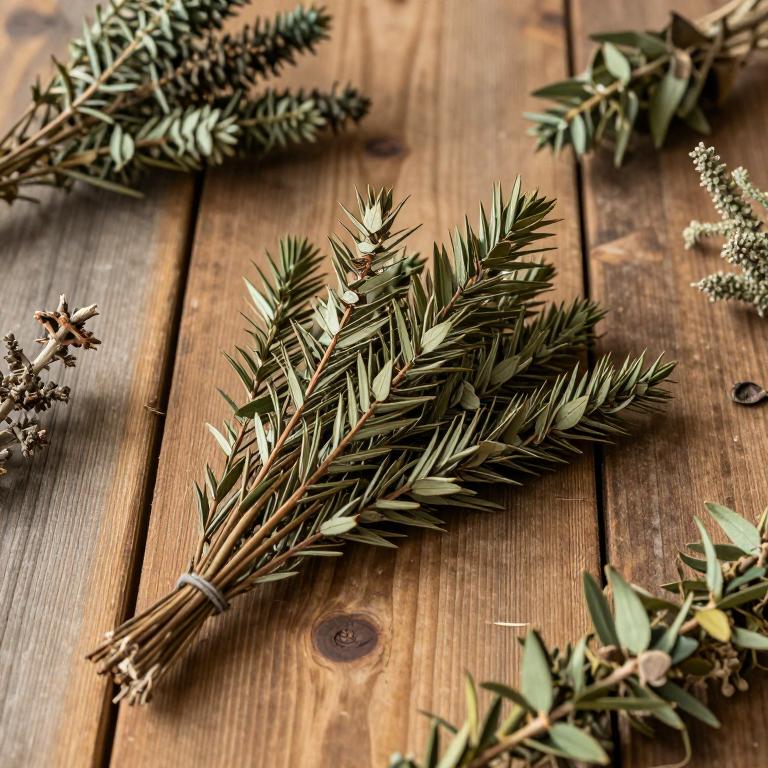
Araucarica excelsa, scientifically known as Araucarica heterophyllia, is a striking coniferous evergreen native to Australia. While primarily celebrated as an ornamental landscape tree, it holds traditional significance. Its unique architectural form and resilient foliage make it a notable botanical specimen, often studied for its distinct ecological and aesthetic properties.
Names and Synonyms
Common Names
- Norfolk Island Pine
- Star Pine
- Norfolk Island-pine
- Norfolk Island araucaria
Scientific Names
Accepted name
Araucaria heterophyllaSynonyms
- Eutassa heterophylla
- Araucaria excelsa var. glauca
- Eutacta excelsa var. glauca
- Eutacta excelsa var. monstrosa
- Eutacta excelsa var. variegata-alba
- Eutacta excelsa var. aurea-variegata
- Araucaria excelsa var. speciosissima
- Pinus columbaria
- Abies columbaria
Regional and Traditional Names
Spanish:
- Pino de la Isla Norfolk
- Araucaria excelsa
- araucaria de Norfolk
- pino de la isla Norfolk
German:
- Zimmertanne
- Norfolk-Tanne
- Zimmertanne
French:
- Pin de norfolk
- Araucarie de Norfolk
- Araucaria
- Pin de Norfolk
- Araucarie de Norfolk
Sources: Wikidata, Catalogue of Life
Taxonomical Classification
This plant belongs to the kingdom Plantae and is classified under the phylum Streptophyta and the class Equisetopsida. Within the subclass Pinidae and order Pinales, it is further categorized into the family Araucariaceae. Finally, its specific taxonomic placement is within the genus Araucarica.
| Rank | Classification |
|---|---|
| Kingdom | Plantae |
| Phylum | Streptophyta |
| Class | Equisetopsida |
| Subclass | Pinidae |
| Order | Pinales |
| Family | Araucariaceae |
| Genus | Araucaria |
Sources: The World Checklist of Vascular Plants (WCVP)
Distribution
This plant exhibits a scattered geographical distribution across several distinct oceanic and continental regions. In the Middle Atlantic Ocean, its presence can be noted on the remote island of Ascension. Moving toward the Indian Subcontinent, it is found within the borders of Bangladesh. The species also reaches the Pacific, specifically inhabiting the Norfolk Islands near Australia. Finally, its range extends to the northern parts of New Zealand.
| Region | Area |
|---|---|
| Middle Atlantic Ocean | Ascension |
| Indian Subcontinent | Bangladesh |
| Australia | Norfolk Is. |
| New Zealand | New Zealand North |
Sources: The World Checklist of Vascular Plants (WCVP)
Botanical Identification
Ecology
The ecology of Araucaria heterophyllas is characterized by a broad altitudinal distribution and specific environmental preferences. This species thrives across a diverse vertical gradient, occupying an elevational range that begins as low as 10 m AMSL and extends to a maximum of 2750 m AMSL. Its habitat is predominantly coastal, where it integrates into maritime ecosystems, though its ability to inhabit varying elevations allows it to persist in both lowland seaside environments and high-altitude montane landscapes.
- Elevational range max:
- 2750 m AMSL
- Elevational range min:
- 10 m AMSL
- Habitat :
- Coastal
Life history
The life history of Araucaria heterophyllas is characterized by its status as a perennial organism, ensuring a long-lived presence within its ecological niche. As a phanerophyte, specifically classified under both phanerophyte life forms, the plant maintains its buds well above the ground level, typically forming large, woody structures that support its growth over many years. Its foliage remains consistent throughout the seasons as an evergreen, providing continuous photosynthetic activity without the need for seasonal leaf shedding.
- Deciduousness :
- evergreen
- Life form :
- phanerophyte
- Lifecycle :
- perennial
Morphology
The morphology of Araucaria heterophylla is characterized by its robust growth form as a woody tree. It is a terrestrial, self-supporting species that functions as an independent organism, lacking any parasitic or epiphytic tendencies. As a large tree, it exhibits significant vertical development, with a mean plant height of approximately 17.5 m, though it is capable of reaching a maximum height of up to 70 m.
- Aquatic :
- terrestrial
- Climber :
- self-supporting
- Epiphyte :
- terrestrial
- Growth form :
- tree
- Parasite :
- independent
- Plant height max:
- 70 m
- Plant height mean:
- 17.5 m
- Woodiness :
- woody
Physiology
The physiology of Araucaria hetero phyllia is characterized by a C3 photosynthetic pathway, which governs its carbon fixation processes and metabolic efficiency. The morphological aspects of its foliage play a critical role in its gas exchange and light interception, with leaves typically measuring between 1 cm and 1.25 cm in length. These leaves are relatively narrow, exhibiting a width ranging from a minimum of 0.3 cm to a maximum of 0.6 cm. Furthermore, the plant does not function as a nitrogen fixer, meaning it relies on the uptake of available nitrogen from the soil rather than through symbiotic biological nitrogen fixation.
- Leaf length max:
- 1.25 cm
- Leaf length min:
- 1 cm
- Leaf width max:
- 0.6 cm
- Leaf width min:
- 0.3 cm
- Nitrogen fixer :
- no
- Photosynthetic pathway :
- C3
Reproduction
The reproduction of Araucaria heterophylla is characterized by a strictly sexual process, as asexual reproduction is absent. The plant relies on abiotic pollination mechanisms, specifically utilizing wind as its primary pollination syndrome. In terms of reproductive structures, the fruit exhibits a mean length and width of 10 cm. Following fertilization, the seeds are produced with a mean mass of approximately 1.1295586 g, though individual seed mass can vary, ranging from a minimum of 1.744586 g to a maximum of 2.5 g. The dispersal syndrome of the species is classified as anemochorous, meaning the seeds are dispersed via wind. Furthermore, the species exhibits a lack of self-fertilization, necessitating cross-pollination to ensure genetic diversity.
- Dispersal syndrome :
- anemochorous
- Fruit length mean:
- 10 cm
- Fruit width mean:
- 10 cm
- Pollination syndrome :
- wind
- Pollination syndrome :
- abiotic
- Reproduction asexual :
- absent
- Seed mass max:
- 2.5 g
- Seed mass mean:
- 1.1295586 g
- Seed mass min:
- 1.744586 g
- Self fertilization :
- absent
Sources: Global Inventory of Floras and Traits (GIFT)
Activities
Araucaria heterophylla has 2 reported activities identified across 0 scientific publications and several other databases. The most consistently reported activities include Phytotoxic, Repellent.
| Activity | Supporting sources | Consensus |
|---|---|---|
| Phytotoxic | 1 supporting sources | ★☆☆☆☆ |
| Repellent | 1 supporting sources | ★☆☆☆☆ |
Phytotoxic
- Chemistry & biodiversity
Repellent
- Chemistry & biodiversity
Preparations
Araucaria heterophylla has 4 reported preparations identified across 0 scientific publications and several other databases. The most consistently reported preparations include EO, REO, nanoemulsion formulations of Araucaria heterophylla and Azadirachta indica leaf extracts, resin essential oil.
| Preparation | Supporting sources | Consensus |
|---|---|---|
| Eo | 1 supporting sources | ★☆☆☆☆ |
| Reo | 1 supporting sources | ★☆☆☆☆ |
| Nanoemulsion formulations of araucaria heterophylla and azadirachta indica leaf extracts | 1 supporting sources | ★☆☆☆☆ |
| Resin essential oil | 1 supporting sources | ★☆☆☆☆ |
Eo
- Chemistry & biodiversity
Reo
- Chemistry & biodiversity
Nanoemulsion formulations of araucaria heterophylla and azadirachta indica leaf extracts
- Scientific reports
Resin essential oil
- Chemistry & biodiversity