Araucaria columnaris
Araucaria columnaris · Accepted scientific name
Scientific literature: Very Sparse (1 studies) · ★☆☆☆☆
, scientifically known as Araucarica columnaris, is a distinctive coniferous species valued for its unique architecture and potential medicinal properties. Often studied for its bioactive compounds, this plant offers intriguing possibilities in traditional wellness practices. Understanding its biological profile is essential for exploring its therapeutic applications in modern herbal medicine.
- Family
- Not available
- Native range
- Europe
- Parts used
- Leaf
- Common names
- Not available
- Scientific synonyms
- Not available
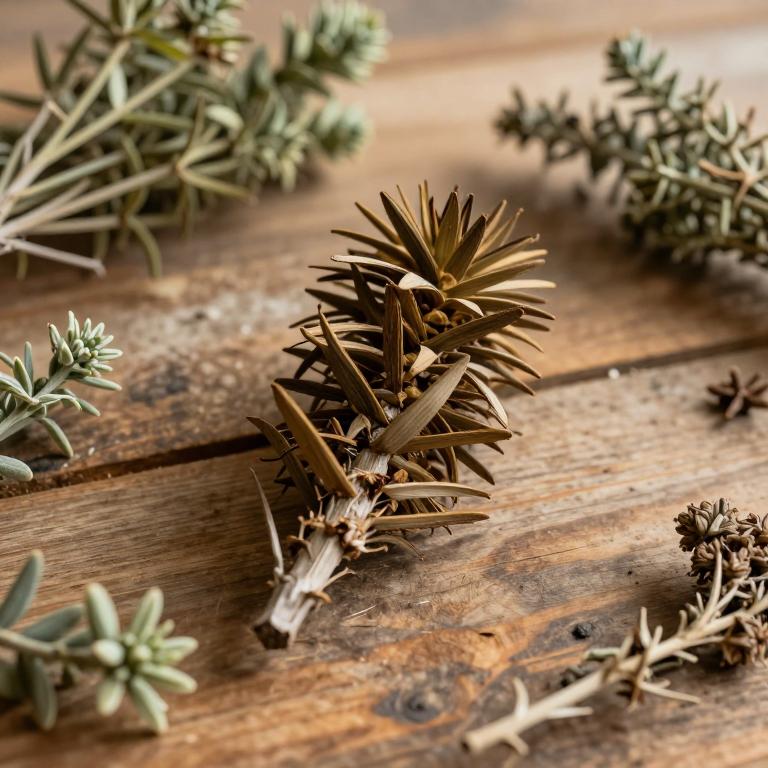
Names and Synonyms
Scientific Names
Accepted name
Araucaria columnarisDistribution
This plant exhibits a remarkably wide geographical distribution across several distinct oceanic and continental regions. In Southeastern Europe, it can be found growing in the area of Sicilia. Its presence extends to the Middle Atlantic Ocean on the remote island of Ascension. Furthermore, it inhabits the Western Indian Ocean within the Comoros archipelago and the Indian Subcontinent in Assam. Finally, the species is also documented in the Southwestern Pacific region of New Caledonia.
| Region | Area |
|---|---|
| Southeastern Europe | Sicilia |
| Middle Atlantic Ocean | Ascension |
| Western Indian Ocean | Comoros |
| Indian Subcontinent | Assam |
| Southwestern Pacific | New Caledonia |
| Southwestern Pacific | Tokelau-Manihiki |
| South-Central Pacific | Cook Is. |
| South-Central Pacific | Tubuai Is. |
Sources: The World Checklist of Vascular Plants (WCVP)
Botanical Identification
Ecology
The ecology of Araucararia columnaris is characterized by its preference for the humid conditions found within the rain forest habitat. This species occupies a diverse altitudinal gradient, thriving in environments ranging from sea level up to a maximum elevation of 1000 m AMSL.
- Elevational range max:
- 1000 m AMSL
- Elevational range min:
- 0 m AMSL
- Habitat :
- rain forest
Life history
The life history of Araucarica columnaris is characterized by a long-lived perennial lifecycle, allowing the individual to persist in its ecosystem for many years. As a phanerophyte, the plant maintains its photosynthetic organs on elevated branches well above the ground, a life form that is consistently categorized as a phanerophyte across different morphological classifications. Furthermore, the species exhibits an evergreen deciduousness, ensuring that its foliage remains functional and present throughout the seasons rather than shedding annually.
- Deciduousness :
- evergreen
- Life form :
- phanerophyte
- Lifecycle :
- perennial
Morphology
The morphology of Araucarica columnaris is characterized by its significant stature, functioning as a large tree that can reach a maximum plant height of 60 m, with a mean height also recorded at 60 m. As a woody organism, it possesses a robust, self-supporting structure that does not rely on climbing or liana-like habits, maintaining an independent growth form rather than acting as a parasite or an epiphyte. It is strictly a terrestrial plant, lacking any aquatic or semiaquatic adaptations, and it establishes itself firmly in the ground as a non-climbing, self-supporting tree.
- Aquatic :
- terrestrial
- Climber :
- self-supporting
- Epiphyte :
- terrestrial
- Growth form :
- tree
- Parasite :
- independent
- Plant height mean:
- 60 m
- Woodiness :
- woody
Physiology
The physiology of Araucararia columnaris is characterized by a C3 photosynthetic pathway, which dictates its carbon fixation processes and metabolic efficiency. The plant's foliage consists of small, specialized leaves with a length ranging from a minimum of 0.4 cm to a maximum of 0.7 cm, and a width that varies between 0.2 cm and 0.3 cm. Structurally, the plant does not exhibit succulence, meaning it lacks specialized water-storing tissues within its leaves. Furthermore, it does not function as a nitrogen fixer, relying instead on external soil nitrogen availability for its nutrient uptake and growth processes.
- Leaf length max:
- 0.7 cm
- Leaf length min:
- 0.4 cm
- Leaf width max:
- 0.3 cm
- Leaf width min:
- 0.2 cm
- Nitrogen fixer :
- no
- Photosynthetic pathway :
- C3
- Succulence :
- no
Reproduction
The reproduction of Araucararia columnaris is characterized by abiotic pollination mechanisms, specifically utilizing wind as the primary pollination syndrome to facilitate genetic exchange. Once fertilization occurs, the plant produces seeds that vary significantly in size and weight. The seed mass ranges from a minimum of 0.4 g to a maximum of 1.905 g, with an average seed mass of approximately 0.851470329 g. In terms of physical dimensions, the seeds are elongated, possessing a length that fluctuates between a minimum of 30 mm and a maximum of 35 mm. The dispersal of these seeds is categorized under the anthropochorous syndrome, indicating that human activity plays a role in their movement and distribution within the environment.
- Dispersal syndrome :
- anthropochorous
- Pollination syndrome :
- wind
- Pollination syndrome :
- abiotic
- Seed length max:
- 35 mm
- Seed length min:
- 30 mm
- Seed mass max:
- 1.905 g
- Seed mass mean:
- 0.851470329 g
- Seed mass min:
- 0.4 g
Sources: Global Inventory of Floras and Traits (GIFT)
Plant Parts
Araucaria columnaris has 1 reported plant parts identified across 1 scientific publications and several other databases that are studied for medicinal purposes. The most consistently reported plant part include leaf.
| Plant part | Supporting sources | Consensus |
|---|---|---|
| Leaf | 1 supporting sources | ★☆☆☆☆ |
Leaf
- Pakistan journal of biological sciences : PJBS
Preparations
Araucaria columnaris has 1 reported preparations identified across 1 scientific publications and several other databases. The most consistently reported preparations include crude extract.
| Preparation | Supporting sources | Consensus |
|---|---|---|
| Crude extract | 1 supporting sources | ★☆☆☆☆ |
Crude extract
- Pakistan journal of biological sciences : PJBS