devil's walking stick
Aralia spinosa · Accepted scientific name
Scientific literature: Very Sparse (23 studies) · ★☆☆☆☆
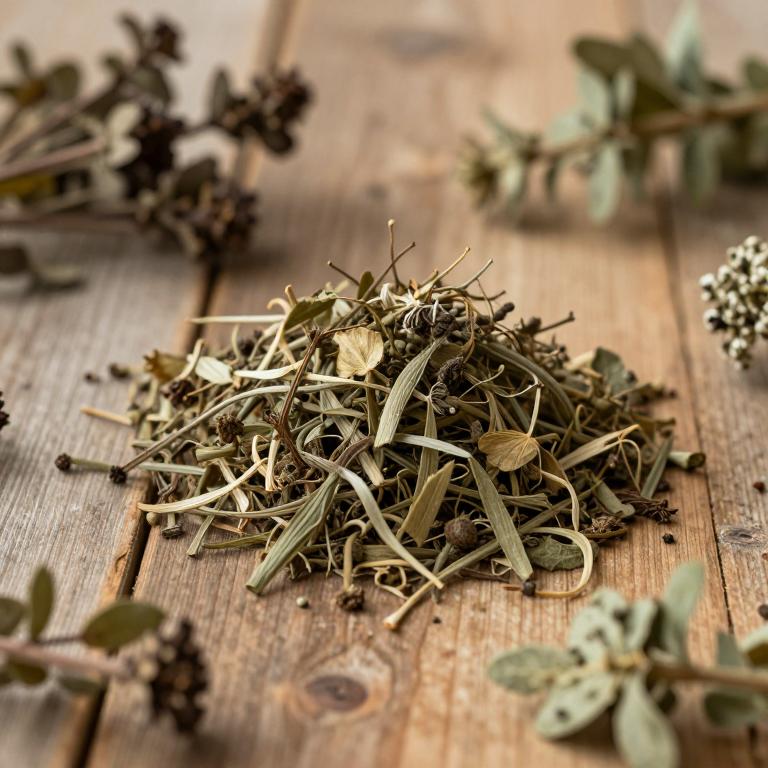
Devil's walking stick, scientifically known as Aralia spinosa, is a distinctive North American perennial shrub. Characterized by its formidable, spine-covered stems and large, compound leaves, this plant offers significant ethnobotanical value. Traditionally used in folk medicine, it possesses various bioactive properties currently being studied for their therapeutic potential.
Names and Synonyms
Common Names
- Hercules'-club
- American angelica-tree
- devil's walking-stick
- prickly-ash
Scientific Names
Accepted name
Aralia spinosaSynonyms
- Aralia leroana
- Chaerophyllum arborescens
- Aralia spinosa var. subinermis
- Aralia georgica
- Myrrhis arborescens
- Aralia spinosa var. inermis
- Aralia spinosa f. subinermis
- Aralia spinosa var. glabra
Regional and Traditional Names
German:
- Herkuleskeule
French:
- angélique en arbre
- angélique épineuse
- aralie épineuse
- bâton du diable
- Gourdin d'Hercule
Sources: Wikidata, Catalogue of Life
Taxonomical Classification
This plant belongs to the kingdom Plantae and is classified under the phylum Streptophyta and the class Equisetopsida. Within the subclass Magnoliidae, it is placed in the order Apiales and the family Araliaceae. Ultimately, its taxonomic identity is defined by the genus Aralia.
| Rank | Classification |
|---|---|
| Kingdom | Plantae |
| Phylum | Streptophyta |
| Class | Equisetopsida |
| Subclass | Magnoliidae |
| Order | Apiales |
| Family | Araliaceae |
| Genus | Aralia |
Sources: The World Checklist of Vascular Plants (WCVP)
Distribution
This plant exhibits a broad geographical distribution that spans across both Europe and North America. In Southeastern Europe, it can be found growing in Albania. Moving to North America, the species is well-established throughout several states in the North-Central U.S.A. specifically within Illinois, Iowa, and Missouri. Additionally, its presence extends further south into the North-Central U.S.A. region of Oklahoma. Consequently, the habitat of Aralia spinosa covers diverse territories across these different continents.
| Region | Area |
|---|---|
| Southeastern Europe | Albania |
| North-Central U.S.A. | Illinois |
| North-Central U.S.A. | Iowa |
| North-Central U.S.A. | Missouri |
| North-Central U.S.A. | Oklahoma |
| Northeastern U.S.A. | Connecticut |
| Northeastern U.S.A. | Indiana |
| Northeastern U.S.A. | Massachusetts |
| Northeastern U.S.A. | Michigan |
| Northeastern U.S.A. | New Jersey |
Sources: The World Checklist of Vascular Plants (WCVP)
Botanical Identification
Life history
The life history of Aralia spinosa is characterized by its status as a perennial plant, allowing it to persist in its environment through multiple growing seasons. In terms of its structural growth and survival strategies, the species exhibits complex life forms, functioning as both a phanerophyte, with its reproductive shoots elevated well above the ground, and as a nanophanerophyte, reflecting its specific architectural development and height characteristics within its ecological niche.
- Life form :
- nanophanerophyte
- Life form :
- phanerophyte
- Lifecycle :
- perennial
Morphology
The morphology of Aralia spinosa is characterized by a woody growth form, functioning primarily as a shrub or a small tree. It is a self-supporting plant that does not require climbing structures, as it maintains a robust, independent stature. The plant typically reaches an average height of approximately 6.555 meters. As a terrestrial species, it grows in soil-based environments rather than aquatic or epiphytic habitats. Furthermore, it is an independent organism, exhibiting no parasitic tendencies toward other vegetation.
- Aquatic :
- terrestrial
- Climber :
- self-supporting
- Epiphyte :
- terrestrial
- Growth form :
- tree
- Growth form :
- shrub
- Parasite :
- independent
- Plant height mean:
- 6.555 m
- Woodiness :
- woody
Physiology
The physiology of Aralia spinosa is characterized by a metabolic framework governed by the C3 photosynthetic pathway, wherein carbon fixation occurs via the enzyme RuBisCO during the Calvin cycle. This pathway involves the initial fixation of atmospheric carbon dioxide into a three-carbon molecule, oxaloacetate, which is a typical physiological adaptation for plants inhabiting temperate or mesic environments where water availability is sufficient to support stomatal conductance. The plant's metabolic processes are closely tied to its structural adaptations, utilizing its vascular system to facilitate the translocation of photosynthates from the leaves to various storage organs, such as its woody stem and root system. This C3 efficiency allows for steady biomass production and the synthesis of complex secondary metabolites, which are integral to its physiological defense mechanisms and overall growth regulation.
- Photosynthetic pathway :
- C3
Reproduction
The reproduction of Aralia spinosa is characterized by a highly flexible flowering period that can occur throughout nearly the entire year, spanning from December through September, though the exact timing remains variable depending on environmental conditions. The plant produces seeds with a relatively small mass, exhibiting a mean weight of approximately 0.0049035 g, with individual seeds ranging from a minimum of 0.0034625 g to a maximum of 0.016 g. Regarding its reproductive strategy, the species utilizes a zoochorous dispersal syndrome, relying on animals to aid in the spread of its seeds to new locations.
- Dispersal syndrome :
- zoochorous
- Flowering time :
- Dec
- Flowering time :
- Sep
- Seed mass max:
- 0.016 g
- Seed mass mean:
- 0.0049035 g
- Seed mass min:
- 0.0034625 g
Sources: Global Inventory of Floras and Traits (GIFT)
Chemicals
Aralia spinosa has 2 reported phytochemicals identified across 0 scientific publications and several other databases. The most consistently reported chemicals include PETROSELINIC ACID, oleic acid.
| Chemical | Supporting sources | Consensus |
|---|---|---|
| PETROSELINIC ACID | 1 supporting sources | ★☆☆☆☆ |
| oleic acid | 1 supporting sources | ★☆☆☆☆ |
PETROSELINIC ACID
- Dr. Duke
oleic acid
- Dr. Duke
Activities
Aralia spinosa has 19 reported activities identified across 0 scientific publications and several other databases. The most consistently reported activities include 5-Alpha-Reductase-Inhibitor, Allergenic, Alpha-Reductase-Inhibitor, Anemiagenic, Antialopecic.
| Activity | Supporting sources | Consensus |
|---|---|---|
| 5-Alpha-Reductase-Inhibitor | 1 supporting sources | ★☆☆☆☆ |
| Allergenic | 1 supporting sources | ★☆☆☆☆ |
| Alpha-Reductase-Inhibitor | 1 supporting sources | ★☆☆☆☆ |
| Anemiagenic | 1 supporting sources | ★☆☆☆☆ |
| Antialopecic | 1 supporting sources | ★☆☆☆☆ |
| Antiandrogenic | 1 supporting sources | ★☆☆☆☆ |
| Antiinflammatory | 1 supporting sources | ★☆☆☆☆ |
| Antileukotriene-D4 | 1 supporting sources | ★☆☆☆☆ |
| Antiseptic | 1 supporting sources | ★☆☆☆☆ |
| Cancer-Preventive | 1 supporting sources | ★☆☆☆☆ |
5-Alpha-Reductase-Inhibitor
- Dr. Duke
Allergenic
- Dr. Duke
Alpha-Reductase-Inhibitor
- Dr. Duke
Anemiagenic
- Dr. Duke
Antialopecic
- Dr. Duke
Antiandrogenic
- Dr. Duke
Antiinflammatory
- Dr. Duke
Antileukotriene-D4
- Dr. Duke
Antiseptic
- Scientific reports
Cancer-Preventive
- Dr. Duke
Conditions
Aralia spinosa has 1 reported investigations on conditions identified across 0 scientific publications and several other databases. The most consistently reported conditions include wound infections.
| Condition | Supporting sources | Consensus |
|---|---|---|
| Wound infections | 1 supporting sources | ★☆☆☆☆ |
Wound infections
- Scientific reports
Preparations
Aralia spinosa has 1 reported preparations identified across 0 scientific publications and several other databases. The most consistently reported preparations include extracts.
| Preparation | Supporting sources | Consensus |
|---|---|---|
| Extracts | 1 supporting sources | ★☆☆☆☆ |
Extracts
- Scientific reports