Aquilaria yunnanensis
Aquilaria yunnanensis · Accepted scientific name
Scientific literature: Very Sparse (18 studies) · ★☆☆☆☆
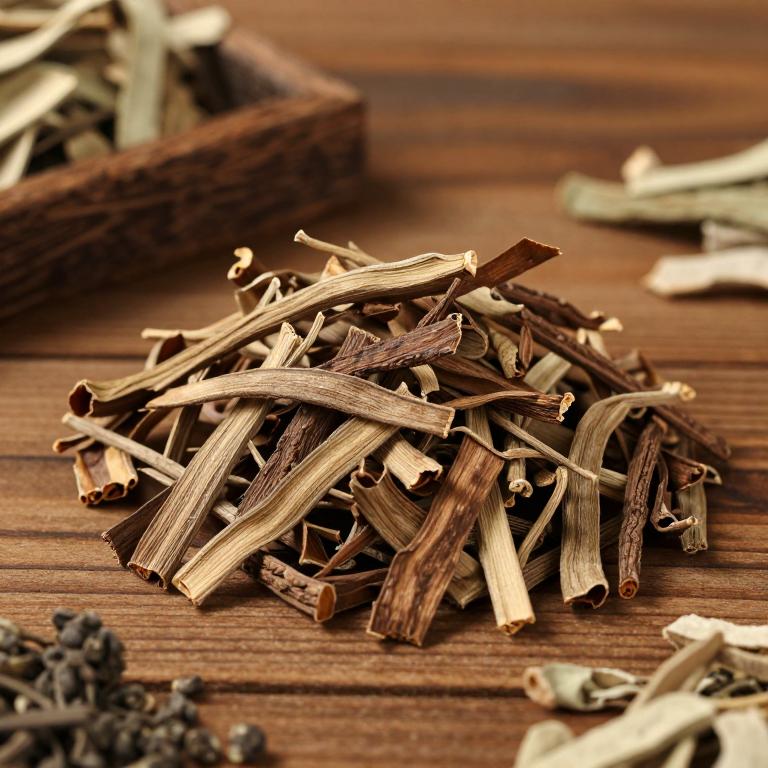
Aquilaria yunnanensis, scientifically known as Aquilaria yunnanensis, is a significant medicinal herb native to the high-altitude regions of Southwest China. Renowned in traditional medicine, it is primarily utilized for its potent bioactive compounds to treat inflammatory conditions, promote blood circulation, and alleviate pain, offering valuable therapeutic potential.
- Family
- Thymelaeaceae
- Native range
- Asia-Temperate
- Parts used
- Stem
- Common names
- Not available
- Scientific synonyms
- Not available
Names and Synonyms
Scientific Names
Accepted name
Aquilaria yunnanensisSources: Wikidata, Catalogue of Life
Taxonomical Classification
This plant, known scientifically as Aquilaria yunnanensis, belongs to the kingdom Plantae and the phylum Streptophyta. Within the class Equisetopsida and subclass Magnoliidae, it is categorized under the order Malvales. Ultimately, it is classified under the family Thymelaeaceae and the genus Aquilaria.
| Rank | Classification |
|---|---|
| Kingdom | Plantae |
| Phylum | Streptophyta |
| Class | Equisetopsida |
| Subclass | Magnoliidae |
| Order | Malvales |
| Family | Thymelaeaceae |
| Genus | Aquilaria |
Sources: The World Checklist of Vascular Plants (WCVP)
Distribution
This plant is primarily found in specific regions of East Asia. Its natural habitat is concentrated within the territory of China. Specifically, it is located throughout the South-Central part of the country. This localized range indicates that the species thrives under particular environmental conditions found in these provinces. Consequently, its geographical footprint remains relatively restricted to this particular area.
| Region | Area |
|---|---|
| China | China South-Central |
Sources: The World Checklist of Vascular Plants (WCVP)
Botanical Identification
Ecology
The ecology of Aquilaria yunnanensis is characterized by a highly specific altitudinal distribution within its native habitat. This species thrives within a precise elevational range, centered at a mean altitude of 1200 m AMSL. The ecological niche of the plant is remarkably consistent, as its environmental requirements are met at a stable threshold where the minimum, mean, and maximum elevation values all converge at 1200 m AMSL. This narrow altitudinal stratification suggests that the plant is specialized to the specific climatic and edaphic conditions found at this particular height, likely dictated by precise temperature gradients and moisture availability inherent to this specific elevation.
- Elevational range max:
- 1200 m AMSL
Life history
The life history of Aquilaria yunnanensis is characterized by its status as a perennial species, allowing it to persist in its environment over multiple growing seasons. Throughout its developmental stages, the plant maintains an evergreen habit, ensuring that its foliage remains functional for photosynthesis year-round rather than shedding leaves seasonally. This combination of a long-lived lifecycle and continuous leaf presence dictates its ecological strategy and physiological endurance within its natural habitat.
- Deciduousness :
- evergreen
- Lifecycle :
- perennial
Morphology
The morphology of Aquilaria yunnanensis is characterized by its growth form as a woody tree. It exhibits a significant vertical presence, with plant heights ranging from a minimum of 3 m to a maximum of 8 m, maintaining an average height of approximately 5.75 m. In terms of its structural habit, the plant can be described as a self-supporting climber, possessing the ability to function as a liana or vine while maintaining its own structural integrity.
- Climber :
- self-supporting
- Growth form :
- tree
- Plant height max:
- 8 m
- Plant height mean:
- 5.75 m
- Plant height min:
- 3 m
- Woodiness :
- woody
Physiology
The physiological profile of Aquilaria yunnanensis is characterized by specific morphological dimensions and nutritional strategies. The foliage exhibits significant variability in size, with leaf lengths ranging from a minimum of 7 cm to a maximum of 11 cm, maintaining an overall mean leaf length of 9 cm. In terms of lateral expansion, the leaf width spans from a minimum of 2 cm to a maximum of 4 cm. Regarding its metabolic and symbiotic capabilities, the plant does not function as a nitrogen fixer, indicating that it relies on the soil environment for nitrogen uptake rather than through symbiotic nitrogen-fixing bacteria.
- Leaf length max:
- 11 cm
- Leaf length mean:
- 9 cm
- Leaf length min:
- 7 cm
- Leaf width max:
- 4 cm
- Leaf width min:
- 2 cm
- Nitrogen fixer :
- no
Reproduction
The reproduction of Aquilaria yunnanensis culminates in the development of its characteristic fruit, which displays a highly consistent morphology. The fruit is characterized by a uniform size distribution, where the length maintains a steady mean of 2.5 cm, with no deviation observed between its minimum and maximum measurements of 2.5 cm. Similarly, the width of the fruit is remarkably stable, maintaining a constant value of 1.7 cm across its minimum, mean, and maximum dimensions. This lack of variance in both length and width suggests a highly standardized fruiting structure essential to its reproductive cycle.
- Fruit length max:
- 2.5 cm
- Fruit width max:
- 1.7 cm
Sources: Global Inventory of Floras and Traits (GIFT)
Plant Parts
Aquilaria yunnanensis has 1 reported plant parts identified across 1 scientific publications and several other databases that are studied for medicinal purposes. The most consistently reported plant part include stem.
| Plant part | Supporting sources | Consensus |
|---|---|---|
| Stem | 1 supporting sources | ★☆☆☆☆ |
Stem
- Zhongguo Zhong yao za zhi = Zhongguo zhongyao zazhi = China journal of Chinese materia medica
Chemicals
Aquilaria yunnanensis has 15 reported phytochemicals identified across 1 scientific publications and several other databases. The most consistently reported chemicals include (+)-Episyringaresinol, (+)-Syringaresinol, (-)-Epicatechin, (-)-Epicatechin gallate, 3,4-DIHYDROXYBENZOIC ACID.
| Chemical | Supporting sources | Consensus |
|---|---|---|
| (+)-Episyringaresinol | 1 supporting sources | ★☆☆☆☆ |
| (+)-Syringaresinol | 1 supporting sources | ★☆☆☆☆ |
| (-)-Epicatechin | 1 supporting sources | ★☆☆☆☆ |
| (-)-Epicatechin gallate | 1 supporting sources | ★☆☆☆☆ |
| 3,4-DIHYDROXYBENZOIC ACID | 1 supporting sources | ★☆☆☆☆ |
| 5-Hydroxy-3',4',7-trimethoxyflavone | 1 supporting sources | ★☆☆☆☆ |
| Barbatic acid | 1 supporting sources | ★☆☆☆☆ |
| Ergosterol peroxide | 1 supporting sources | ★☆☆☆☆ |
| Genkwanin | 1 supporting sources | ★☆☆☆☆ |
| Lecanoric acid | 1 supporting sources | ★☆☆☆☆ |
(+)-Episyringaresinol
- Zhongguo Zhong yao za zhi = Zhongguo zhongyao zazhi = China journal of Chinese materia medica
(+)-Syringaresinol
- Zhongguo Zhong yao za zhi = Zhongguo zhongyao zazhi = China journal of Chinese materia medica
(-)-Epicatechin
- Zhongguo Zhong yao za zhi = Zhongguo zhongyao zazhi = China journal of Chinese materia medica
(-)-Epicatechin gallate
- Zhongguo Zhong yao za zhi = Zhongguo zhongyao zazhi = China journal of Chinese materia medica
3,4-DIHYDROXYBENZOIC ACID
- Zhongguo Zhong yao za zhi = Zhongguo zhongyao zazhi = China journal of Chinese materia medica
5-Hydroxy-3',4',7-trimethoxyflavone
- Zhongguo Zhong yao za zhi = Zhongguo zhongyao zazhi = China journal of Chinese materia medica
Barbatic acid
- Zhongguo Zhong yao za zhi = Zhongguo zhongyao zazhi = China journal of Chinese materia medica
Ergosterol peroxide
- Zhongguo Zhong yao za zhi = Zhongguo zhongyao zazhi = China journal of Chinese materia medica
Genkwanin
- Zhongguo Zhong yao za zhi = Zhongguo zhongyao zazhi = China journal of Chinese materia medica
Lecanoric acid
- Zhongguo Zhong yao za zhi = Zhongguo zhongyao zazhi = China journal of Chinese materia medica
Conditions
Aquilaria yunnanensis has 2 reported investigations on conditions identified across 1 scientific publications and several other databases. The most consistently reported conditions include asthma, cough.
| Condition | Supporting sources | Consensus |
|---|---|---|
| Asthma | 1 supporting sources | ★☆☆☆☆ |
| Cough | 1 supporting sources | ★☆☆☆☆ |
Asthma
- Zhongguo Zhong yao za zhi = Zhongguo zhongyao zazhi = China journal of Chinese materia medica
Cough
- Zhongguo Zhong yao za zhi = Zhongguo zhongyao zazhi = China journal of Chinese materia medica
Preparations
Aquilaria yunnanensis has 1 reported preparations identified across 1 scientific publications and several other databases. The most consistently reported preparations include stem bark.
| Preparation | Supporting sources | Consensus |
|---|---|---|
| Stem bark | 1 supporting sources | ★☆☆☆☆ |
Stem bark
- Zhongguo Zhong yao za zhi = Zhongguo zhongyao zazhi = China journal of Chinese materia medica