Eagle wood
Aquilaria crassna · Accepted scientific name
Scientific literature: Very Sparse (1 studies) · ★☆☆☆☆
Eagle wood, scientifically known as Aquilaria crassna, is a precious medicinal plant prized for its aromatic resin. Found primarily in Southeast Asia, this species is the cornerstone of high-quality agarwood. Renowned for its therapeutic properties, it is widely utilized in traditional medicine and luxury perfumery for its healing essence.
- Family
- Thymelaeaceae
- Native range
- Asia-Tropical
- Parts used
- Not available
- Common names
- Not available
- Scientific synonyms
- Not available
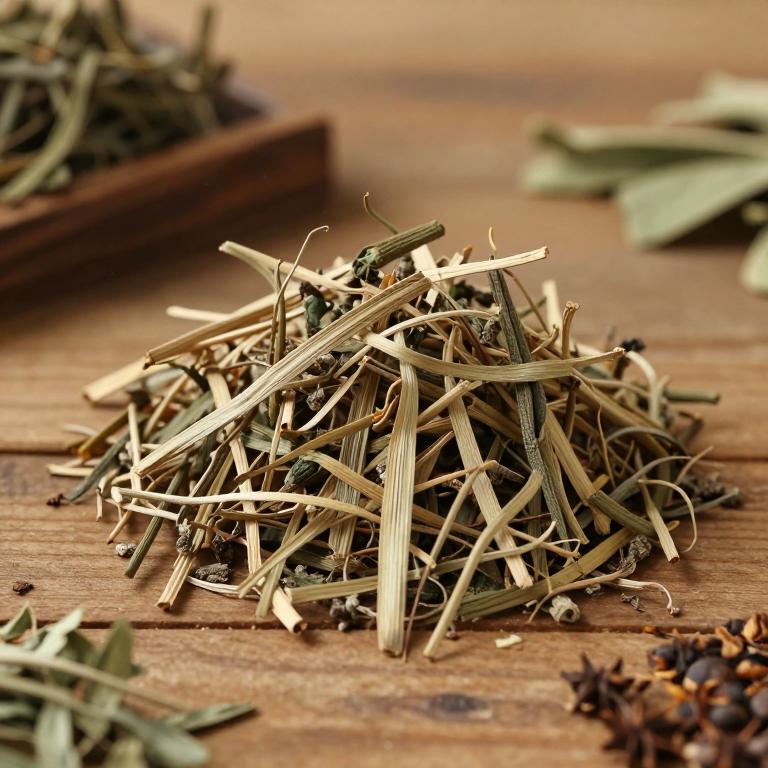
Names and Synonyms
Scientific Names
Accepted name
Aquilaria crassnaSources: Wikidata
Taxonomical Classification
This plant, known scientifically as Aquilaria crassna, belongs to the kingdom Plantae and the phylum Streptophyta. Within the class Equisetopsida and subclass Magnoliidae, it is classified under the order Malvales. Finally, it is a member of the family Thymelaeaceae and is situated within the genus Aquilaria.
| Rank | Classification |
|---|---|
| Kingdom | Plantae |
| Phylum | Streptophyta |
| Class | Equisetopsida |
| Subclass | Magnoliidae |
| Order | Malvales |
| Family | Thymelaeaceae |
| Genus | Aquilaria |
Sources: The World Checklist of Vascular Plants (WCVP)
Distribution
This plant, known scientifically as Aquilaria crassna, possesses a specific geographical distribution concentrated within the Indo-China region. It can be found growing naturally throughout the territory of Cambodia. Furthermore, its habitat extends into the forested areas of Laos. The species is also widely distributed across various parts of Thailand. Finally, the plant is a significant component of the native flora in Vietnam.
| Region | Area |
|---|---|
| Indo-China | Cambodia |
| Indo-China | Laos |
| Indo-China | Thailand |
| Indo-China | Vietnam |
Sources: The World Checklist of Vascular Plants (WCVP)
Botanical Identification
Life history
The life history of Aquilaria crassna is characterized by its classification as a perennial species, allowing it to maintain its presence in its native ecosystem over many years. As a phanerophyte, the plant directs its regenerative buds to a height well above the ground, typically developing into a woody tree structure. This life form is consistent across its developmental stages, as it remains a phanerophyte throughout its mature existence. Furthermore, the plant exhibits an evergreen deciduousness, meaning it retains its foliage year-round, providing a continuous canopy and maintaining physiological activity across different seasons.
- Deciduousness :
- evergreen
- Life form :
- phanerophyte
- Lifecycle :
- perennial
Morphology
The morphology of Aquilaria crassna is characterized by its stature as a large, woody tree that can reach a significant height, with a mean plant height of approximately 20 m. As a terrestrial species, it grows in non-aquatic environments and functions as an independent organism rather than a parasite or epiphyte. The plant exhibits a self-supporting growth habit, meaning it does not require external structures such as lianas or vines for support, maintaining a robust and upright structure through its woody composition.
- Aquatic :
- terrestrial
- Climber :
- self-supporting
- Epiphyte :
- terrestrial
- Growth form :
- tree
- Parasite :
- independent
- Plant height mean:
- 20 m
- Woodiness :
- woody
Physiology
The physiology of Aquilaria crassna is characterized by a C3 photosynthetic pathway, which involves the direct fixation of carbon dioxide through the Calvin cycle within the mesophyll cells. As a C3 plant, its metabolic processes are highly dependent on ambient environmental conditions, particularly temperature and moisture levels, to optimize gas exchange and photosynthetic efficiency. Furthermore, this species does not function as a nitrogen fixer, meaning it lacks the symbiotic relationship with nitrogen-fixing bacteria required to convert atmospheric nitrogen into usable forms; instead, it relies entirely on the uptake of nitrates and ammonium from the soil through its root system to support its growth and secondary metabolite production.
- Nitrogen fixer :
- no
- Photosynthetic pathway :
- C3
Sources: Global Inventory of Floras and Traits (GIFT)
Chemicals
Aquilaria crassna has 1 reported phytochemicals identified across 0 scientific publications and several other databases. The most consistently reported chemicals include Sesquiterpenes.
| Chemical | Supporting sources | Consensus |
|---|---|---|
| Sesquiterpenes | 1 supporting sources | ★☆☆☆☆ |
Sesquiterpenes
- International journal of analytical chemistry