Sea Celery
Apium prostratum · Accepted scientific name
Scientific literature: Very Sparse (5 studies) · ★☆☆☆☆
Sea Celery, scientifically known as Apium prostratum, is a resilient coastal herb found in saline environments. Renowned for its unique nutritional profile, this plant offers significant medicinal potential. Rich in bioactive compounds, it is traditionally utilized for its antioxidant, anti-inflammatory, and diuretic properties, supporting overall wellness and metabolic health.
- Family
- Apiaceae
- Native range
- Africa
- Parts used
- Not available
- Common names
- Sea Celery · New Zealand Celery · 2 more
- Scientific synonyms
- Petroselinum Prostratum · Apium Australe Var. Angustisectum
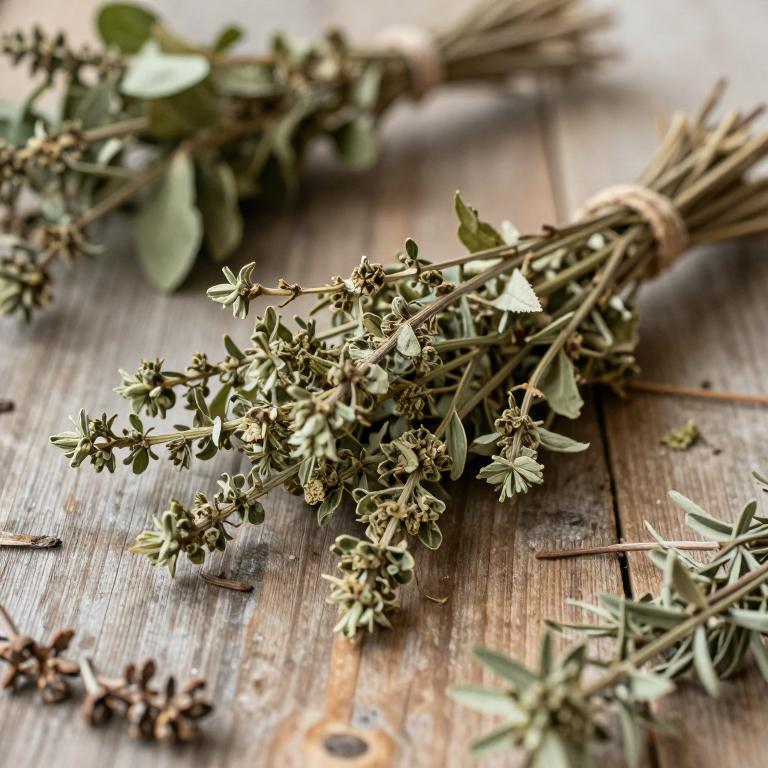
Names and Synonyms
Common Names
- sea celery
- New Zealand Celery
- Shore Celery
- Wild Celery
Scientific Names
Accepted name
Apium prostratumSynonyms
- Petroselinum prostratum
- Apium australe var. angustisectum
Regional and Traditional Names
French:
- Faux persil de Corniche
Sources: Wikidata, Catalogue of Life
Taxonomical Classification
This plant belongs to the kingdom Plantae and the phylum Streptophyta, falling under the class Equisetopsida and subclass Magnoliidae. Within the order Apiales, it is classified under the family Apiaceae. Its taxonomic placement is completed by its designation within the genus Apium.
| Rank | Classification |
|---|---|
| Kingdom | Plantae |
| Phylum | Streptophyta |
| Class | Equisetopsida |
| Subclass | Magnoliidae |
| Order | Apiales |
| Family | Apiaceae |
| Genus | Apium |
Sources: The World Checklist of Vascular Plants (WCVP)
Distribution
This plant exhibits a wide geographical distribution that spans across two different continents. In Southern Africa, it can be found growing within the Cape Provinces and throughout Namibia. Its presence extends to the Australian continent as well, specifically inhabiting the regions of New South Wales and Queensland. Additionally, the species is documented on the remote Norfolk Island. Consequently, the range of Apium prosthatum covers diverse environments from African coastal areas to various parts of Australia.
| Region | Area |
|---|---|
| Southern Africa | Cape Provinces |
| Southern Africa | Namibia |
| Australia | Norfolk Is. |
| Australia | New South Wales |
| Australia | Queensland |
| Australia | South Australia |
| Australia | Tasmania |
| Australia | Victoria |
| Australia | Western Australia |
| New Zealand | Antipodean Is. |
Sources: The World Checklist of Vascular Plants (WCVP)
Botanical Identification
Ecology
The ecology of Apium prostratum is defined by its specialized adaptation to coastal environments, where it thrives within maritime habitats. This species occupies a distinct altitudinal gradient, ranging from sea level up to a maximum elevation of 914 meters above mean sea level (m AMSL). By inhabiting these coastal zones, the plant is integrated into ecosystems characterized by high salinity and maritime influences, maintaining a presence from 0 m AMSL across its specified elevational range.
- Elevational range max:
- 914 m AMSL
- Elevational range min:
- 0 m AMSL
- Habitat :
- Coastal
Life history
The life history of Apium prostratum is characterized by its status as a perennial plant, allowing it to persist through multiple growing seasons. As a therophyte, it completes its life cycle through the production of seeds that remain dormant until favorable conditions arise, ensuring its survival in its specific ecological niche. Throughout its existence, the plant maintains an evergreen nature, retaining its foliage and biological activity rather than undergoing a deciduous period. This combination of a perennial lifecycle and a therophytic life form enables the species to effectively manage its seasonal transitions and reproductive strategies.
- Deciduousness :
- evergreen
- Life form :
- therophyte
- Lifecycle :
- perennial
Morphology
The morphology of Apium prostratum is characterized by a low-growing growth form, specifically classified as a non-woody herb and a forb. The plant exhibits a self-supporting structure rather than acting as a climber or a vine, and it functions as an independent organism without parasitic tendencies. In terms of its habit, it is a terrestrial species, neither aquatic nor epiphytic. The stature of the plant is relatively diminutive, with a height that typically ranges from a minimum of 0.05 m to a maximum of 1 m, maintaining a mean plant height of approximately 0.2 m.
- Aquatic :
- terrestrial
- Climber :
- self-supporting
- Epiphyte :
- terrestrial
- Growth form :
- herb
- Growth form :
- forb
- Parasite :
- independent
- Plant height max:
- 1 m
- Plant height mean:
- 0.2 m
- Plant height min:
- 0.05 m
- Woodiness :
- non-woody
Physiology
The physiology of Apium prostratum is characterized by its specific morphological adaptations and nutritional requirements, particularly regarding its leaf development and nutrient acquisition. The plant exhibits a significant range in leaf dimensions, with leaf lengths varying from a minimum of 1.5 cm to a maximum of 70 cm. Correspondingly, the leaf width demonstrates substantial plasticity, spanning from a narrow 0.2 cm to a broader 3 cm. These varying surface areas play a critical role in the plant's photosynthetic capacity and transpiration rates. In terms of nutrient cycling and soil interaction, the plant does not function as a nitrogen fixer, meaning it relies on the availability of nitrogen within the substrate rather than engaging in symbiotic nitrogen fixation processes.
- Leaf length max:
- 70 cm
- Leaf length min:
- 1.5 cm
- Leaf width max:
- 3 cm
- Leaf width min:
- 0.2 cm
- Nitrogen fixer :
- no
Reproduction
The reproduction of Apium prostratum involves both sexual and asexual mechanisms, as asexual reproduction is confirmed to be present in this species. The flowering cycle is highly variable throughout the year, typically beginning in October and concluding in April. Following pollination, the plant produces small fruits that serve as the primary vessel for seed dispersal. These fruits are characterized by a minimum length of 0.15 cm and a maximum length of 0.25 cm, while their width varies from a minimum of 0.15 cm to a maximum of 0.25 cm, with an average width recorded at approximately 0.3 cm. The resulting seeds are remarkably fine, with a mean mass of 0.0013 g, ranging from a minimum of 0.00129 g to a maximum of 0.00131 g. Regarding dispersal, the plant utilizes an unspecialized dispersal syndrome, meaning it does not rely on a single highly specific mechanism but rather employs generalist strategies to spread its progeny.
- Dispersal syndrome :
- unspecialized
- Flowering time :
- Oct
- Flowering time :
- Apr
- Fruit length max:
- 0.25 cm
- Fruit length min:
- 0.15 cm
- Fruit width max:
- 0.25 cm
- Fruit width mean:
- 0.3 cm
- Fruit width min:
- 0.15 cm
- Reproduction asexual :
- present
- Seed mass max:
- 0.00131 g
- Seed mass mean:
- 0.0013 g
- Seed mass min:
- 0.00129 g
Sources: Global Inventory of Floras and Traits (GIFT)
Chemicals
Apium prostratum has 5 reported phytochemicals identified across 0 scientific publications and several other databases. The most consistently reported chemicals include CHLOROGENIC ACID, Sagerinic acid, caffeic acid, quinic acid, rosmarinic acid.
| Chemical | Supporting sources | Consensus |
|---|---|---|
| CHLOROGENIC ACID | 1 supporting sources | ★☆☆☆☆ |
| Sagerinic acid | 1 supporting sources | ★☆☆☆☆ |
| caffeic acid | 1 supporting sources | ★☆☆☆☆ |
| quinic acid | 1 supporting sources | ★☆☆☆☆ |
| rosmarinic acid | 1 supporting sources | ★☆☆☆☆ |
CHLOROGENIC ACID
- Plants (Basel, Switzerland)
Sagerinic acid
- Plants (Basel, Switzerland)
caffeic acid
- Plants (Basel, Switzerland)
quinic acid
- Plants (Basel, Switzerland)
rosmarinic acid
- Plants (Basel, Switzerland)