Albinoberry
Aphloia theiformis · Accepted scientific name
Scientific literature: Very Sparse (24 studies) · ★☆☆☆☆
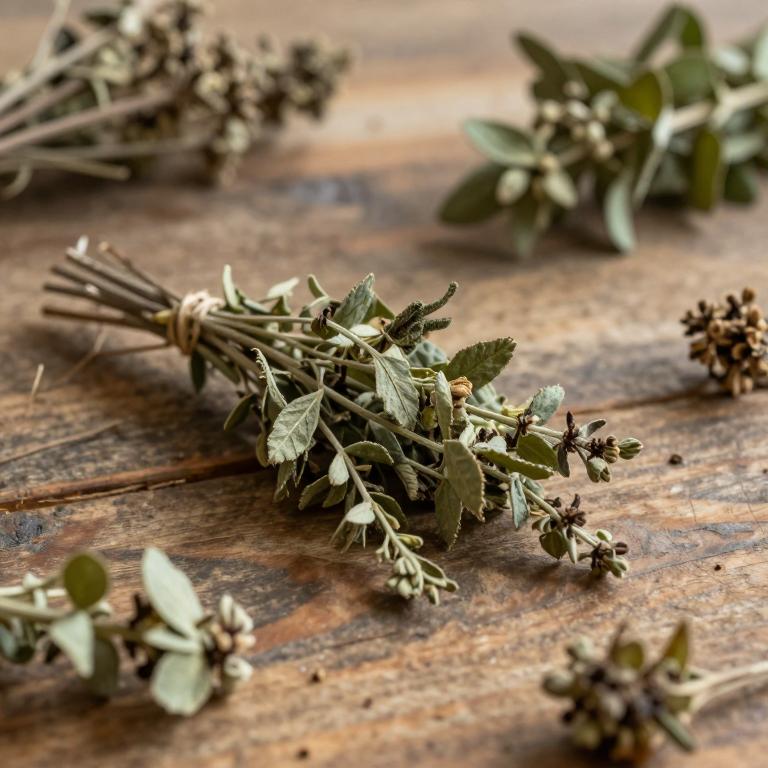
Albinoberry, scientifically known as Aphloia theiiformis, is an evergreen shrub native to the subtropical forests of New Zealand. Revered in traditional Māori medicine, this resilient plant offers significant antioxidant properties. Its leaves are frequently utilized in herbal infusions, providing wellness benefits and contributing to the rich biodiversity of ecosystems.
Names and Synonyms
Common Names
- Albinoberry
- Malagasy tea
- Mountain-Peach
Scientific Names
Accepted name
Aphloia theiformisSynonyms
- Aphloia theiformis var. minima
- Aphloia mauritiana var. theiformis
- Prockia integrifolia
- Prockia theiformis
- Neumannia minima
- Neumannia madagascariensis
- Neumannia integrifolia
- Aphloia mauritiana var. integrifolia
- Prockia ovata
- Aphloia madagascariensis var. polymorpha
- Aphloia madagascariensis
- Aphloia madagascariensis var. seychellensis
- Aphloia mauritiana var. sessilifolia
- Aphloia theiformis var. racemosa
- Aphloia theiformis f. tsaratananae
- Guidonia serrata
- Aphloia deltoides
- Aphloia integrifolia
- Neumannia deltoidea
- Neumannia theiformis
- Neumannia myrtiflora
- Prockia laciniata
- Aphloia minima
- Aphloia myrtiflora
- Aphloia sessilifolia
- Prockia deltoides
- Aphloia seychellensis
- Aphloia theiformis f. andringitrensis
- Lightfootia integrifolia
- Aphloia theiformis var. angustissima
- Lightfootia theiformis
- Aphloia theiformis var. caerulescens
- Ludia heterophylla
- Aphloia theiformis var. closii
- Guya integrifolia
- Aphloia theiformis subsp. deltoides
- Aphloia theiformis subsp. laciniata
- Aphloia theiformis subsp. madagascariensis
- Aphloia theiformis var. micrantha
- Aphloia theiformis var. micranthera
- Aphloia theiformis f. obcuneata
- Aphloia theiformis var. purpurascens
- Aphloia theiformis var. seychellensis
Regional and Traditional Names
Spanish:
- Aphloiaceae
- Arbusto de Madagascar
French:
- Aphloiacée
- Aphloiacées
- voafotsy
- Change-écorce
- Goyave marron
- Change-écorce
- Fandamane
Sources: Wikidata, Catalogue of Life
Taxonomical Classification
This plant belongs to the kingdom Plantae and the phylum Streptophyta, falling within the class Equisetopsida and subclass Magnoliidae. It is classified under the order Crossosomatales and is a member of the family Aphloiaceae. Within this family, it is specifically identified by the genus Aphloia.
| Rank | Classification |
|---|---|
| Kingdom | Plantae |
| Phylum | Streptophyta |
| Class | Equisetopsida |
| Subclass | Magnoliidae |
| Order | Crossosomatales |
| Family | Aphloiaceae |
| Genus | Aphloia |
Sources: The World Checklist of Vascular Plants (WCVP)
Distribution
This plant exhibits a specific geographical distribution across the African continent. In East Tropical Africa, its presence is noted in the countries of Kenya and Tanzania. Moving toward the southern regions, it is also found within South Tropical Africa. Specifically, the species inhabits the territories of Malawi and Mozambique. Finally, its range extends into the country of Zimbabwe.
| Region | Area |
|---|---|
| East Tropical Africa | Kenya |
| East Tropical Africa | Tanzania |
| South Tropical Africa | Malawi |
| South Tropical Africa | Mozambique |
| South Tropical Africa | Zimbabwe |
| Southern Africa | KwaZulu-Natal |
| Southern Africa | Eswatini |
| Southern Africa | Northern Provinces |
| Western Indian Ocean | Comoros |
| Western Indian Ocean | Mauritius |
Sources: The World Checklist of Vascular Plants (WCVP)
Botanical Identification
Ecology
The ecology of Aphloia theiiformis is characterized by its ability to inhabit diverse montane environments, spanning a significant vertical gradient within its native habitat. This species thrives across a broad altitudinal spectrum, typically occurring at elevations ranging from a minimum of 380 m AMSL to a maximum of 1730 m AMSL. This wide elevational range suggests a high degree of ecological plasticity, allowing the plant to adapt to varying temperature regimes, moisture levels, and atmospheric pressures found from lower montane slopes up to higher altitude cloud forests or sub-alpine zones. Such a distribution indicates that the species can occupy various niches within its ecosystem, playing a role in both lower-altitude shrublands and higher-elevation forest structures.
- Elevational range max:
- 1730 m AMSL
- Elevational range min:
- 380 m AMSL
Life history
The life history of Aphloia theiformis is characterized by its status as a perennial species, allowing it to persist in its environment over many years rather than completing its cycle in a single season. Throughout its long life, the plant maintains an evergreen habit, ensuring that its foliage remains functional and present across different seasons rather than shedding leaves seasonally.
- Deciduousness :
- evergreen
- Lifecycle :
- perennial
Morphology
The morphology of Aphloia theiformis is characterized by a woody growth form, primarily developing as a self-supporting tree. As a terrestrial species, it does not exhibit aquatic or epiphytic tendencies and functions as an independent organism rather than a parasite. The plant reaches a significant stature, with its height typically ranging from a minimum of 2 meters to a maximum of 10 meters, maintaining an average height of approximately 10 meters. Its structural habit is defined by its robust, woody nature, allowing it to maintain a self-supporting upright posture without the need for climbing or liana-like behavior.
- Aquatic :
- terrestrial
- Climber :
- self-supporting
- Epiphyte :
- terrestrial
- Growth form :
- tree
- Parasite :
- independent
- Plant height mean:
- 10 m
- Plant height min:
- 2 m
- Woodiness :
- woody
Physiology
The physiology of Aphloia theiiformis is characterized by a standard C3 photosynthetic pathway, utilizing the Calvin cycle to fix carbon dioxide during the light-independent reactions. In terms of nutrient acquisition and metabolic nitrogen cycling, the species does not function as a nitrogen fixer, meaning it relies on the uptake of available nitrates and ammonium from the soil rather than establishing symbiotic relationships with nitrogen-fixing bacteria to convert atmospheric nitrogen.
- Nitrogen fixer :
- no
- Photosynthetic pathway :
- C3
Reproduction
The reproduction of Aphloia theiformis is characterized by the production of fruit classified as a berry, which is notably indehiscent. These fruits possess an average length of 1.05 cm and an average width of 0.85 cm. The seeds contained within the fruit are relatively small, exhibiting a mean mass of 0.0046775 g, with individual seed weights ranging from a minimum of 0.00365 g to a maximum of 0.00725 g. Furthermore, the seed volume remains consistent at a value of 0.64 mm³, representing both the minimum and maximum measurements as well as the mean. To facilitate the spread of its progeny, the plant employs a zoochorous dispersal syndrome, relying on animals to aid in the movement of its seeds.
- Dehiscence :
- indehiscent
- Dispersal syndrome :
- zoochorous
- Fruit length mean:
- 1.05 cm
- Fruit type :
- berry
- Fruit width mean:
- 0.85 cm
- Seed mass max:
- 0.00725 g
- Seed mass mean:
- 0.0046775 g
- Seed mass min:
- 0.00365 g
- Seed volume max:
- 0.64 mm³
Sources: Global Inventory of Floras and Traits (GIFT)
Chemicals
Aphloia theiformis has 5 reported phytochemicals identified across 0 scientific publications and several other databases. The most consistently reported chemicals include CHLOROGENIC ACID, Gallic acid, Mangiferin, kaempferol, quercetin.
| Chemical | Supporting sources | Consensus |
|---|---|---|
| CHLOROGENIC ACID | 1 supporting sources | ★☆☆☆☆ |
| Gallic acid | 1 supporting sources | ★☆☆☆☆ |
| Mangiferin | 1 supporting sources | ★☆☆☆☆ |
| kaempferol | 1 supporting sources | ★☆☆☆☆ |
| quercetin | 1 supporting sources | ★☆☆☆☆ |
CHLOROGENIC ACID
- Biomedicine & pharmacotherapy = Biomedecine & pharmacotherapie
Gallic acid
- Biomedicine & pharmacotherapy = Biomedecine & pharmacotherapie
Mangiferin
- Biomedicine & pharmacotherapy = Biomedecine & pharmacotherapie
kaempferol
- Biomedicine & pharmacotherapy = Biomedecine & pharmacotherapie
quercetin
- Biomedicine & pharmacotherapy = Biomedecine & pharmacotherapie
Activities
Aphloia theiformis has 4 reported activities identified across 0 scientific publications and several other databases. The most consistently reported activities include Antimalarial, Antioxidant, Cytotoxic, Hypolipidemic.
| Activity | Supporting sources | Consensus |
|---|---|---|
| Antimalarial | 1 supporting sources | ★☆☆☆☆ |
| Antioxidant | 1 supporting sources | ★☆☆☆☆ |
| Cytotoxic | 1 supporting sources | ★☆☆☆☆ |
| Hypolipidemic | 1 supporting sources | ★☆☆☆☆ |
Antimalarial
- Journal of ethnopharmacology
Antioxidant
- Antioxidants (Basel, Switzerland)
Cytotoxic
- Journal of ethnopharmacology
Hypolipidemic
- Antioxidants (Basel, Switzerland)
Conditions
Aphloia theiformis has 12 reported investigations on conditions identified across 0 scientific publications and several other databases. The most consistently reported conditions include oxidative stress, Plasmodium berghei, Plasmodium falciparum, ZIKV, Zika virus.
| Condition | Supporting sources | Consensus |
|---|---|---|
| Oxidative stress | 2 supporting sources | ★☆☆☆☆ |
| Plasmodium berghei | 1 supporting sources | ★☆☆☆☆ |
| Plasmodium falciparum | 1 supporting sources | ★☆☆☆☆ |
| Zikv | 1 supporting sources | ★☆☆☆☆ |
| Zika virus | 1 supporting sources | ★☆☆☆☆ |
| Dengue virus | 1 supporting sources | ★☆☆☆☆ |
| Immune responses | 1 supporting sources | ★☆☆☆☆ |
| Inflammation | 1 supporting sources | ★☆☆☆☆ |
| Metabolic disease | 1 supporting sources | ★☆☆☆☆ |
| Metabolic diseases | 1 supporting sources | ★☆☆☆☆ |
Oxidative stress
- Biomedicine & pharmacotherapy = Biomedecine & pharmacotherapie
- Antioxidants (Basel, Switzerland)
Plasmodium berghei
- Journal of ethnopharmacology
Plasmodium falciparum
- Journal of ethnopharmacology
Zikv
- Scientific reports
Zika virus
- Scientific reports
Dengue virus
- Current drug targets
Immune responses
- Biomedicine & pharmacotherapy = Biomedecine & pharmacotherapie
Inflammation
- Biomedicine & pharmacotherapy = Biomedecine & pharmacotherapie
Metabolic disease
- Antioxidants (Basel, Switzerland)
Metabolic diseases
- Biomedicine & pharmacotherapy = Biomedecine & pharmacotherapie
Preparations
Aphloia theiformis has 2 reported preparations identified across 0 scientific publications and several other databases. The most consistently reported preparations include aqueous extracts, extract from Aphloia theiformis.
| Preparation | Supporting sources | Consensus |
|---|---|---|
| Aqueous extracts | 1 supporting sources | ★☆☆☆☆ |
| Extract from aphloia theiformis | 1 supporting sources | ★☆☆☆☆ |
Aqueous extracts
- Biomedicine & pharmacotherapy = Biomedecine & pharmacotherapie
Extract from aphloia theiformis
- Scientific reports