Antrocaryon
Antrocaryon micraster · Accepted scientific name
Scientific literature: Very Sparse (5 studies) · ★☆☆☆☆
Antrocaryon, scientifically known as Antrocaryon micraster, is a remarkable medicinal plant native to tropical African forests. Renowned for its diverse pharmacological potential, this species is traditionally utilized by local communities to treat various ailments. Recent studies highlight its bioactive compounds, offering promising insights into its therapeutic and healing properties.
- Family
- Anacardiaceae
- Native range
- Africa
- Parts used
- Stem
- Common names
- Antrocaryon
- Scientific synonyms
- Not available
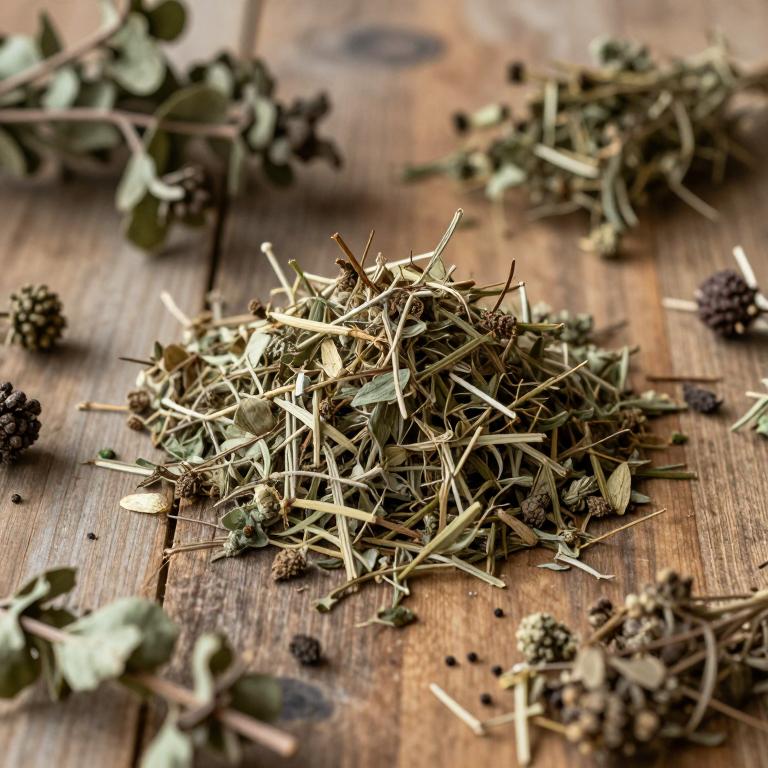
Names and Synonyms
Common Names
- Antrocaryon
Scientific Names
Accepted name
Antrocaryon micrasterSources: Wikidata, Catalogue of Life
Taxonomical Classification
This plant belongs to the kingdom Plantae and is classified under the phylum Streptophyta within the class Equisetopsida. Following the subclass Magnoliidae, it is ordered under Sapindales and placed in the family Anacardiaceae. Ultimately, its taxonomic identity is defined by its placement within the genus Antrocaryon.
| Rank | Classification |
|---|---|
| Kingdom | Plantae |
| Phylum | Streptophyta |
| Class | Equisetopsida |
| Subclass | Magnoliidae |
| Order | Sapindales |
| Family | Anacardiaceae |
| Genus | Antrocaryon |
Sources: The World Checklist of Vascular Plants (WCVP)
Distribution
This plant is primarily distributed across the West Tropical Africa region. Specifically, its presence has been documented within the borders of Benin. It can also be found growing naturally in Ghana and Guinea. Furthermore, the species extends its range into Ivory Coast. Finally, its geographical footprint includes the nation of Liberia.
| Region | Area |
|---|---|
| West Tropical Africa | Benin |
| West Tropical Africa | Ghana |
| West Tropical Africa | Guinea |
| West Tropical Africa | Ivory Coast |
| West Tropical Africa | Liberia |
| West Tropical Africa | Nigeria |
| West Tropical Africa | Sierra Leone |
| West-Central Tropical Africa | Central African Republic |
| West-Central Tropical Africa | Cameroon |
| West-Central Tropical Africa | Congo |
Sources: The World Checklist of Vascular Plants (WCVP)
Botanical Identification
Life history
The life history of Antrocaryon micraster is characterized by its status as a perennial organism, allowing it to persist in its ecosystem over many years through repeated seasonal cycles. As a deciduous species, it undergoes a distinct period of leaf shedding, typically synchronized with seasonal changes to manage water conservation and metabolic demands. This cycle of growth and dormancy defines its long-term survival strategy within its natural habitat.
- Deciduousness :
- deciduous
- Lifecycle :
- perennial
Morphology
The morphology of Antrocaryon micraster is characterized by its substantial stature and robust structural development. It is a large, woody tree that functions as a self-supporting organism, reaching an average height of approximately 40 m, with some specimens capable of attaining a maximum height of up to 45.72 m. As a terrestrial species, it does not inhabit aquatic or semiaquatic environments, nor does it exhibit epiphytic or parasitic tendencies, growing instead as an independent entity. Its growth form is strictly defined as a tree, characterized by its woody composition and lack of climbing or vine-like habits.
- Aquatic :
- terrestrial
- Climber :
- self-supporting
- Epiphyte :
- terrestrial
- Growth form :
- tree
- Parasite :
- independent
- Plant height max:
- 45.72055596 m
- Plant height mean:
- 40 m
- Woodiness :
- woody
Physiology
The physiology of Antrocaryon micraster is characterized by a C3 photosynthetic pathway, a metabolic strategy common among many woody tropical species that involves the direct fixation of carbon dioxide through the Calvin cycle within the mesophyll cells. In terms of nutrient acquisition and symbiotic relationships, this species does not function as a nitrogen fixer, meaning it lacks the specialized root nodules containing diazotrophic bacteria required to convert atmospheric nitrogen into bioavailable forms. Consequently, its physiological reliance on nitrogen is dependent on the uptake of nitrates and ammonium from the soil substrate.
- Nitrogen fixer :
- no
- Photosynthetic pathway :
- C3
Sources: Global Inventory of Floras and Traits (GIFT)
Plant Parts
Antrocaryon micraster has 1 reported plant parts identified across 1 scientific publications and several other databases that are studied for medicinal purposes. The most consistently reported plant part include stem.
| Plant part | Supporting sources | Consensus |
|---|---|---|
| Stem | 1 supporting sources | ★☆☆☆☆ |
Stem
- Advances in pharmacological and pharmaceutical sciences
Activities
Antrocaryon micraster has 2 reported activities identified across 1 scientific publications and several other databases. The most consistently reported activities include Antiplasmodial, Cytotoxic.
| Activity | Supporting sources | Consensus |
|---|---|---|
| Antiplasmodial | 1 supporting sources | ★☆☆☆☆ |
| Cytotoxic | 1 supporting sources | ★☆☆☆☆ |
Antiplasmodial
- Advances in pharmacological and pharmaceutical sciences
Cytotoxic
- Advances in pharmacological and pharmaceutical sciences
Conditions
Antrocaryon micraster has 2 reported investigations on conditions identified across 1 scientific publications and several other databases. The most consistently reported conditions include malaria, trypanosomiasis.
| Condition | Supporting sources | Consensus |
|---|---|---|
| Malaria | 1 supporting sources | ★☆☆☆☆ |
| Trypanosomiasis | 1 supporting sources | ★☆☆☆☆ |
Malaria
- Advances in pharmacological and pharmaceutical sciences
Trypanosomiasis
- Advances in pharmacological and pharmaceutical sciences
Preparations
Antrocaryon micraster has 1 reported preparations identified across 1 scientific publications and several other databases. The most consistently reported preparations include stem bark (AMSBE).
| Preparation | Supporting sources | Consensus |
|---|---|---|
| Stem bark (amsbe) | 1 supporting sources | ★☆☆☆☆ |
Stem bark (amsbe)
- Advances in pharmacological and pharmaceutical sciences