Snapdragons
Antirrhinum majus · Accepted scientific name
Scientific literature: Very Sparse (14 studies) · ★☆☆☆☆
Snapdragons, scientifically known as Antirrhinum majus, is a vibrant ornamental perennial celebrated for its unique, mask-like blooms. Beyond its aesthetic appeal in gardens, this plant holds historical significance in traditional medicine. Often studied for its potential bioactive properties, it serves as a fascinating bridge between horticulture and ethnobotany.
- Family
- Plantaginaceae
- Native range
- Europe
- Parts used
- Not available
- Common names
- Garden Snapdragon · Snapdragon
- Scientific synonyms
- Orontium Majus
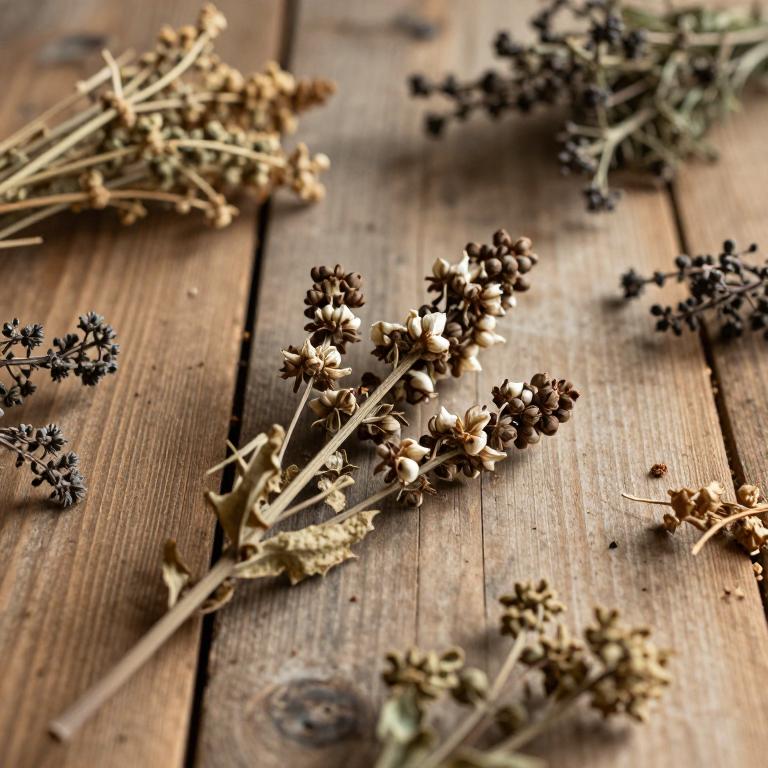
Names and Synonyms
Common Names
- garden snapdragon
- Snapdragon
Scientific Names
Accepted name
Antirrhinum majusSynonyms
- Orontium majus
Regional and Traditional Names
Spanish:
- Tarasca de jardin
- Hierba becerra
- boca de dragón
- Conejito
- Dragonaria
- Dragón
- Flor de Perritos
German:
- Großes Löwenmaul
- Garten-Löwenmaul
- Löwenmaul
- Artengruppe Löwenmäulchen
- Großes Löwenmaul
- Garten-Loewenmaul
French:
- Muflier à grandes fleurs
- Gueule-de-loup
- Grand Muflier
- Muflier
- Gueule de loup
- Gueule-de-lion
- Antirrhinum latifolium
- gueule-de-lion
- muflier commun
- muflier à grandes fleurs
- grand muflier
- gueule de lion
- gueule de loup
Sources: Wikidata, Catalogue of Life
Taxonomical Classification
This plant belongs to the kingdom Plantae and the phylum Streptophyta. Within the class Equisetopsida and subclass Magnoliidae, it is classified under the order Lamiales and the family Plantaginaceae. Finally, its specific taxonomic designation is within the genus Antirrhinum.
| Rank | Classification |
|---|---|
| Kingdom | Plantae |
| Phylum | Streptophyta |
| Class | Equisetopsida |
| Subclass | Magnoliidae |
| Order | Lamiales |
| Family | Plantaginaceae |
| Genus | Antirrhinum |
Sources: The World Checklist of Vascular Plants (WCVP)
Distribution
This plant, known as Antirrhinum majus, exhibits a specific distribution across several regions of the European continent. In Northern Europe, its presence can be documented within the territories of Great Britain and Ireland. Moving toward Middle Europe, the species is also found growing in Austria and Belgium. Additionally, its range extends through the central regions of Czechia and Slovakia. Together, these locations define the primary geographical footprint of this medicinal species in Europe.
| Region | Area |
|---|---|
| Northern Europe | Great Britain |
| Northern Europe | Ireland |
| Middle Europe | Austria |
| Middle Europe | Belgium |
| Middle Europe | Czechia-Slovakia |
| Middle Europe | Germany |
| Middle Europe | Netherlands |
| Middle Europe | Switzerland |
| Southwestern Europe | Baleares |
| Southwestern Europe | France |
Sources: The World Checklist of Vascular Plants (WCVP)
Botanical Identification
Ecology
The ecology of Antirrhinum majus is characterized by a broad adaptability to varying altitudes, spanning an elevational range from 0 m AMSL to a maximum of 2600 m AMSL. This wide vertical distribution allows the species to inhabit diverse climatic zones, from lowland coastal areas to high-altitude montane environments. While it can be found in various natural settings, it is frequently documented within anthropogenic landscapes, specifically thriving in garden habitats where soil conditions are often managed.
- Elevational range max:
- 2600 m AMSL
- Elevational range min:
- 0 m AMSL
- Habitat :
- garden
Life history
The life history of Antirrhinum majus is characterized by its classification as a therophyte, a life form where the plant completes its development through a highly specialized cycle often involving ephemeral stages. While its lifecycle can be described as variable—ranging from annual to biennial or even perennial depending on environmental conditions and cultivation—it typically functions within a lifespan of approximately 3 years. As a deciduous species, it sheds its foliage in response to seasonal changes, ensuring its survival through dormancy. This strategic growth pattern allows the plant to navigate fluctuating climates, utilizing its therophytic nature to focus energy on seed production and survival through various life stages.
- Deciduousness :
- deciduous
- Life form :
- therophyte
- Lifecycle :
- perennial
- Lifespan :
- 3
Morphology
The morphology of Antirrhinum majus is characterized by its growth form as a non-woody herb, specifically classified as a forb. This species is a terrestrial plant that grows independently, lacking any parasitic or epiphytic tendencies. It exhibits an erect shoot orientation and is a self-supporting plant rather than a climber or vine. In terms of stature, the plant typically reaches an average height of 0.3625 m, with individual specimens ranging from a minimum height of 0.3 m to a maximum height of 0.8 m.
- Aquatic :
- terrestrial
- Climber :
- self-supporting
- Epiphyte :
- terrestrial
- Growth form :
- herb
- Growth form :
- forb
- Parasite :
- independent
- Plant height max:
- 0.8 m
- Plant height mean:
- 0.3625 m
- Plant height min:
- 0.3 m
- Shoot orientation :
- erect
- Woodiness :
- non-woody
Physiology
The physiology of Antirrhinum majus is characterized by a C3 photosynthetic pathway, reflecting its metabolic strategy for carbon fixation. The plant exhibits a non-succulent morphology and is strictly non-carnivorous, relying on standard soil-based nutrient uptake rather than nitrogen fixation, as it is not a nitrogen fixer. Its leaf architecture is defined by an elliptic form, with leaf dimensions varying significantly; leaf length ranges from a minimum of 1.8 cm to a maximum of 6.5 cm, while the leaf width fluctuates between a minimum of 0.6 cm and a maximum of 2 cm, resulting in a mean leaf width of 0.9 cm. On average, the leaves possess a mean surface area of 3.03 cm², and the plant maintains a mean Specific Leaf Area (SLA) of 172 cm²/g, which serves as a key indicator of its leaf thickness and resource investment strategies.
- Carnivory :
- non-carnivorous
- Leaf form :
- elliptic
- Leaf length max:
- 6.5 cm
- Leaf length min:
- 1.8 cm
- Leaf size mean:
- 3.03 cm²
- Leaf width max:
- 2 cm
- Leaf width mean:
- 0.9 cm
- Leaf width min:
- 0.6 cm
- Nitrogen fixer :
- no
- Photosynthetic pathway :
- C3
- Specific Leaf Area (SLA) mean:
- 172 cm²/g
- Succulence :
- no
Reproduction
The reproduction of Antirrhinum majus is primarily sexual, characterized by bisexual flowers that facilitate cross-pollination, as self-fertilization is noted to be absent. The flowering period typically commences in June and concludes in September, producing vibrant red flowers that range in length from 3.3 cm to 4.5 cm. These flowers rely on biotic pollination syndromes, specifically utilizing insects such as bees to ensure successful fertilization. Following pollination, the plant develops a dehiscent fruit in the form of a capsule. These capsules vary in size, with a mean length of 1.2 cm (reaching up to 1.5 cm) and a mean width of 1.1 cm (ranging from 1 cm to 1.2 cm). Each fruit is highly prolific, containing more than 1,000 seeds. The seeds are quite small, with a mean length and width of 1 mm and a mean mass of approximately 0.000163889 g (ranging from 0.0001 g to 0.00023 g). Dispersal of these seeds occurs through both anemochorous (wind) and anthropochorous (human) mechanisms. As a monocarpic species, the reproductive cycle is a definitive stage in its life history, and asexual reproduction is absent.
- Dehiscence :
- dehiscent
- Dispersal syndrome :
- anemochorous
- Dispersal syndrome :
- anthropochorous
- Flower colour :
- red
- Flower length max:
- 4.5 cm
- Flower length min:
- 3.3 cm
- Flowering time :
- Jun
- Flowering time :
- Sep
- Fruit length max:
- 1.5 cm
- Fruit length mean:
- 1.2 cm
- Fruit type :
- capsule
- Fruit width max:
- 1.2 cm
- Fruit width min:
- 1 cm
- Monocarpy :
- monocarp
- Pollination syndrome :
- insect
- Pollination syndrome :
- bee
- Pollination syndrome :
- biotic
- Reproduction asexual :
- absent
- Reproduction sexual :
- bisexual
- Seed length mean:
- 1 mm
- Seed mass max:
- 0.00023 g
- Seed mass mean:
- 0.000163889 g
- Seed mass min:
- 1e-04 g
- Seed width mean:
- 1 mm
- Seeds_per_fruit :
- >1000
- Self fertilization :
- absent
Sources: Global Inventory of Floras and Traits (GIFT)
Chemicals
Antirrhinum majus has 7 reported phytochemicals identified across 0 scientific publications and several other databases. The most consistently reported chemicals include 8-Oxogeranial, Apigenin 7-glucuronide, CHLOROGENIC ACID, Flavonoid, Iridoids.
| Chemical | Supporting sources | Consensus |
|---|---|---|
| 8-Oxogeranial | 1 supporting sources | ★☆☆☆☆ |
| Apigenin 7-glucuronide | 1 supporting sources | ★☆☆☆☆ |
| CHLOROGENIC ACID | 1 supporting sources | ★☆☆☆☆ |
| Flavonoid | 1 supporting sources | ★☆☆☆☆ |
| Iridoids | 1 supporting sources | ★☆☆☆☆ |
| Luteolin-7-glucuronide | 1 supporting sources | ★☆☆☆☆ |
| citric acid | 1 supporting sources | ★☆☆☆☆ |
8-Oxogeranial
- The Journal of biological chemistry
Apigenin 7-glucuronide
- Heliyon
CHLOROGENIC ACID
- Heliyon
Flavonoid
- Heliyon
Iridoids
- The Journal of biological chemistry
Luteolin-7-glucuronide
- Heliyon
citric acid
- Frontiers in chemistry
Conditions
Antirrhinum majus has 6 reported investigations on conditions identified across 0 scientific publications and several other databases. The most consistently reported conditions include Bacillus subtilis, Candida albicans, Enterobacter aerogenes, Escherichia coli, Staphylococcus aureus.
| Condition | Supporting sources | Consensus |
|---|---|---|
| Bacillus subtilis | 1 supporting sources | ★☆☆☆☆ |
| Candida albicans | 1 supporting sources | ★☆☆☆☆ |
| Enterobacter aerogenes | 1 supporting sources | ★☆☆☆☆ |
| Escherichia coli | 1 supporting sources | ★☆☆☆☆ |
| Staphylococcus aureus | 1 supporting sources | ★☆☆☆☆ |
| Gastric diseases | 1 supporting sources | ★☆☆☆☆ |
Bacillus subtilis
- Heliyon
Candida albicans
- Heliyon
Enterobacter aerogenes
- Heliyon
Escherichia coli
- Heliyon
Staphylococcus aureus
- Heliyon
Gastric diseases
- Pakistan journal of pharmaceutical sciences