kidney vetch
Anthyllis vulneraria · Accepted scientific name
Scientific literature: Very Sparse (14 studies) · ★☆☆☆☆
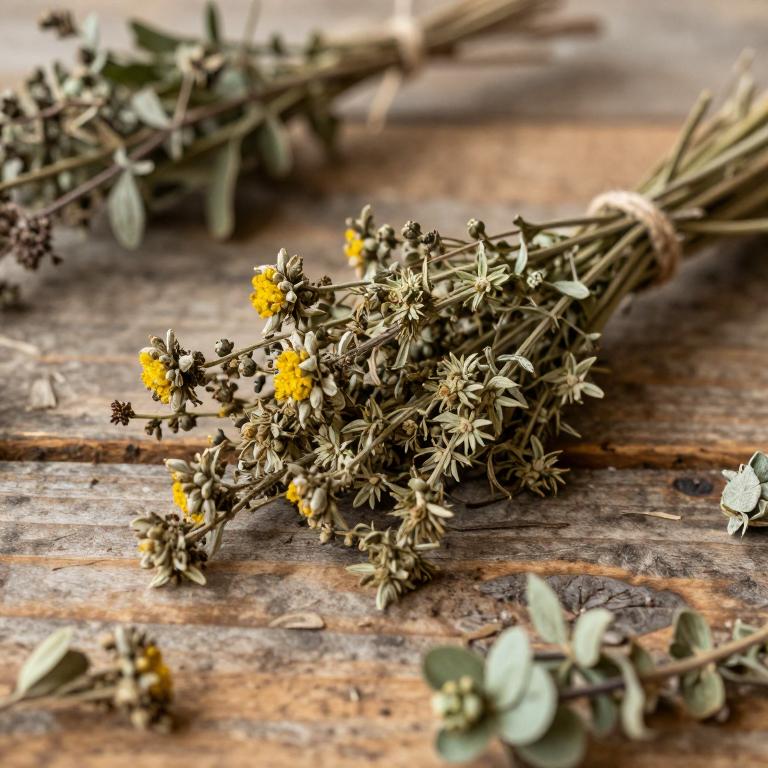
Kidney vetch, scientifically known as Anthyllis vulneraria, is a resilient perennial herb native to Europe. Historically valued in traditional medicine, it was once used to treat wounds and skin ailments. Characterized by its vibrant yellow flower clusters, this plant thrives in rocky, coastal habitats, offering unique botanical interest.
- Family
- Fabaceae
- Native range
- Europe
- Parts used
- Leaf
- Common names
- Kidney-Vetch · Lady'S Fingers · 6 more
- Scientific synonyms
- Vulneraria Anthyllis
Names and Synonyms
Common Names
- kidney-vetch
- lady's fingers
- Kidney Vetch
- lady's-fingers
- woundwort
- Common Kidney-Vetch
- common kidneyvetch
- ladies’ fingers
Scientific Names
Accepted name
Anthyllis vulnerariaSynonyms
- Vulneraria anthyllis
Regional and Traditional Names
Spanish:
- hierba de la cuchillada
- pie de gallo encarnado
- pitiflor blanca
- uña de gato
- vulneraria
- hierba llaguera
- vulneraría
- hierba de la cuchillada
- pie de gallo encarnado
- pitiflor blanca
- uña de gato
German:
- Echter Wundklee
- Tannenklee
- Gemeiner Wundklee
- Gewöhnlicher Wundklee
- Tannenklee
- Wundklee
- Echter Wundklee
- Gemeiner Wundklee
- Gewöhnlicher Wundklee
French:
- Anthyllide vulnéraire
- vulnéraire
- anthyllide vulnéraire
- anthyllis vulnéraire
- trèfle jaune des sables
- vulnéraire
- Anthyllide vulneraire
- Vulnéraire commune
Sources: Wikidata, Catalogue of Life
Taxonomical Classification
This plant, known scientifically as Anthyllis vulneraria, belongs to the kingdom Plantae and the phylum Streptophyta. Within the class Equisetopsida and subclass Magnoliidae, it is classified under the order Fabales and the family Fabaceae. It is further categorized into the genus Anthyllis.
| Rank | Classification |
|---|---|
| Kingdom | Plantae |
| Phylum | Streptophyta |
| Class | Equisetopsida |
| Subclass | Magnoliidae |
| Order | Fabales |
| Family | Fabaceae |
| Genus | Anthyllis |
Sources: The World Checklist of Vascular Plants (WCVP)
Distribution
This plant exhibits a widespread presence across several regions of Northern Europe. It can be found growing naturally throughout the coastal and inland areas of Denmark. Its distribution extends further north to include the landscapes of Finland and Iceland. Additionally, the species is well-established within the British Isles, specifically inhabiting Great Britain and Ireland. Together, these locations define its characteristic range within the northern part of the continent.
| Region | Area |
|---|---|
| Northern Europe | Denmark |
| Northern Europe | Finland |
| Northern Europe | Great Britain |
| Northern Europe | Iceland |
| Northern Europe | Ireland |
| Northern Europe | Norway |
| Northern Europe | Sweden |
| Middle Europe | Austria |
| Middle Europe | Belgium |
| Middle Europe | Czechia-Slovakia |
Sources: The World Checklist of Vascular Plants (WCVP)
Botanical Identification
Ecology
The ecology of Anthyllis vulneraria is characterized by its preference for open, well-drained landscapes, where it frequently colonizes alpine meadows and pastures. It thrives in these high-altitude or temperate environments, often occupying nutrient-poor, calcareous, or sandy soils that are subject to moderate disturbance. Because it is well-adapted to the competitive yet resource-limited conditions of montane grasslands, it can withstand various climatic stressors common to these habitats, such as intense solar radiation and fluctuating seasonal temperatures. Its presence in these pastures often indicates a specific niche within the plant community where it can coexist with various grasses and herbaceous species, contributing to the biodiversity of these open ecosystems.
- Habitat :
- alpine meadows and pastures
Life history
The life history of Anthyllis vulneraria is characterized by a perennial lifecycle, allowing the plant to persist through multiple growing seasons. As a hemicryptophyte, its perennuating buds are located at or just below the soil surface, protected by leaf litter or surface debris during unfavorable conditions. The plant exhibits a deciduous nature, shedding its foliage as it enters periods of dormancy.
- Deciduousness :
- deciduous
- Life form :
- hemicryptophyte
- Lifecycle :
- perennial
Morphology
The morphology of Anthyllis vulneraria is characterized by its growth form as a non-woody herb and forb. This terrestrial plant exhibits a self-supporting growth habit, functioning as an independent organism without parasitic or epiphytic requirements. Its shoots display an ascending orientation, and the plant typically reaches a maximum height of 1 m, with a minimum height of 0.05 m and an average height of approximately 0.275 m.
- Aquatic :
- terrestrial
- Climber :
- self-supporting
- Epiphyte :
- terrestrial
- Growth form :
- herb
- Growth form :
- forb
- Parasite :
- independent
- Plant height max:
- 1 m
- Plant height mean:
- 0.275 m
- Plant height min:
- 0.05 m
- Shoot orientation :
- ascending
- Woodiness :
- non-woody
Physiology
The physiology of Anthyllis vulneraria is characterized by a C3 photosynthetic pathway, which dictates its carbon fixation processes and metabolic efficiency. The plant exhibits a non-carnivorous nutritional strategy, relying entirely on soil-derived nutrients rather than the capture of prey. Morphologically, its foliage is defined by a mean leaf size of 10.07 cm² and a maximum leaf length of 3.1 cm. Furthermore, the plant possesses a mean Specific Leaf Area (SLA) of 162.7 cm²/g, a physiological metric that reflects its leaf thickness and the investment of biomass relative to its surface area for gas exchange and light interception.
- Carnivory :
- non-carnivorous
- Leaf length max:
- 3.1 cm
- Leaf size mean:
- 10.07 cm²
- Photosynthetic pathway :
- C3
- Specific Leaf Area (SLA) mean:
- 162.7 cm²/g
Reproduction
The reproduction of Anthyllis vulneraria is a specialized process characterized by biotic pollination and sexual reproduction, as asexual reproduction is notably absent. The flowering period typically commences in May and extends through August, facilitating a window for successful fertilization. The plant relies on a biotic pollination syndrome, specifically utilizing insects with a strong emphasis on bees to ensure the transfer of pollen. Interestingly, self-fertilization is absent, necessitating these insect intermediaries for genetic exchange. Once fertilization occurs, the plant produces fruit in the form of a dehiscient capsule. The resulting seeds are small, with a consistent mean length of 1.5 mm (ranging from a minimum of 1.5 mm to a maximum of 1.5 mm) and a mean mass of approximately 0.002825859 g, with individual seeds falling between a minimum of 0.00196 g and a maximum of 0.00451 g. Following maturation, the seeds are distributed via an anemochorous dispersal syndrome, meaning they are dispersed by the wind.
- Dehiscence :
- dehiscent
- Dispersal syndrome :
- anemochorous
- Flowering time :
- May
- Flowering time :
- Aug
- Fruit type :
- capsule
- Pollination syndrome :
- insect
- Pollination syndrome :
- bee
- Pollination syndrome :
- biotic
- Reproduction asexual :
- absent
- Seed length mean:
- 1.5 mm
- Seed mass max:
- 0.00451 g
- Seed mass mean:
- 0.002825859 g
- Seed mass min:
- 0.00196 g
- Self fertilization :
- absent
Sources: Global Inventory of Floras and Traits (GIFT)
Plant Parts
Anthyllis vulneraria has 1 reported plant parts identified across 1 scientific publications and several other databases that are studied for medicinal purposes. The most consistently reported plant part include leaf.
| Plant part | Supporting sources | Consensus |
|---|---|---|
| Leaf | 1 supporting sources | ★☆☆☆☆ |
Leaf
- Antioxidants (Basel, Switzerland)
Chemicals
Anthyllis vulneraria has 8 reported phytochemicals identified across 1 scientific publications and several other databases. The most consistently reported chemicals include Isoflavones, Isohamnetin, Kanzonol C, Rhamnetin, Soyasapogenol B.
| Chemical | Supporting sources | Consensus |
|---|---|---|
| Isoflavones | 1 supporting sources | ★☆☆☆☆ |
| Isohamnetin | 1 supporting sources | ★☆☆☆☆ |
| Kanzonol C | 1 supporting sources | ★☆☆☆☆ |
| Rhamnetin | 1 supporting sources | ★☆☆☆☆ |
| Soyasapogenol B | 1 supporting sources | ★☆☆☆☆ |
| apigenin | 1 supporting sources | ★☆☆☆☆ |
| luteolin | 1 supporting sources | ★☆☆☆☆ |
| quercetin | 1 supporting sources | ★☆☆☆☆ |
Isoflavones
- Chemistry & biodiversity
Isohamnetin
- Mutation research
Kanzonol C
- Chemistry & biodiversity
Rhamnetin
- Mutation research
Soyasapogenol B
- Acta poloniae pharmaceutica
apigenin
- Mutation research
luteolin
- Mutation research
quercetin
- Mutation research
Activities
Anthyllis vulneraria has 1 reported activities identified across 1 scientific publications and several other databases. The most consistently reported activities include Antiproliferative.
| Activity | Supporting sources | Consensus |
|---|---|---|
| Antiproliferative | 1 supporting sources | ★☆☆☆☆ |
Antiproliferative
- Chemistry & biodiversity
Conditions
Anthyllis vulneraria has 4 reported investigations on conditions identified across 1 scientific publications and several other databases. The most consistently reported conditions include breast carcinoma, thyroid carcinoma, wound healing, wounds.
| Condition | Supporting sources | Consensus |
|---|---|---|
| Breast carcinoma | 1 supporting sources | ★☆☆☆☆ |
| Thyroid carcinoma | 1 supporting sources | ★☆☆☆☆ |
| Wound healing | 1 supporting sources | ★☆☆☆☆ |
| Wounds | 1 supporting sources | ★☆☆☆☆ |
Breast carcinoma
- Chemistry & biodiversity
Thyroid carcinoma
- Chemistry & biodiversity
Wound healing
- Planta medica
Wounds
- Antioxidants (Basel, Switzerland)
Preparations
Anthyllis vulneraria has 1 reported preparations identified across 1 scientific publications and several other databases. The most consistently reported preparations include 50% (v/v) ethanolic and aqueous extracts of the plants' leaves.
| Preparation | Supporting sources | Consensus |
|---|---|---|
| 50% (v/v) ethanolic and aqueous extracts of the plants' leaves | 1 supporting sources | ★☆☆☆☆ |
50% (v/v) ethanolic and aqueous extracts of the plants' leaves
- Antioxidants (Basel, Switzerland)