White Meranti
Anthoshorea roxburghii · Accepted scientific name
Scientific literature: Very Sparse (16 studies) · ★☆☆☆☆
White Meranti, scientifically known as Anthoshorea roxburgii, is a significant timber tree native to Southeast Asian rainforests. Beyond its industrial value, this species holds traditional importance in ethnomedicine. Various parts of the tree are utilized in folk remedies to treat diverse ailments, showcasing its profound ecological and medicinal utility.
- Family
- Dipterocarpaceae
- Native range
- Asia-Tropical
- Parts used
- Flower
- Common names
- White Meranti
- Scientific synonyms
- Shorea Saigonensis · Shorea Talura · 9 more
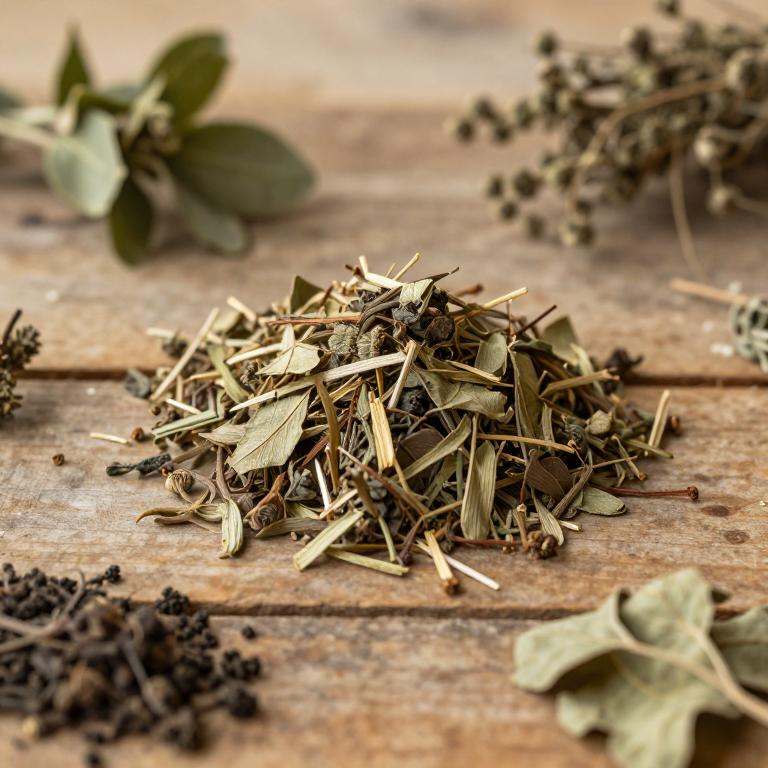
Names and Synonyms
Common Names
- White Meranti
Scientific Names
Accepted name
Anthoshorea roxburghiiSynonyms
- Shorea saigonensis
- Shorea talura
- Shorea floribunda
- Shorea cochinchinensis
- Shorea harmandii
- Shorea attopoensis
- Shorea talura var. saigonensis
- Anthoshorea harmandii
- Shorea roxburghii
- Shorea cochinchinensis var. saigonensis
- Vatica laccifera
Sources: Wikidata, Catalogue of Life
Taxonomical Classification
This plant belongs to the kingdom Plantae and is classified under the phylum Streptophyta and class Equisetopsida. Within the subclass Magnoliidae, it is organized under the order Malvales and the family Dipterocarpaceae. It is specifically identified by the genus Anthoshorea, which includes the species Anthoshorea roxburghii.
| Rank | Classification |
|---|---|
| Kingdom | Plantae |
| Phylum | Streptophyta |
| Class | Equisetopsida |
| Subclass | Magnoliidae |
| Order | Malvales |
| Family | Dipterocarpaceae |
| Genus | Anthoshorea |
Sources: The World Checklist of Vascular Plants (WCVP)
Distribution
This plant exhibits a broad geographical presence across several key regions in Asia. Within the Indian Subcontinent, its distribution is primarily identified in India. It also maintains a significant presence throughout the Indo-China region. Specifically, it can be found growing in the landscapes of Cambodia and Laos. Furthermore, its range extends into the territories of Myanmar and Thailand.
| Region | Area |
|---|---|
| Indian Subcontinent | India |
| Indo-China | Cambodia |
| Indo-China | Laos |
| Indo-China | Myanmar |
| Indo-China | Thailand |
| Indo-China | Vietnam |
| Malesia | Malaya |
Sources: The World Checklist of Vascular Plants (WCVP)
Plant Parts
Anthoshorea roxburghii has 1 reported plant parts identified across 1 scientific publications and several other databases that are studied for medicinal purposes. The most consistently reported plant part include flower.
| Plant part | Supporting sources | Consensus |
|---|---|---|
| Flower | 1 supporting sources | ★☆☆☆☆ |
Flower
- BMC complementary medicine and therapies
Chemicals
Anthoshorea roxburghii has 10 reported phytochemicals identified across 1 scientific publications and several other databases. The most consistently reported chemicals include Asiatic acid, CINNAMIC ACID, Coumaric Acid, Dammarenolic acid, Dipterocarpol.
| Chemical | Supporting sources | Consensus |
|---|---|---|
| Asiatic acid | 1 supporting sources | ★☆☆☆☆ |
| CINNAMIC ACID | 1 supporting sources | ★☆☆☆☆ |
| Coumaric Acid | 1 supporting sources | ★☆☆☆☆ |
| Dammarenolic acid | 1 supporting sources | ★☆☆☆☆ |
| Dipterocarpol | 1 supporting sources | ★☆☆☆☆ |
| Flavonoids | 1 supporting sources | ★☆☆☆☆ |
| TANNIC ACID | 1 supporting sources | ★☆☆☆☆ |
| Tannin | 1 supporting sources | ★☆☆☆☆ |
| ferulic acid | 1 supporting sources | ★☆☆☆☆ |
| resin | 1 supporting sources | ★☆☆☆☆ |
Asiatic acid
- Ancient science of life
CINNAMIC ACID
- BMC complementary medicine and therapies
Coumaric Acid
- BMC complementary medicine and therapies
Dammarenolic acid
- Ancient science of life
Dipterocarpol
- Ancient science of life
Flavonoids
- BMC complementary medicine and therapies
TANNIC ACID
- Ancient science of life
Tannin
- Ancient science of life
ferulic acid
- BMC complementary medicine and therapies
resin
- Ancient science of life
Activities
Anthoshorea roxburghii has 4 reported activities identified across 1 scientific publications and several other databases. The most consistently reported activities include Analgesic, Antibacterial, Anticancer, Antioxidant.
| Activity | Supporting sources | Consensus |
|---|---|---|
| Analgesic | 1 supporting sources | ★☆☆☆☆ |
| Antibacterial | 1 supporting sources | ★☆☆☆☆ |
| Anticancer | 1 supporting sources | ★☆☆☆☆ |
| Antioxidant | 1 supporting sources | ★☆☆☆☆ |
Analgesic
- Ancient science of life
Antibacterial
- Ancient science of life
Anticancer
- BMC complementary medicine and therapies
Antioxidant
- BMC complementary medicine and therapies
Preparations
Anthoshorea roxburghii has 3 reported preparations identified across 1 scientific publications and several other databases. The most consistently reported preparations include Water extract, ethyl acetate extract, ethyl acetate fractions.
| Preparation | Supporting sources | Consensus |
|---|---|---|
| Water extract | 1 supporting sources | ★☆☆☆☆ |
| Ethyl acetate extract | 1 supporting sources | ★☆☆☆☆ |
| Ethyl acetate fractions | 1 supporting sources | ★☆☆☆☆ |
Water extract
- BMC complementary medicine and therapies
Ethyl acetate extract
- BMC complementary medicine and therapies
Ethyl acetate fractions
- Evidence-based complementary and alternative medicine : eCAM