Anthemis maritima
Anthemis maritima · Accepted scientific name
Scientific literature: Very Sparse (15 studies) · ★☆☆☆☆
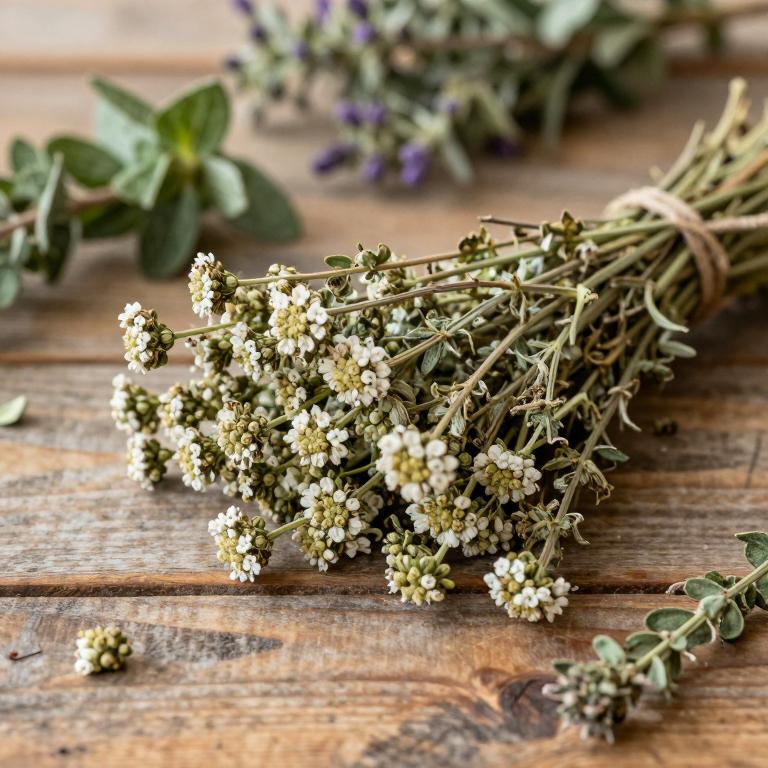
Anthemis maritima, scientifically known as Anthemis maritima, is a resilient perennial herb native to coastal Mediterranean regions. Characterized by its delicate white daisy-like flowers and aromatic foliage, this plant thrives in sandy soils. Traditionally valued in herbalism, it offers unique botanical properties within the diverse Asteraceae family.
- Family
- Asteraceae
- Native range
- Europe
- Parts used
- Not available
- Common names
- Not available
- Scientific synonyms
- Not available
Names and Synonyms
Scientific Names
Accepted name
Anthemis maritimaRegional and Traditional Names
French:
- Anthémis maritime
Sources: Wikidata
Taxonomical Classification
This plant belongs to the kingdom Plantae within the phylum Streptophyta and the class Equisetopsida. It is further classified under the subclass Magnoliidae and the order Asterales. Finally, it is a member of the family Asteraceae and falls under the genus Anthemis.
| Rank | Classification |
|---|---|
| Kingdom | Plantae |
| Phylum | Streptophyta |
| Class | Equisetopsida |
| Subclass | Magnoliidae |
| Order | Asterales |
| Family | Asteraceae |
| Genus | Anthemis |
Sources: The World Checklist of Vascular Plants (WCVP)
Distribution
This plant is primarily distributed across various regions of Southwestern Europe. Its presence can be observed throughout the coastal areas of France and Portugal. Additionally, it is found inhabiting the island of Corse. The species also grows within the Mediterranean territories of Sardegna. Finally, its geographical range extends to the Baleares islands.
| Region | Area |
|---|---|
| Southwestern Europe | Baleares |
| Southwestern Europe | Corse |
| Southwestern Europe | France |
| Southwestern Europe | Portugal |
| Southwestern Europe | Sardegna |
| Southwestern Europe | Spain |
| Southeastern Europe | Italy |
| Southeastern Europe | Sicilia |
| Northern Africa | Algeria |
| Northern Africa | Libya |
Sources: The World Checklist of Vascular Plants (WCVP)
Botanical Identification
Life history
The life history of Anthemis maritima is characterized by its classification as a perennial species, allowing it to persist through multiple growing seasons. In terms of its growth habit and structural strategy, the plant is categorized as a chamaephyte, a life form where the majority of the vegetation is located close to the soil surface, often protected by snow or leaf litter during unfavorable conditions. This specific life form, identified through both its chamaephyte status in ecological stratification and its structural designation, enables the plant to thrive in its typical coastal or rocky habitats by maintaining a low-growing, resilient profile.
- Life form :
- chamaephyte
- Lifecycle :
- perennial
Morphology
The morphology of Anthemis maritima is characterized by its growth form as a herb, typically presenting a non-woody structure throughout its development. It functions as a terrestrial plant, growing directly in the soil rather than as an epiphyte, and maintains an independent lifestyle as it is not a parasite. While it does not exhibit climbing behavior, its structural habit is strictly self-supporting, allowing it to maintain its upright or spreading position without the need for external support.
- Climber :
- self-supporting
- Epiphyte :
- terrestrial
- Growth form :
- herb
- Parasite :
- independent
- Woodiness :
- non-woody
Reproduction
The reproduction of Anthemis maritima is characterized by the production of seeds that exhibit a highly uniform mass across the sampled population. Based on quantitative data, the seed mass maintains a consistent value with a mean of 0.00102 g, which is mirrored by both the maximum and minimum recorded measurements of 0.00102 g. This lack of variance in seed mass suggests a highly standardized reproductive output, where each individual seed carries a specific, consistent weight of 0.00102 g, ensuring a predictable energy investment per propagule during the plant's life cycle.
- Seed mass mean:
- 0.00102 g
Sources: Global Inventory of Floras and Traits (GIFT)
Chemicals
Anthemis maritima has 6 reported phytochemicals identified across 0 scientific publications and several other databases. The most consistently reported chemicals include Astragalin, Coumarins, Flavonoids, Kaempferol-3-O-rutinoside, Sterols.
| Chemical | Supporting sources | Consensus |
|---|---|---|
| Astragalin | 1 supporting sources | ★☆☆☆☆ |
| Coumarins | 1 supporting sources | ★☆☆☆☆ |
| Flavonoids | 1 supporting sources | ★☆☆☆☆ |
| Kaempferol-3-O-rutinoside | 1 supporting sources | ★☆☆☆☆ |
| Sterols | 1 supporting sources | ★☆☆☆☆ |
| cyanidin-3,5-diglucoside | 1 supporting sources | ★☆☆☆☆ |
Astragalin
- BMC complementary medicine and therapies
Coumarins
- BMC complementary medicine and therapies
Flavonoids
- BMC complementary medicine and therapies
Kaempferol-3-O-rutinoside
- BMC complementary medicine and therapies
Sterols
- BMC complementary medicine and therapies
cyanidin-3,5-diglucoside
- BMC complementary medicine and therapies
Activities
Anthemis maritima has 4 reported activities identified across 0 scientific publications and several other databases. The most consistently reported activities include Antibacterial, Antimicrobial, Antioxidant, Cytotoxic.
| Activity | Supporting sources | Consensus |
|---|---|---|
| Antibacterial | 1 supporting sources | ★☆☆☆☆ |
| Antimicrobial | 1 supporting sources | ★☆☆☆☆ |
| Antioxidant | 1 supporting sources | ★☆☆☆☆ |
| Cytotoxic | 1 supporting sources | ★☆☆☆☆ |
Antibacterial
- BMC complementary medicine and therapies
Antimicrobial
- BMC complementary medicine and therapies
Antioxidant
- BMC complementary medicine and therapies
Cytotoxic
- BMC complementary medicine and therapies
Conditions
Anthemis maritima has 4 reported investigations on conditions identified across 0 scientific publications and several other databases. The most consistently reported conditions include Pseudomonas aeruginosa, cancer, inflammation, wound-healing.
| Condition | Supporting sources | Consensus |
|---|---|---|
| Pseudomonas aeruginosa | 1 supporting sources | ★☆☆☆☆ |
| Cancer | 1 supporting sources | ★☆☆☆☆ |
| Inflammation | 1 supporting sources | ★☆☆☆☆ |
| Wound-healing | 1 supporting sources | ★☆☆☆☆ |
Pseudomonas aeruginosa
- BMC complementary medicine and therapies
Cancer
- BMC complementary medicine and therapies
Inflammation
- BMC complementary medicine and therapies
Wound-healing
- BMC complementary medicine and therapies
Preparations
Anthemis maritima has 1 reported preparations identified across 0 scientific publications and several other databases. The most consistently reported preparations include methanolic extracts of Anthemis maritima aerial parts.
| Preparation | Supporting sources | Consensus |
|---|---|---|
| Methanolic extracts of anthemis maritima aerial parts | 1 supporting sources | ★☆☆☆☆ |
Methanolic extracts of anthemis maritima aerial parts
- BMC complementary medicine and therapies