Anthemis auriculata
Anthemis auriculata · Accepted scientific name
Scientific literature: Very Sparse (11 studies) · ★☆☆☆☆
Anthemis auriculata, scientifically known as Anthemis auriculata, is a resilient perennial herb belonging to the Asteraceae family. Native to the rocky terrains of the Mediterranean and Middle East, this plant is valued for its aromatic properties and traditional medicinal uses, particularly in soothing skin ailments and reducing inflammation.
- Family
- Asteraceae
- Native range
- Europe
- Parts used
- Not available
- Common names
- Not available
- Scientific synonyms
- Anthemis Sismondaeana
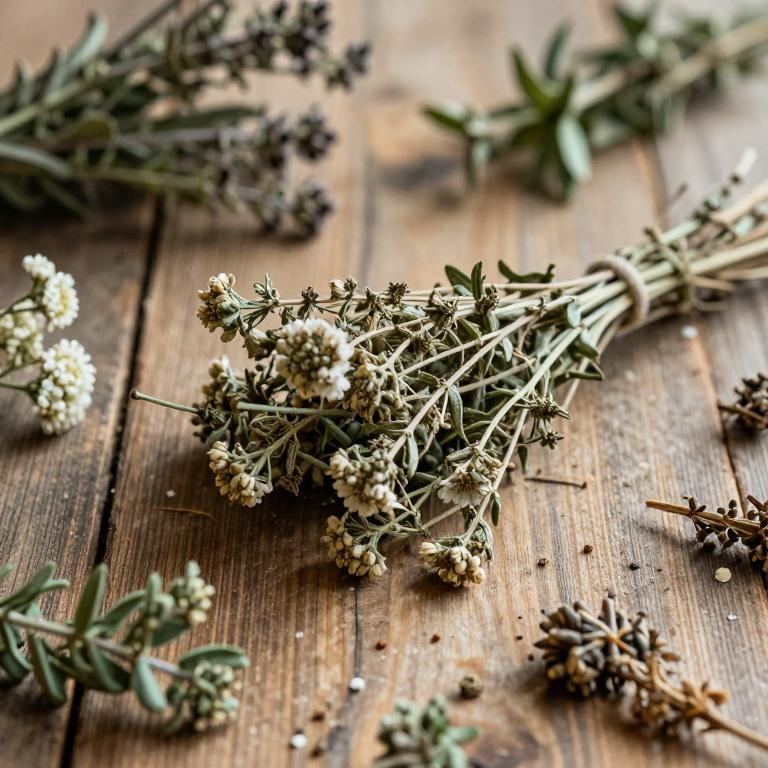
Names and Synonyms
Scientific Names
Accepted name
Anthemis auriculataSynonyms
- Anthemis sismondaeana
Sources: Wikidata
Taxonomical Classification
This plant belongs to the kingdom Plantae and is classified under the phylum Streptophyta and class Equisetopsida. Within the subclass Magnoliidae and order Asterales, it is a member of the Asteraceae family. Specifically, it is identified by the genus Anthemis, within which the species Anthemis auriculata is categorized.
| Rank | Classification |
|---|---|
| Kingdom | Plantae |
| Phylum | Streptophyta |
| Class | Equisetopsida |
| Subclass | Magnoliidae |
| Order | Asterales |
| Family | Asteraceae |
| Genus | Anthemis |
Sources: The World Checklist of Vascular Plants (WCVP)
Distribution
This plant is widely distributed across various regions within Southeastern Europe. It can be found growing in the country of Albania as well as throughout Bulgaria. Its range extends into Greece, marking a significant presence in the Mediterranean area. Additionally, the species is located in the European portion of Türkiye. Finally, its distribution encompasses the northwestern Balkan Peninsula.
| Region | Area |
|---|---|
| Southeastern Europe | Albania |
| Southeastern Europe | Bulgaria |
| Southeastern Europe | Greece |
| Southeastern Europe | Türkiye-in-Europe |
| Southeastern Europe | NW. Balkan Pen. |
| Western Asia | East Aegean Is. |
| Western Asia | Türkiye |
Sources: The World Checklist of Vascular Plants (WCVP)
Botanical Identification
Life history
The life history of Anthemis auriculata is characterized by its classification as a hemicryptophyte, a life form where the perennating buds are located at the soil surface or just beneath it, protected by the leaf litter or soil layer during unfavorable seasons. Within the spectrum of plant growth forms, it functions specifically as a hemicryptophyte, distinguishing it from other life forms such as phanerophytes, chamaephytes, cryptophytes, or therophytes. This biological strategy allows the plant to persist through seasonal environmental shifts by maintaining its vital structures at the ground level, enabling it to re-emerge and complete its reproductive cycle once favorable conditions return.
- Life form :
- hemicryptophyte
Morphology
The morphology of Anthemis auriculata is characterized by its growth habit as a terrestrial plant, typically found in well-drained soils rather than aquatic or semiaquatic environments. It features an erect or ascending herbaceous structure, often forming small clumps or spreading slightly via branched stems. The leaves are typically divided or pinnatisect, exhibiting a characteristic arrangement that distinguishes it within the Asteraceae family. The foliage often displays small, lobed segments that contribute to a fine, feathery texture. The inflorescence consists of capitula (flower heads) borne on peduncles, featuring white ray florets surrounding a central disc of yellow tubular florets. The stems are often slightly pubescent, providing a textural contrast to the delicate leaf structure and the composite floral arrangement.
- Aquatic :
- terrestrial
Sources: Global Inventory of Floras and Traits (GIFT)
Chemicals
Anthemis auriculata has 4 reported phytochemicals identified across 0 scientific publications and several other databases. The most consistently reported chemicals include ANTHECOTULIDE, Methyl vanillate, acetoxyanthecotulide, hydroxyanthecotulide.
| Chemical | Supporting sources | Consensus |
|---|---|---|
| ANTHECOTULIDE | 2 supporting sources | ★☆☆☆☆ |
| Methyl vanillate | 1 supporting sources | ★☆☆☆☆ |
| acetoxyanthecotulide | 1 supporting sources | ★☆☆☆☆ |
| hydroxyanthecotulide | 1 supporting sources | ★☆☆☆☆ |
ANTHECOTULIDE
- Phytomedicine : international journal of phytotherapy and phytopharmacology
- Journal of natural products
Methyl vanillate
- Journal of natural products
acetoxyanthecotulide
- Journal of natural products
hydroxyanthecotulide
- Journal of natural products
Activities
Anthemis auriculata has 1 reported activities identified across 0 scientific publications and several other databases. The most consistently reported activities include Cytotoxic.
| Activity | Supporting sources | Consensus |
|---|---|---|
| Cytotoxic | 1 supporting sources | ★☆☆☆☆ |
Cytotoxic
- Phytomedicine : international journal of phytotherapy and phytopharmacology
Conditions
Anthemis auriculata has 4 reported investigations on conditions identified across 0 scientific publications and several other databases. The most consistently reported conditions include Leishmania donovani, Trypanosoma brucei rhodesiense, Trypanosomiasis, leishmaniasis.
| Condition | Supporting sources | Consensus |
|---|---|---|
| Leishmania donovani | 1 supporting sources | ★☆☆☆☆ |
| Trypanosoma brucei rhodesiense | 1 supporting sources | ★☆☆☆☆ |
| Trypanosomiasis | 1 supporting sources | ★☆☆☆☆ |
| Leishmaniasis | 1 supporting sources | ★☆☆☆☆ |
Leishmania donovani
- Phytomedicine : international journal of phytotherapy and phytopharmacology
Trypanosoma brucei rhodesiense
- Phytomedicine : international journal of phytotherapy and phytopharmacology
Trypanosomiasis
- Phytomedicine : international journal of phytotherapy and phytopharmacology
Leishmaniasis
- Phytomedicine : international journal of phytotherapy and phytopharmacology