Sugar Apple
Annona mucosa · Accepted scientific name
Scientific literature: Very Extensive (647 studies) · ★★★★★
Sugar Apple, scientifically known as Annona mucosa, is a tropical fruit-bearing tree cherished for its luscious, custard-like flesh. Beyond its culinary appeal, this plant holds significant ethnobotanical value. It is widely utilized in traditional medicine to treat various ailments, showcasing its potent bioactive properties and importance in natural healing.
- Family
- Annonaceae
- Native range
- Asia-Tropical
- Parts used
- Leaf · Seed
- Common names
- Sugar Apple
- Scientific synonyms
- Rollinia Mucosa · Annona Obtusiflora · 22 more
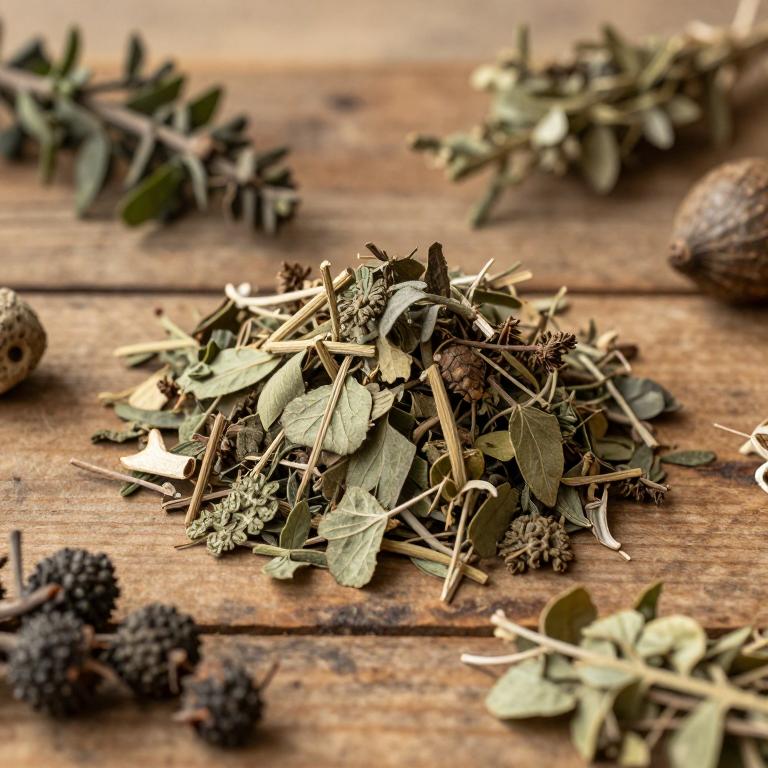
Names and Synonyms
Common Names
- Sugar Apple
Scientific Names
Accepted name
Annona mucosaSynonyms
- Rollinia mucosa
- Annona obtusiflora
- Annona obtusifolia
- Annona muscosa
- Rollinia biflora
- Rollinia pulchrinervia
- Rollinia pterocarpa
- Rollinia sieberi
- Rollinia deliciosa
- Rollinia curvipetala
- Rollinia neglecta
- Rollinia orthopetala
- Rollinia jimenezii
- Rollinia permensis
- Rollinia micrantha
- Rollinia mucosa var. macropoda
- Rolliniopsis parviflora var. angustifolia
- Rollinia mucosa subsp. portoricensis
- Annona biflora
- Annona reticulata var. mucosa
- Annona pteropetala
- Rollinia jimenezii var. nelsonii
- Rollinia mucosa subsp. aequatorialis
- Rollinia mucosa var. neglecta
Regional and Traditional Names
Spanish:
- anona
- cachimán
- candón
- cherimoya
- Candongo
- anón amazónico
German:
- Schleimapfel
French:
- cachiman créme
- cachiman montagne
- Cachiman crème
Sources: Wikidata, Catalogue of Life
Taxonomical Classification
This plant belongs to the kingdom Plantae and the phylum Streptophyta, falling under the class Equisetopsida and subclass Magnoliidae. Within the order Magnoliales, it is classified under the family Annonaceae. Finally, Annona mucosa is identified by its specific genus, Annona.
| Rank | Classification |
|---|---|
| Kingdom | Plantae |
| Phylum | Streptophyta |
| Class | Equisetopsida |
| Subclass | Magnoliidae |
| Order | Magnoliales |
| Family | Annonaceae |
| Genus | Annona |
Sources: The World Checklist of Vascular Plants (WCVP)
Distribution
This plant exhibits a diverse geographical presence spanning both Southeast Asia and North America. In the Indo-China region, its distribution includes the country of Thailand. Its reach extends significantly into Mexico, where it can be found throughout the central territories. Furthermore, the species is widely spread across the Mexican Gulf coast and the southwest regions. Finally, its habitat encompasses the southeast portions of Mexico as well.
| Region | Area |
|---|---|
| Indo-China | Thailand |
| Mexico | Mexico Central |
| Mexico | Mexico Gulf |
| Mexico | Mexico Southwest |
| Mexico | Mexico Southeast |
| Central America | Belize |
| Central America | Costa Rica |
| Central America | El Salvador |
| Central America | Guatemala |
| Central America | Honduras |
Sources: The World Checklist of Vascular Plants (WCVP)
Botanical Identification
Ecology
The ecology of Annona mucosa is characterized by its adaptability to diverse tropical forest environments, specifically thriving within both Floresta de Terra Firme and Floresta de Várzea habitats. This species exhibits a broad altitudinal distribution, spanning from sea level (0 m AMSL) up to a maximum elevation of 2000 m AMSL. Throughout its natural range, it maintains a mean elevation of approximately 650 m AMSL, reflecting its ability to inhabit both lowland floodplains and more elevated forest terrains.
- Elevational range max:
- 2000 m AMSL
- Elevational range mean:
- 650 m AMSL
- Elevational range min:
- 0 m AMSL
- Habitat :
- Floresta de Terra Firme, Floresta de Várzea
Life history
The life history of Annona mucosa is characterized by its status as a perennial plant, allowing it to persist in its environment through multiple growing seasons. Throughout its existence, it maintains an evergreen habit, retaining its foliage year-round rather than shedding leaves seasonally.
- Deciduousness :
- evergreen
- Lifecycle :
- perennial
Morphology
The morphology of Annona mucosa is characterized by a woody growth form, specifically manifesting as a tree. This species is a terrestrial plant that functions independently, lacking any parasitic tendencies. In terms of its physical stature, it can reach a maximum plant height of 25 m, with an average height of approximately 12 m. Although it possesses a robust structure, its climbing habit is classified as self-supporting rather than being an obligatory or facultative climber. Furthermore, it is a non-epiphytic species, maintaining a strictly terrestrial existence.
- Aquatic :
- terrestrial
- Climber :
- self-supporting
- Epiphyte :
- terrestrial
- Growth form :
- tree
- Parasite :
- independent
- Plant height max:
- 25 m
- Plant height mean:
- 12 m
- Woodiness :
- woody
Physiology
The physiology of Annona mucosa is characterized by a C3 photosynthetic pathway, which involves the direct fixation of atmospheric carbon dioxide through the enzyme Rubisco during the Calvin cycle. Unlike plants utilizing C4 or CAM mechanisms, this species relies on the standard carbon assimilation process typical of many woody tropical angiosperms. Furthermore, in terms of its nutrient cycling capabilities, Annona mucosa is not a nitrogen fixer, meaning it lacks the specialized symbiotic relationships with diazotrophic bacteria, such as Rhizobium, required to convert atmospheric nitrogen into bioavailable forms. Consequently, the plant depends on the uptake of mineral nitrogen, primarily in the form of nitrates or ammonium, from the soil substrate to support its metabolic processes and growth.
- Nitrogen fixer :
- no
- Photosynthetic pathway :
- C3
Reproduction
The reproduction of Annona mucosa is characterized by a seed dispersal strategy categorized as zoochorous, relying on animals for the distribution of its offspring. The seeds produced by this species exhibit consistent morphological properties, with a recorded seed mass that is uniform at both the minimum and maximum levels, specifically 0.16 g, resulting in a mean seed mass of 0.16 g. In terms of physical dimensions, the seeds vary in length, ranging from a minimum of 6 mm to a maximum of 15 mm.
- Dispersal syndrome :
- zoochorous
- Seed length max:
- 15 mm
- Seed length min:
- 6 mm
- Seed mass mean:
- 0.16 g
Sources: Global Inventory of Floras and Traits (GIFT)
Plant Parts
Annona mucosa has 3 reported plant parts identified across 7 scientific publications and several other databases that are studied for medicinal purposes. The most consistently reported plant part include leaf, seed, fruit.
| Plant part | Supporting sources | Consensus |
|---|---|---|
| Leaf | 4 supporting sources | ★★☆☆☆ |
| Seed | 2 supporting sources | ★☆☆☆☆ |
| Fruit | 1 supporting sources | ★☆☆☆☆ |
Leaf
- Journal of natural products
- Bioorganic & medicinal chemistry
- Phytochemistry
- Zeitschrift fur Naturforschung. C, Journal of biosciences
Seed
- Phytochemistry
- Journal of natural products
Fruit
- Journal of natural products
Chemicals
Annona mucosa has 85 reported phytochemicals identified across 7 scientific publications and several other databases. The most consistently reported chemicals include ACETOGENINS, Desacetyluvaricin, Squamone, (+)-Epieudesmine, 1,2-Disehydronorcoclaurine.
| Chemical | Supporting sources | Consensus |
|---|---|---|
| ACETOGENINS | 2 supporting sources | ★☆☆☆☆ |
| Desacetyluvaricin | 2 supporting sources | ★☆☆☆☆ |
| Squamone | 2 supporting sources | ★☆☆☆☆ |
| (+)-Epieudesmine | 1 supporting sources | ★☆☆☆☆ |
| 1,2-Disehydronorcoclaurine | 1 supporting sources | ★☆☆☆☆ |
| 14-Hydroxy-25-desoxyrollinicin | 1 supporting sources | ★☆☆☆☆ |
| Annomonicin | 1 supporting sources | ★☆☆☆☆ |
| Annoreticuin-9-one | 1 supporting sources | ★☆☆☆☆ |
| Anonaine | 1 supporting sources | ★☆☆☆☆ |
| Ash | 1 supporting sources | ★☆☆☆☆ |
ACETOGENINS
- Journal of natural products
- Brazilian journal of microbiology : [publication of the Brazilian Society for Microbiology]
Desacetyluvaricin
- Bioorganic & medicinal chemistry
- Journal of natural products
Squamone
- Yao xue xue bao = Acta pharmaceutica Sinica
- Journal of natural products
(+)-Epieudesmine
- Zeitschrift fur Naturforschung. C, Journal of biosciences
1,2-Disehydronorcoclaurine
- Dr. Duke
14-Hydroxy-25-desoxyrollinicin
- Dr. Duke
Annomonicin
- Journal of natural products
Annoreticuin-9-one
- Journal of natural products
Anonaine
- Dr. Duke
Ash
- Dr. Duke
Activities
Annona mucosa has 357 reported activities identified across 7 scientific publications and several other databases. The most consistently reported activities include Antibacterial, Analgesic, Anthelmintic, Antipyretic, Cytotoxic.
| Activity | Supporting sources | Consensus |
|---|---|---|
| Antibacterial | 3 supporting sources | ★★☆☆☆ |
| Analgesic | 2 supporting sources | ★☆☆☆☆ |
| Anthelmintic | 2 supporting sources | ★☆☆☆☆ |
| Antipyretic | 2 supporting sources | ★☆☆☆☆ |
| Cytotoxic | 2 supporting sources | ★☆☆☆☆ |
| 5-Alpha-Reductase-Inhibitor | 1 supporting sources | ★☆☆☆☆ |
| Acidulant | 1 supporting sources | ★☆☆☆☆ |
| Adrenergic | 1 supporting sources | ★☆☆☆☆ |
| Aldose-Reductase-Inhibitor | 1 supporting sources | ★☆☆☆☆ |
| Allergenic | 1 supporting sources | ★☆☆☆☆ |
Antibacterial
- Dr. Duke
- TheScientificWorldJournal
- Chemistry & biodiversity
Analgesic
- Dr. Duke
- Journal of traditional and complementary medicine
Anthelmintic
- Dr. Duke
- Journal of traditional and complementary medicine
Antipyretic
- Dr. Duke
- Journal of traditional and complementary medicine
Cytotoxic
- Dr. Duke
- Journal of natural products
5-Alpha-Reductase-Inhibitor
- Dr. Duke
Acidulant
- Dr. Duke
Adrenergic
- Dr. Duke
Aldose-Reductase-Inhibitor
- Dr. Duke
Allergenic
- Dr. Duke
Conditions
Annona mucosa has 2 reported investigations on conditions identified across 7 scientific publications and several other databases. The most consistently reported conditions include Bacillus thuringiensis, Streptococcus pyogenes.
| Condition | Supporting sources | Consensus |
|---|---|---|
| Bacillus thuringiensis | 1 supporting sources | ★☆☆☆☆ |
| Streptococcus pyogenes | 1 supporting sources | ★☆☆☆☆ |
Bacillus thuringiensis
- Brazilian journal of microbiology : [publication of the Brazilian Society for Microbiology]
Streptococcus pyogenes
- Brazilian journal of microbiology : [publication of the Brazilian Society for Microbiology]
Preparations
Annona mucosa has 9 reported preparations identified across 7 scientific publications and several other databases. The most consistently reported preparations include CHCl(3)-MeOH (1:1) extract, Crude ethanolic extracts, aqueous methanol fraction of the leaves, crude methanol-soluble fraction, ethanolic extract of the leaves.
| Preparation | Supporting sources | Consensus |
|---|---|---|
| Chcl(3)-meoh (1:1) extract | 1 supporting sources | ★☆☆☆☆ |
| Crude ethanolic extracts | 1 supporting sources | ★☆☆☆☆ |
| Aqueous methanol fraction of the leaves | 1 supporting sources | ★☆☆☆☆ |
| Crude methanol-soluble fraction | 1 supporting sources | ★☆☆☆☆ |
| Ethanolic extract of the leaves | 1 supporting sources | ★☆☆☆☆ |
| Ethanolic extracts of the leaves | 1 supporting sources | ★☆☆☆☆ |
| Ethyl acetate extract | 1 supporting sources | ★☆☆☆☆ |
| Ethyl acetate extract of seeds of annona reticulata | 1 supporting sources | ★☆☆☆☆ |
| Leaves | 1 supporting sources | ★☆☆☆☆ |
Chcl(3)-meoh (1:1) extract
- Journal of natural products
Crude ethanolic extracts
- Medicines (Basel, Switzerland)
Aqueous methanol fraction of the leaves
- Bioorganic & medicinal chemistry
Crude methanol-soluble fraction
- Journal of natural products
Ethanolic extract of the leaves
- Phytochemistry
Ethanolic extracts of the leaves
- Journal of natural products
Ethyl acetate extract
- Journal of natural products
Ethyl acetate extract of seeds of annona reticulata
- Phytochemistry
Leaves
- Zeitschrift fur Naturforschung. C, Journal of biosciences