Annona diversifolia
Annona macroprophyllata · Accepted scientific name
Scientific literature: Very Extensive (230 studies) · ★★★★★
Annona diversifolia, scientifically known as Annona macroprophyllata, is a versatile medicinal plant native to tropical regions. Renowned for its therapeutic properties, it is frequently utilized in traditional medicine to treat various ailments. This species offers significant pharmacological potential, particularly through its bioactive compounds used in holistic healing practices.
- Family
- Annonaceae
- Native range
- Northern America
- Parts used
- Leaf
- Common names
- Ilama
- Scientific synonyms
- Annona Diversifolia
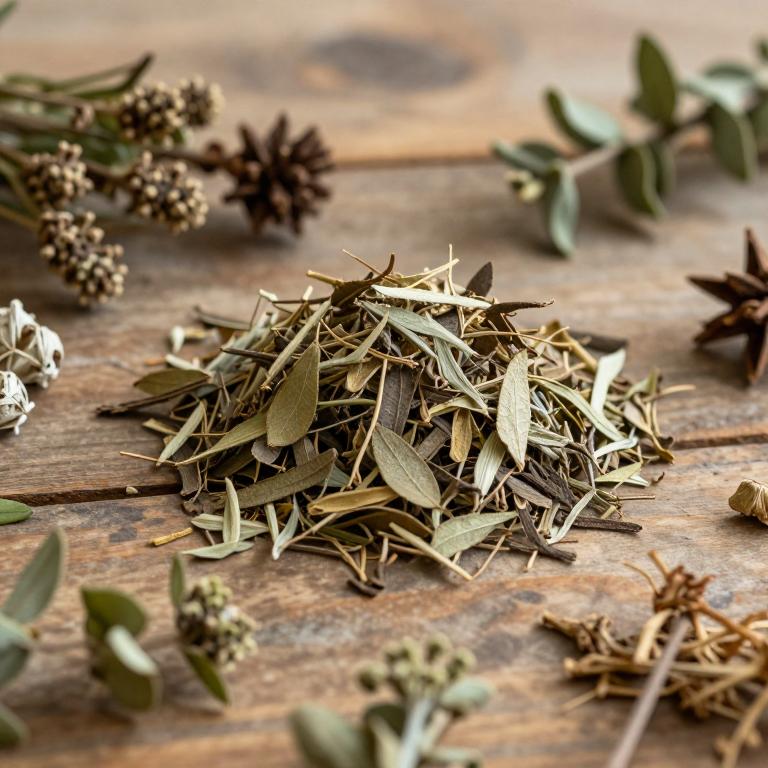
Names and Synonyms
Common Names
- ilama
Scientific Names
Accepted name
Annona macroprophyllataSynonyms
- Annona diversifolia
Regional and Traditional Names
Spanish:
- Annona diversifolia
- Ilama
- Papausa
- anona blanca
- llama
- perpauce
- Ilamazapote
German:
- Ilama
- Annona diversifolia
Sources: Wikidata, Catalogue of Life
Taxonomical Classification
This plant belongs to the kingdom Plantae and the phylum Streptophyta, falling under the class Equisetopsida and subclass Magnoliidae. Within the order Magnoliales, it is classified under the family Annonaceae. Finally, its taxonomic designation is completed within the genus Annona.
| Rank | Classification |
|---|---|
| Kingdom | Plantae |
| Phylum | Streptophyta |
| Class | Equisetopsida |
| Subclass | Magnoliidae |
| Order | Magnoliales |
| Family | Annonaceae |
| Genus | Annona |
Sources: The World Checklist of Vascular Plants (WCVP)
Distribution
This plant exhibits a diverse geographical range spanning across several key regions of Mexico and Central America. Within Mexico, it can be found throughout the central territories and along the Gulf coast. Its distribution also extends to the southwestern portions of the country. Furthermore, the species is present in the southeastern regions of Mexico. Finally, its presence reaches into Central America, specifically within the borders of El Salvador.
| Region | Area |
|---|---|
| Mexico | Mexico Central |
| Mexico | Mexico Gulf |
| Mexico | Mexico Southwest |
| Mexico | Mexico Southeast |
| Central America | El Salvador |
| Central America | Guatemala |
| Central America | Honduras |
| Central America | Nicaragua |
Sources: The World Checklist of Vascular Plants (WCVP)
Botanical Identification
Life history
The life history of Annona macroprophylla is characterized by its classification as a perennial species, meaning it persists through multiple growing seasons and maintains its vegetative structure over a long duration. As a perennial plant, it does not complete its life cycle in a single year or two, but rather establishes a lasting presence in its ecosystem, allowing for repeated cycles of growth, flowering, and fruit production. This long-lived life strategy enables the plant to invest significant energy into robust root systems and woody structures, which support its continuous development and ability to withstand varying environmental conditions over many years.
- Lifecycle :
- perennial
Morphology
The morphology of Annona macroprophylla is characterized by a woody growth form, specifically manifesting as a tree. It reaches an average plant height of approximately 8 meters and functions as a self-supporting organism, categorized as both a self-supporting climber and a non-obligatory, self-supporting structure. The plant is strictly terrestrial in its ecological habit, existing neither as an aquatic nor a semiaquatic species, and it does not function as an epiphyte. Furthermore, it is an independent organism, showing no parasitic tendencies.
- Aquatic :
- terrestrial
- Climber :
- self-supporting
- Epiphyte :
- terrestrial
- Growth form :
- tree
- Parasite :
- independent
- Plant height mean:
- 8 m
- Woodiness :
- woody
Physiology
The physiology of Annona macroprophyllata is characterized by complex metabolic processes centered on nutrient acquisition and energy conversion within its tropical ecosystem. In terms of its nitrogen cycle involvement, the species does not function as a nitrogen fixer, meaning it lacks the symbiotic relationship with diazotrophic bacteria required to convert atmospheric nitrogen into bioavailable forms; instead, it relies on the uptake of nitrates and ammonium from the soil through its root system. The plant's carbon assimilation is driven by photosynthetic pathways that facilitate the synthesis of organic compounds, which are subsequently redistributed through vascular tissues to support fruit development and vegetative growth. Its physiological regulation also involves efficient transpiration rates and osmotic adjustments to maintain turgor pressure and manage water potential in varying environmental conditions.
- Nitrogen fixer :
- no
Sources: Global Inventory of Floras and Traits (GIFT)
Plant Parts
Annona macroprophyllata has 1 reported plant parts identified across 1 scientific publications and several other databases that are studied for medicinal purposes. The most consistently reported plant part include leaf.
| Plant part | Supporting sources | Consensus |
|---|---|---|
| Leaf | 1 supporting sources | ★☆☆☆☆ |
Leaf
- Planta medica
Chemicals
Annona macroprophyllata has 14 reported phytochemicals identified across 1 scientific publications and several other databases. The most consistently reported chemicals include 16-Hentriacontanone, Ash, CALCIUM, FAT, IRON.
| Chemical | Supporting sources | Consensus |
|---|---|---|
| 16-Hentriacontanone | 1 supporting sources | ★☆☆☆☆ |
| Ash | 1 supporting sources | ★☆☆☆☆ |
| CALCIUM | 1 supporting sources | ★☆☆☆☆ |
| FAT | 1 supporting sources | ★☆☆☆☆ |
| IRON | 1 supporting sources | ★☆☆☆☆ |
| Liriodenine | 1 supporting sources | ★☆☆☆☆ |
| PHOSPHORUS | 1 supporting sources | ★☆☆☆☆ |
| Palmitone | 1 supporting sources | ★☆☆☆☆ |
| ascorbic acid | 1 supporting sources | ★☆☆☆☆ |
| beta-carotene | 1 supporting sources | ★☆☆☆☆ |
16-Hentriacontanone
- Planta medica
Ash
- Dr. Duke
CALCIUM
- Dr. Duke
FAT
- Dr. Duke
IRON
- Dr. Duke
Liriodenine
- The journal of venomous animals and toxins including tropical diseases
PHOSPHORUS
- Dr. Duke
Palmitone
- Planta medica
ascorbic acid
- Dr. Duke
beta-carotene
- Dr. Duke
Activities
Annona macroprophyllata has 207 reported activities identified across 1 scientific publications and several other databases. The most consistently reported activities include Anticonvulsant, Acidulant, Aldose-Reductase-Inhibitor, Allergenic, Analgesic.
| Activity | Supporting sources | Consensus |
|---|---|---|
| Anticonvulsant | 2 supporting sources | ★☆☆☆☆ |
| Acidulant | 1 supporting sources | ★☆☆☆☆ |
| Aldose-Reductase-Inhibitor | 1 supporting sources | ★☆☆☆☆ |
| Allergenic | 1 supporting sources | ★☆☆☆☆ |
| Analgesic | 1 supporting sources | ★☆☆☆☆ |
| Androgenic? | 1 supporting sources | ★☆☆☆☆ |
| Angiotensin-Receptor-Blocker | 1 supporting sources | ★☆☆☆☆ |
| AntiAGE | 1 supporting sources | ★☆☆☆☆ |
| AntiCFS | 1 supporting sources | ★☆☆☆☆ |
| AntiCTS | 1 supporting sources | ★☆☆☆☆ |
Anticonvulsant
- Dr. Duke
- Planta medica
Acidulant
- Dr. Duke
Aldose-Reductase-Inhibitor
- Dr. Duke
Allergenic
- Dr. Duke
Analgesic
- Dr. Duke
Androgenic?
- Dr. Duke
Angiotensin-Receptor-Blocker
- Dr. Duke
AntiAGE
- Dr. Duke
AntiCFS
- Dr. Duke
AntiCTS
- Dr. Duke
Conditions
Annona macroprophyllata has 7 reported investigations on conditions identified across 1 scientific publications and several other databases. The most consistently reported conditions include Colorectal cancer, Cryptococcus gattii, Cryptococcus neoformans, Histoplasma capsulatum, Paracoccidioides.
| Condition | Supporting sources | Consensus |
|---|---|---|
| Colorectal cancer | 1 supporting sources | ★☆☆☆☆ |
| Cryptococcus gattii | 1 supporting sources | ★☆☆☆☆ |
| Cryptococcus neoformans | 1 supporting sources | ★☆☆☆☆ |
| Histoplasma capsulatum | 1 supporting sources | ★☆☆☆☆ |
| Paracoccidioides | 1 supporting sources | ★☆☆☆☆ |
| Neoplasia | 1 supporting sources | ★☆☆☆☆ |
| Tumors | 1 supporting sources | ★☆☆☆☆ |
Colorectal cancer
- Cancers
Cryptococcus gattii
- The journal of venomous animals and toxins including tropical diseases
Cryptococcus neoformans
- The journal of venomous animals and toxins including tropical diseases
Histoplasma capsulatum
- The journal of venomous animals and toxins including tropical diseases
Paracoccidioides
- The journal of venomous animals and toxins including tropical diseases
Neoplasia
- Cancers
Tumors
- Cancers
Preparations
Annona macroprophyllata has 4 reported preparations identified across 1 scientific publications and several other databases. The most consistently reported preparations include aqueous extracts, ethanol extract of leaves of Annona diversifolia Saff., liriodenine, organic extracts.
| Preparation | Supporting sources | Consensus |
|---|---|---|
| Aqueous extracts | 1 supporting sources | ★☆☆☆☆ |
| Ethanol extract of leaves of annona diversifolia saff. | 1 supporting sources | ★☆☆☆☆ |
| Liriodenine | 1 supporting sources | ★☆☆☆☆ |
| Organic extracts | 1 supporting sources | ★☆☆☆☆ |
Aqueous extracts
- Neurochemical research
Ethanol extract of leaves of annona diversifolia saff.
- Planta medica
Liriodenine
- The journal of venomous animals and toxins including tropical diseases
Organic extracts
- Neurochemical research