fleshyflower annona
Annona crassiflora · Accepted scientific name
Scientific literature: Very Sparse (25 studies) · ★☆☆☆☆
Fleshyflower Annona, scientifically known as Annona crassiflora, is a vital medicinal plant native to the Brazilian Cerrado. Renowned for its nutritional and therapeutic properties, it is traditionally used to treat inflammation and digestive issues. This resilient species offers significant pharmacological potential for developing new treatments in natural medicine.
- Family
- Annonaceae
- Native range
- Southern America
- Parts used
- Root · Seed
- Common names
- Fleshyflower Annona
- Scientific synonyms
- Annona Rodriguesii · Annona Macrocarpa
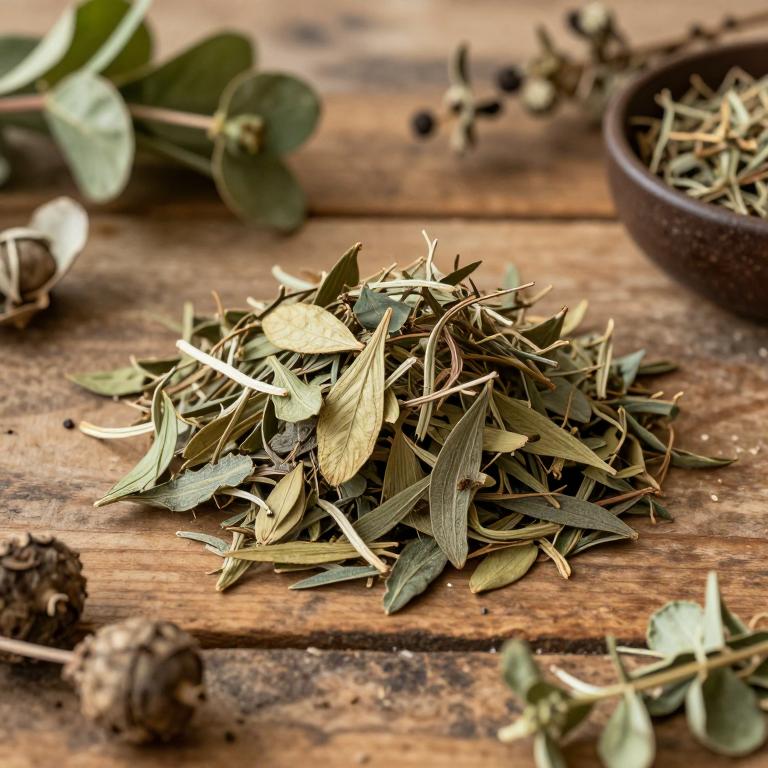
Names and Synonyms
Common Names
- fleshyflower annona
Scientific Names
Accepted name
Annona crassifloraSynonyms
- Annona rodriguesii
- Annona macrocarpa
Regional and Traditional Names
French:
- anone à fleurs charnues
Sources: Wikidata, Catalogue of Life
Taxonomical Classification
This plant, known scientifically as Annona crassiflora, belongs to the kingdom Plantae and the phylum Streptophyta. Within the class Equisetopsida and subclass Magnoliidae, it is classified under the order Magnoliales. It is further categorized into the family Annonaceae and the genus Annona.
| Rank | Classification |
|---|---|
| Kingdom | Plantae |
| Phylum | Streptophyta |
| Class | Equisetopsida |
| Subclass | Magnoliidae |
| Order | Magnoliales |
| Family | Annonaceae |
| Genus | Annona |
Sources: The World Checklist of Vascular Plants (WCVP)
Distribution
This plant exhibits a vast geographical presence across several distinct regions of Brazil. It can be found growing within the North region, spanning significant portions of the tropical landscape. The species also thrives throughout the Northeast and West-Central areas of the country. Furthermore, its distribution extends into the Southeast, showcasing its ability to adapt to diverse climates. Finally, the plant is recorded in the South, completing its wide-ranging coverage across the Brazilian territory.
| Region | Area |
|---|---|
| Brazil | Brazil West-Central |
| Brazil | Brazil Northeast |
| Brazil | Brazil Southeast |
| Brazil | Brazil North |
| Brazil | Brazil South |
| Southern South America | Paraguay |
Sources: The World Checklist of Vascular Plants (WCVP)
Botanical Identification
Ecology
The ecology of Annona crassiflora is characterized by its adaptation to the Cerrado (lato sensu) biome, where it thrives within the specific environmental conditions of this tropical savanna ecosystem. This species occupies a broad altitudinal gradient, establishing itself across a diverse topographical range that begins at sea level (0 m AMSL) and extends up to a maximum elevation of 500 m AMSL. Such a distribution allows the plant to inhabit various niches within the Cerrado, ranging from lowland plains to slightly elevated plateaus, playing a vital role in the structural and biological complexity of its native habitat.
- Elevational range max:
- 500 m AMSL
- Elevational range min:
- 0 m AMSL
- Habitat :
- Cerrado (lato sensu)
Life history
The life history of Annona crassiflora is characterized by its status as a perennial plant, allowing it to persist in its environment over many growing seasons. As a phanerophyte, its reproductive buds are located on elevated branches well above the ground, a structural adaptation that defines its physical growth habit. This species exhibits a deciduous nature, undergoing seasonal leaf shedding which is a key component of its survival strategy and phenological cycle.
- Deciduousness :
- deciduous
- Life form :
- phanerophyte
- Lifecycle :
- perennial
Morphology
The morphology of Annona crassiflora is characterized by a woody growth form that can manifest as either a shrub or a tree. As a terrestrial species, it is an independent organism that does not function as a parasite or an epiphyte. The plant is self-supporting in its structure, lacking any climbing or vining tendencies. In terms of stature, it reaches a mean height of approximately 6 m, though it has the capacity to attain a maximum height of up to 15 m.
- Aquatic :
- terrestrial
- Climber :
- self-supporting
- Epiphyte :
- terrestrial
- Growth form :
- tree
- Growth form :
- shrub
- Parasite :
- independent
- Plant height max:
- 15 m
- Plant height mean:
- 6 m
- Woodiness :
- woody
Physiology
The physiology of Annona crassiflora is characterized by a standard C3 photosynthetic pathway, a metabolic process common to most tropical woody species where carbon fixation occurs directly via the enzyme RuBisCO within the mesophyll cells. This pathway dictates the plant's water-use efficiency and carbon assimilation rates in response to varying light and temperature conditions. Furthermore, the species does not function as a nitrogen fixer, meaning it lacks the symbiotic relationship with diazotrophic bacteria required to convert atmospheric nitrogen into bioavailable forms; instead, it relies on the uptake of nitrates and ammonium from the soil through its root system to meet its nutritional requirements for growth and development.
- Nitrogen fixer :
- no
- Photosynthetic pathway :
- C3
Reproduction
The reproduction of Annona crassiflora is characterized by the production of fleshy fruits that serve as the primary vessel for seed dispersal. These fruits are categorized by a fleshy consistency, providing a nutrient-rich medium that often attracts dispersers. Within these fruits, the seeds are significant in size and exhibit highly consistent dimensions; specifically, the seed volume remains constant with a minimum, maximum, and mean value of 3100 mm³. This uniformity in seed volume suggests a stabilized reproductive strategy aimed at ensuring consistent seedling vigor upon germination.
- Fruit dryness :
- fleshy
- Seed volume max:
- 3100 mm³
Sources: Global Inventory of Floras and Traits (GIFT)
Plant Parts
Annona crassiflora has 2 reported plant parts identified across 2 scientific publications and several other databases that are studied for medicinal purposes. The most consistently reported plant part include root, seed.
| Plant part | Supporting sources | Consensus |
|---|---|---|
| Root | 1 supporting sources | ★☆☆☆☆ |
| Seed | 1 supporting sources | ★☆☆☆☆ |
Root
- Bioresource technology
Seed
- Brazilian journal of medical and biological research = Revista brasileira de pesquisas medicas e biologicas
Chemicals
Annona crassiflora has 6 reported phytochemicals identified across 2 scientific publications and several other databases. The most consistently reported chemicals include (epi)catechin, CHLOROGENIC ACID, RUTIN, SINAPIC ACID, caffeic acid.
| Chemical | Supporting sources | Consensus |
|---|---|---|
| (epi)catechin | 1 supporting sources | ★☆☆☆☆ |
| CHLOROGENIC ACID | 1 supporting sources | ★☆☆☆☆ |
| RUTIN | 1 supporting sources | ★☆☆☆☆ |
| SINAPIC ACID | 1 supporting sources | ★☆☆☆☆ |
| caffeic acid | 1 supporting sources | ★☆☆☆☆ |
| kaempferol | 1 supporting sources | ★☆☆☆☆ |
(epi)catechin
- Bioorganic chemistry
CHLOROGENIC ACID
- Bioorganic chemistry
RUTIN
- Brazilian journal of medical and biological research = Revista brasileira de pesquisas medicas e biologicas
SINAPIC ACID
- Brazilian journal of medical and biological research = Revista brasileira de pesquisas medicas e biologicas
caffeic acid
- Brazilian journal of medical and biological research = Revista brasileira de pesquisas medicas e biologicas
kaempferol
- Bioorganic chemistry
Activities
Annona crassiflora has 7 reported activities identified across 2 scientific publications and several other databases. The most consistently reported activities include Anticholinesterase, Antimutagenic, Antiproliferative, Antiprotozoal, Astringent.
| Activity | Supporting sources | Consensus |
|---|---|---|
| Anticholinesterase | 1 supporting sources | ★☆☆☆☆ |
| Antimutagenic | 1 supporting sources | ★☆☆☆☆ |
| Antiproliferative | 1 supporting sources | ★☆☆☆☆ |
| Antiprotozoal | 1 supporting sources | ★☆☆☆☆ |
| Astringent | 1 supporting sources | ★☆☆☆☆ |
| Chemopreventive | 1 supporting sources | ★☆☆☆☆ |
| Tonic | 1 supporting sources | ★☆☆☆☆ |
Anticholinesterase
- Brazilian journal of medical and biological research = Revista brasileira de pesquisas medicas e biologicas
Antimutagenic
- Pharmaceutical biology
Antiproliferative
- Brazilian journal of medical and biological research = Revista brasileira de pesquisas medicas e biologicas
Antiprotozoal
- Memorias do Instituto Oswaldo Cruz
Astringent
- Brazilian journal of biology = Revista brasleira de biologia
Chemopreventive
- Pharmaceutical biology
Tonic
- Brazilian journal of biology = Revista brasleira de biologia
Conditions
Annona crassiflora has 7 reported investigations on conditions identified across 2 scientific publications and several other databases. The most consistently reported conditions include Escherichia coli, Leishmania donovani, cancer, fungal infections, snake bites.
| Condition | Supporting sources | Consensus |
|---|---|---|
| Escherichia coli | 1 supporting sources | ★☆☆☆☆ |
| Leishmania donovani | 1 supporting sources | ★☆☆☆☆ |
| Cancer | 1 supporting sources | ★☆☆☆☆ |
| Fungal infections | 1 supporting sources | ★☆☆☆☆ |
| Snake bites | 1 supporting sources | ★☆☆☆☆ |
| Tumor cell lines | 1 supporting sources | ★☆☆☆☆ |
| Venereal diseases | 1 supporting sources | ★☆☆☆☆ |
Escherichia coli
- BMC veterinary research
Leishmania donovani
- Memorias do Instituto Oswaldo Cruz
Cancer
- Brazilian journal of biology = Revista brasleira de biologia
Fungal infections
- Brazilian journal of biology = Revista brasleira de biologia
Snake bites
- Brazilian journal of biology = Revista brasleira de biologia
Tumor cell lines
- Brazilian journal of medical and biological research = Revista brasileira de pesquisas medicas e biologicas
Venereal diseases
- Brazilian journal of biology = Revista brasleira de biologia
Preparations
Annona crassiflora has 4 reported preparations identified across 2 scientific publications and several other databases. The most consistently reported preparations include EE, ethanolic extracts obtained from root bark, ethanolic extracts obtained from root wood, seed extracts.
| Preparation | Supporting sources | Consensus |
|---|---|---|
| Ee | 1 supporting sources | ★☆☆☆☆ |
| Ethanolic extracts obtained from root bark | 1 supporting sources | ★☆☆☆☆ |
| Ethanolic extracts obtained from root wood | 1 supporting sources | ★☆☆☆☆ |
| Seed extracts | 1 supporting sources | ★☆☆☆☆ |
Ee
- BMC veterinary research
Ethanolic extracts obtained from root bark
- Bioresource technology
Ethanolic extracts obtained from root wood
- Bioresource technology
Seed extracts
- Brazilian journal of medical and biological research = Revista brasileira de pesquisas medicas e biologicas