Enantia polycarpa
Annickia polycarpa · Accepted scientific name
Scientific literature: Very Sparse (8 studies) · ★☆☆☆☆
Enantia polycarpa, scientifically known as Annickia polycarpa, is a significant medicinal plant valued in traditional African medicine. Renowned for its potent bioactive compounds, it is frequently utilized to treat various ailments, including malaria, digestive issues, and inflammatory conditions. This plant remains a vital subject for pharmacological research and ethnobotanical studies.
- Family
- Annonaceae
- Native range
- Africa
- Parts used
- Leaf · Stem
- Common names
- African Yellow Wood · Yellow-Wood
- Scientific synonyms
- Melodorum Polycarpum · Xylopia Polycarpa · 5 more
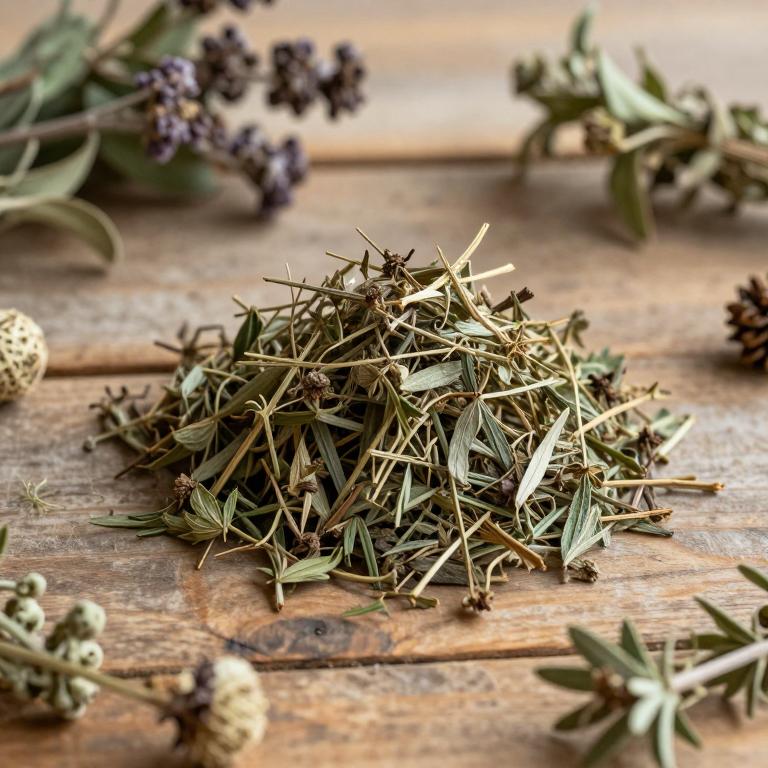
Names and Synonyms
Common Names
- African yellow wood
- yellow-wood
Scientific Names
Accepted name
Annickia polycarpaSynonyms
- Melodorum polycarpum
- Xylopia polycarpa
- Xylopicrum polycarpum
- Coelocline polycarpa
- Enantia polycarpa
- Annona polycarpa
- Unona polycarpa
Regional and Traditional Names
Spanish:
- Enantia polycarpa
- Xylopicrum polycarpum
German:
- Enantia polycarpa
- Xylopicrum polycarpum
French:
- Enantia polycarpa
- moambe jaune
- Xylopicrum polycarpum
- Moambe jaune
Sources: Wikidata, Catalogue of Life
Taxonomical Classification
This plant belongs to the kingdom Plantae and the phylum Streptophyta, falling under the class Equisetopsida and subclass Magnoliidae. Within the order Magnoliales, it is classified under the family Annonaceae. Finally, its specific taxonomic identification is placed within the genus Annickia.
| Rank | Classification |
|---|---|
| Kingdom | Plantae |
| Phylum | Streptophyta |
| Class | Equisetopsida |
| Subclass | Magnoliidae |
| Order | Magnoliales |
| Family | Annonaceae |
| Genus | Annickia |
Sources: The World Checklist of Vascular Plants (WCVP)
Distribution
This plant is primarily distributed throughout the West Tropical Africa region. Specifically, it can be found growing within the borders of Ghana. Its natural habitat also extends into the territories of Guinea and the Ivory Coast. Additionally, the species is documented to exist across Liberia. Finally, its geographical range includes the country of Nigeria.
| Region | Area |
|---|---|
| West Tropical Africa | Ghana |
| West Tropical Africa | Guinea |
| West Tropical Africa | Ivory Coast |
| West Tropical Africa | Liberia |
| West Tropical Africa | Nigeria |
| West Tropical Africa | Sierra Leone |
| West-Central Tropical Africa | Cameroon |
Sources: The World Checklist of Vascular Plants (WCVP)
Botanical Identification
Life history
The life history of Annickia polycarpa is characterized by its classification as a perennial organism, allowing it to persist through multiple growing seasons rather than completing its cycle within a single year. In terms of its structural growth strategy, the species is categorized as a phanerophyte, specifically functioning as both a phanerophyte and a nanophanerophyte, which indicates that its perennating buds are elevated above the ground level on aerial shoots. This life form enables the plant to maintain its reproductive potential and structural integrity over extended periods within its natural habitat.
- Life form :
- phanerophyte
- Lifecycle :
- perennial
Morphology
The morphology of Annickia polycarpa is characterized by its significant stature, reaching a mean height of approximately 20 m, with observed maximum heights reaching up to 18.28822238 m. It is categorized as a tree with a woody growth form, functioning as an independent organism rather than a parasite or an epiphyte. The plant is strictly terrestrial in its habitat and exhibits a self-supporting climbing habit, meaning it does not rely on other structures as an obligatory vine or liana but maintains its own structural integrity as it grows.
- Aquatic :
- terrestrial
- Climber :
- self-supporting
- Epiphyte :
- terrestrial
- Growth form :
- tree
- Parasite :
- independent
- Plant height max:
- 18.28822238 m
- Plant height mean:
- 20 m
- Woodiness :
- woody
Physiology
The physiology of Annickia polycarpa is characterized by a C3 photosynthetic pathway, meaning it utilizes the Calvin cycle to fix carbon dioxide without the specialized anatomical adaptations found in C4 or CAM plants. This metabolic process involves the direct fixation of CO2 by the enzyme Rubisco within the mesophyll cells. Furthermore, the plant does not function as a nitrogen fixer, lacking the symbiotic relationships with nitrogen-fixing bacteria required to convert atmospheric nitrogen into a bioavailable form for its growth and development.
- Nitrogen fixer :
- no
- Photosynthetic pathway :
- C3
Sources: Global Inventory of Floras and Traits (GIFT)
Plant Parts
Annickia polycarpa has 2 reported plant parts identified across 2 scientific publications and several other databases that are studied for medicinal purposes. The most consistently reported plant part include leaf, stem.
| Plant part | Supporting sources | Consensus |
|---|---|---|
| Leaf | 1 supporting sources | ★☆☆☆☆ |
| Stem | 1 supporting sources | ★☆☆☆☆ |
Leaf
- Advances in pharmacological and pharmaceutical sciences
Stem
- Journal of ethnopharmacology
Activities
Annickia polycarpa has 3 reported activities identified across 2 scientific publications and several other databases. The most consistently reported activities include Antimicrobial, Antiplasmodial, Cytotoxic.
| Activity | Supporting sources | Consensus |
|---|---|---|
| Antimicrobial | 1 supporting sources | ★☆☆☆☆ |
| Antiplasmodial | 1 supporting sources | ★☆☆☆☆ |
| Cytotoxic | 1 supporting sources | ★☆☆☆☆ |
Antimicrobial
- Fitoterapia
Antiplasmodial
- Advances in pharmacological and pharmaceutical sciences
Cytotoxic
- Advances in pharmacological and pharmaceutical sciences
Conditions
Annickia polycarpa has 2 reported investigations on conditions identified across 2 scientific publications and several other databases. The most consistently reported conditions include malaria, trypanosomiasis.
| Condition | Supporting sources | Consensus |
|---|---|---|
| Malaria | 1 supporting sources | ★☆☆☆☆ |
| Trypanosomiasis | 1 supporting sources | ★☆☆☆☆ |
Malaria
- Advances in pharmacological and pharmaceutical sciences
Trypanosomiasis
- Advances in pharmacological and pharmaceutical sciences
Preparations
Annickia polycarpa has 3 reported preparations identified across 2 scientific publications and several other databases. The most consistently reported preparations include PEP, crude ethanol extracts, leaf (APLE).
| Preparation | Supporting sources | Consensus |
|---|---|---|
| Pep | 1 supporting sources | ★☆☆☆☆ |
| Crude ethanol extracts | 1 supporting sources | ★☆☆☆☆ |
| Leaf (aple) | 1 supporting sources | ★☆☆☆☆ |
Pep
- Evidence-based complementary and alternative medicine : eCAM
Crude ethanol extracts
- Journal of ethnopharmacology
Leaf (aple)
- Advances in pharmacological and pharmaceutical sciences