African yellow wood
Annickia affinis · Accepted scientific name
Scientific literature: Very Sparse (8 studies) · ★☆☆☆☆
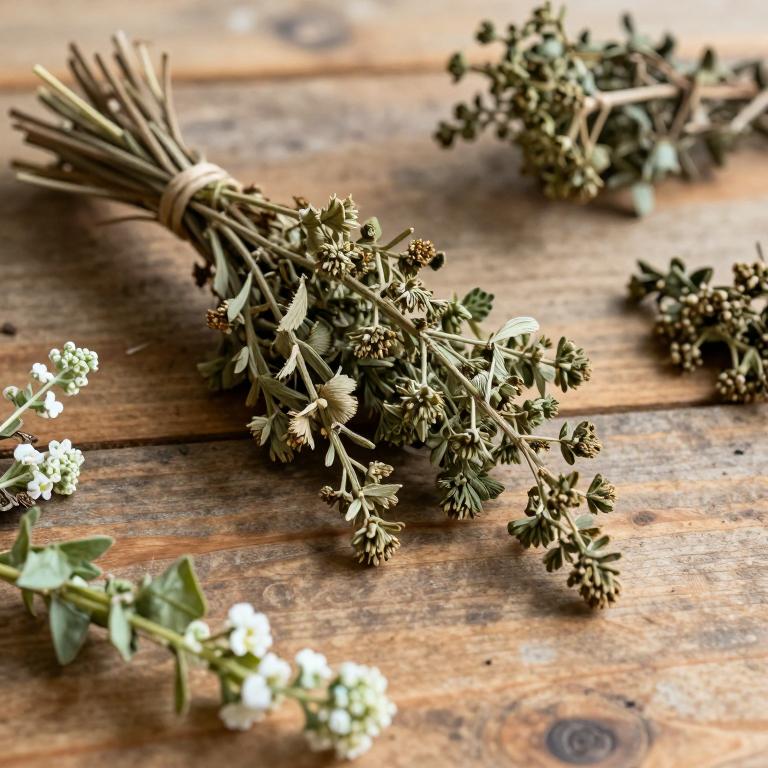
African yellow wood, scientifically known as Annickia affinis, is a climbing shrub native to the tropical rainforests of Africa. Renowned for its vibrant, trumpet-shaped yellow flowers, this plant is highly valued in traditional medicine for its diverse therapeutic properties, including its potential anti-inflammatory, antimicrobial, and antioxidant medicinal benefits.
- Family
- Annonaceae
- Native range
- Africa
- Parts used
- Leaf
- Common names
- African Yellow Wood · Yellow-Wood
- Scientific synonyms
- Enantia Affinis · Enantia Chlorantha Var. Soyauxii
Names and Synonyms
Common Names
- African yellow wood
- yellow-wood
Scientific Names
Accepted name
Annickia affinisSynonyms
- Enantia affinis
- Enantia chlorantha var. soyauxii
Regional and Traditional Names
French:
- Moambe jaune
Sources: Wikidata, Catalogue of Life
Taxonomical Classification
This plant belongs to the kingdom Plantae and the phylum Streptophyta, falling under the class Equisetopsida and subclass Magnoliidae. Within the order Magnoliales, it is classified under the family Annonaceae. Finally, it is identified by the genus Annickia, specifically as the species Annickia affinis.
| Rank | Classification |
|---|---|
| Kingdom | Plantae |
| Phylum | Streptophyta |
| Class | Equisetopsida |
| Subclass | Magnoliidae |
| Order | Magnoliales |
| Family | Annonaceae |
| Genus | Annickia |
Sources: The World Checklist of Vascular Plants (WCVP)
Distribution
This plant exhibits a specific distribution across the tropical regions of the African continent. In West Tropical Africa, its presence is documented within the borders of Nigeria. Moving into West-Central Tropical Africa, the species can be found in the enclave of Cabinda. It is also widely distributed across the central territories of Cameroon and the Republic of the Congo. Finally, its geographical range extends further into the Democratic Republic of the Congo.
| Region | Area |
|---|---|
| West Tropical Africa | Nigeria |
| West-Central Tropical Africa | Cabinda |
| West-Central Tropical Africa | Cameroon |
| West-Central Tropical Africa | Congo |
| West-Central Tropical Africa | DR Congo |
Sources: The World Checklist of Vascular Plants (WCVP)
Botanical Identification
Morphology
The morphology of Annickiia affinis is characterized by its distinct growth form as a tree, exhibiting a robust and structural development. As a perennial species, it displays a woody nature, featuring lignified stems and branches that contribute to its significant stature and perennial stability within its ecosystem.
- Growth form :
- tree
- Woodiness :
- woody
Sources: Global Inventory of Floras and Traits (GIFT)
Plant Parts
Annickia affinis has 1 reported plant parts identified across 1 scientific publications and several other databases that are studied for medicinal purposes. The most consistently reported plant part include leaf.
| Plant part | Supporting sources | Consensus |
|---|---|---|
| Leaf | 1 supporting sources | ★☆☆☆☆ |
Leaf
- Journal of ethnopharmacology
Chemicals
Annickia affinis has 2 reported phytochemicals identified across 1 scientific publications and several other databases. The most consistently reported chemicals include ACETOGENINS, Sesquiterpenes.
| Chemical | Supporting sources | Consensus |
|---|---|---|
| ACETOGENINS | 1 supporting sources | ★☆☆☆☆ |
| Sesquiterpenes | 1 supporting sources | ★☆☆☆☆ |
ACETOGENINS
- Journal of ethnopharmacology
Sesquiterpenes
- Journal of ethnopharmacology
Conditions
Annickia affinis has 1 reported investigations on conditions identified across 1 scientific publications and several other databases. The most consistently reported conditions include malaria.
| Condition | Supporting sources | Consensus |
|---|---|---|
| Malaria | 1 supporting sources | ★☆☆☆☆ |
Malaria
- Journal of ethnopharmacology
Preparations
Annickia affinis has 1 reported preparations identified across 1 scientific publications and several other databases. The most consistently reported preparations include Agbo-iba decoction.
| Preparation | Supporting sources | Consensus |
|---|---|---|
| Agbo-iba decoction | 1 supporting sources | ★☆☆☆☆ |
Agbo-iba decoction
- Journal of ethnopharmacology