Anisodus stramoniifolius
Anisodus stramoniifolius · Accepted scientific name
Scientific literature: Very Sparse (17 studies) · ★☆☆☆☆
Anisodus strainoniifolius, scientifically known as Anisodus strainoniifolius, is a remarkable medicinal shrub native to high-altitude regions. Renowned for its potent alkaloid content, this plant serves as a vital resource in traditional medicine, offering significant therapeutic potential for managing pain and addressing various inflammatory conditions through its unique bioactive properties.
- Family
- Solanaceae
- Native range
- Asia-Temperate
- Parts used
- Root · Leaf
- Common names
- Not available
- Scientific synonyms
- Scopolia Lurida · Scopolia Anomala · 12 more
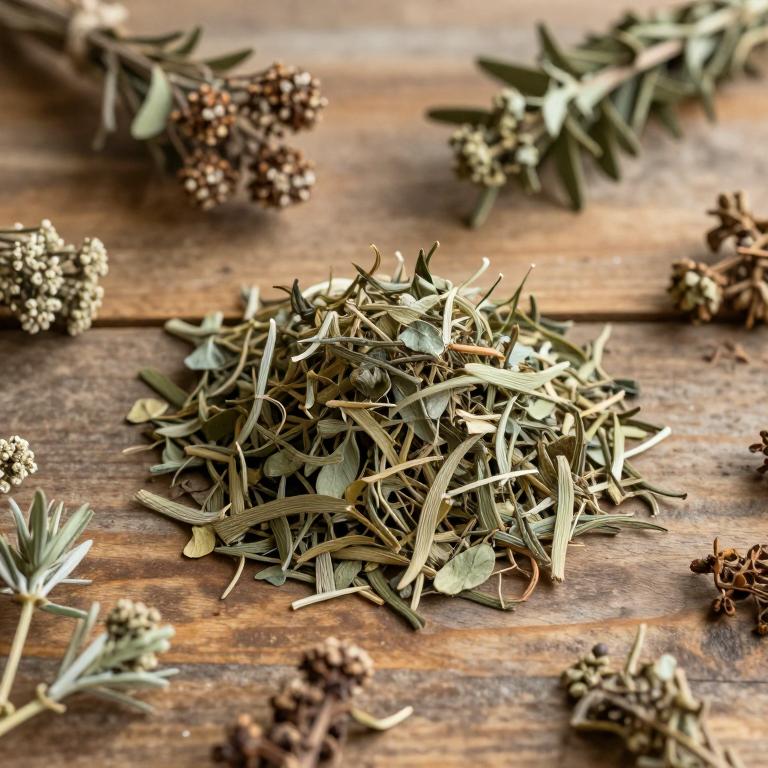
Names and Synonyms
Scientific Names
Accepted name
Anisodus stramoniifoliusSynonyms
- Scopolia lurida
- Scopolia anomala
- Whitleya stramoniifolia
- Scopolia straminiifolia
- Scopolia mairei
- Anisodus luridus
- Anisodus mairei
- Scopolina stemonifolia
- Nicandra anomala
- Physalis stramoniifolia
- Hyoscyamus luridus
- Anisodus anomalus
- Anisodus luridus var. fischerianus
- Anisodus fischerianus
Regional and Traditional Names
Spanish:
- Anisodus stramonifolius
German:
- Anisodus stramonifolius
French:
- Anisodus stramonifolius
Sources: Wikidata, Catalogue of Life
Taxonomical Classification
This plant, Anisodorus stramoniifolius, belongs to the kingdom Plantae and the phylum Streptophyta. Within the class Equisetopsida and subclass Magnoliidae, it is classified under the order Solanales and the family Solanaceae. Finally, it is identified by the genus Anisodorus.
| Rank | Classification |
|---|---|
| Kingdom | Plantae |
| Phylum | Streptophyta |
| Class | Equisetopsida |
| Subclass | Magnoliidae |
| Order | Solanales |
| Family | Solanaceae |
| Genus | Anisodus |
Sources: The World Checklist of Vascular Plants (WCVP)
Distribution
This plant exhibits a widespread distribution across several key regions in Asia. In China, it can be found throughout the South-Central territories as well as in the high-altitude regions of Tibet. Its presence extends into the Indian Subcontinent, where it thrives within the East Himalaya range. Additionally, the species is documented to grow in the mountainous terrain of Nepal. Finally, the plant is also widely distributed across the West Himalaya region.
| Region | Area |
|---|---|
| China | China South-Central |
| China | Tibet |
| Indian Subcontinent | East Himalaya |
| Indian Subcontinent | Nepal |
| Indian Subcontinent | West Himalaya |
Sources: The World Checklist of Vascular Plants (WCVP)
Botanical Identification
Ecology
The ecology of Anisodus stramoniifolius is defined by its distribution within high-altitude montane environments, where it occupies a specific vertical niche. This plant thrives across a significant altitudinal gradient, ranging from a minimum elevation of 2200 m AMSL to a maximum peak of 4200 m AMSL. Within this specialized habitat, the species maintains a mean elevation of approximately 3700 m AMSL, indicating a strong ecological preference for subalpine or alpine zones. These high-elevation ranges suggest an adaptation to the unique climatic conditions associated with such altitudes, including lower temperatures and varying levels of solar radiation.
- Elevational range max:
- 4200 m AMSL
- Elevational range mean:
- 3700 m AMSL
- Elevational range min:
- 2200 m AMSL
Life history
The life history of Anisodus stamoniifolius is characterized by its status as a perennial organism, allowing it to persist in its environment over multiple growing seasons. As a perennial species, it undergoes complex developmental stages that extend beyond a single reproductive cycle, often establishing a robust root system that facilitates long-term survival and seasonal regrowth. This extended lifecycle enables the plant to accumulate sufficient energy reserves to support successive flowering and seed production events, contributing to its ecological stability and ability to colonize specific habitats over time.
- Lifecycle :
- perennial
Morphology
The morphology of Anisodus stamoniifolius is characterized by its herbaceous growth form, presenting as a non-woody plant. As a terrestrial species, it lacks climbing mechanisms, functioning instead as a self-supporting herb. The plant exhibits significant variation in stature, with heights ranging from a minimum of 0.5 m to a maximum of 1.2 m, maintaining an average plant height of approximately 0.85 m.
- Climber :
- self-supporting
- Epiphyte :
- terrestrial
- Growth form :
- herb
- Plant height max:
- 1.2 m
- Plant height mean:
- 0.85 m
- Plant height min:
- 0.5 m
- Woodiness :
- non-woody
Physiology
The physiological development of Anisodus stamoniifolius is closely characterized by the morphological variability and structural dimensions of its foliage, which serve as primary sites for metabolic activity and photosynthesis. The leaves exhibit a significant range in size, with longitudinal growth spanning from a minimum length of 7 cm to a maximum of 15 cm, maintaining a mean length of approximately 11 cm. This dimensional plasticity is mirrored in the lateral expansion of the leaf blades, where widths fluctuate between a minimum of 4 cm and a maximum of 8.5 cm. These specific leaf area metrics suggest a highly adaptive photosynthetic surface area that can adjust to varying light intensities and environmental conditions, facilitating efficient gas exchange and nutrient assimilation essential to the plant's physiological vigor.
- Leaf length max:
- 15 cm
- Leaf length mean:
- 11 cm
- Leaf length min:
- 7 cm
- Leaf width max:
- 8.5 cm
- Leaf width min:
- 4 cm
Sources: Global Inventory of Floras and Traits (GIFT)
Plant Parts
Anisodus stramoniifolius has 2 reported plant parts identified across 4 scientific publications and several other databases that are studied for medicinal purposes. The most consistently reported plant part include root, leaf.
| Plant part | Supporting sources | Consensus |
|---|---|---|
| Root | 3 supporting sources | ★★☆☆☆ |
| Leaf | 1 supporting sources | ★☆☆☆☆ |
Root
- ACS omega
- Biochemical and biophysical research communications
- Frontiers in plant science
Leaf
- Natural product research
Chemicals
Anisodus stramoniifolius has 7 reported phytochemicals identified across 4 scientific publications and several other databases. The most consistently reported chemicals include hyoscyamine, scopolamine, Tropine, Tropinone, apigenin.
| Chemical | Supporting sources | Consensus |
|---|---|---|
| hyoscyamine | 3 supporting sources | ★★☆☆☆ |
| scopolamine | 3 supporting sources | ★★☆☆☆ |
| Tropine | 1 supporting sources | ★☆☆☆☆ |
| Tropinone | 1 supporting sources | ★☆☆☆☆ |
| apigenin | 1 supporting sources | ★☆☆☆☆ |
| luteolin | 1 supporting sources | ★☆☆☆☆ |
| quercetin | 1 supporting sources | ★☆☆☆☆ |
hyoscyamine
- ACS omega
- Biochemical and biophysical research communications
- Frontiers in plant science
scopolamine
- ACS omega
- Biochemical and biophysical research communications
- Frontiers in plant science
Tropine
- Frontiers in plant science
Tropinone
- Frontiers in plant science
apigenin
- Natural product research
luteolin
- Natural product research
quercetin
- Natural product research