Rough-barked Angophora
Angophora floribunda · Accepted scientific name
Scientific literature: Very Sparse (2 studies) · ★☆☆☆☆
Rough-barked Angophora, scientifically known as Angophora floribunda, is a distinctive Australian tree prized for its rugged texture and vibrant blooms. Native to coastal regions, it serves as a vital component of local ecosystems, offering medicinal potential through its traditional uses and contributing significantly to biodiversity and environmental health.
- Family
- Myrtaceae
- Native range
- Australasia
- Parts used
- Not available
- Common names
- Rough-Barked Angophora · Rough-Barked Apple
- Scientific synonyms
- Eucalyptus Florida · Angophora Intermedia · 2 more
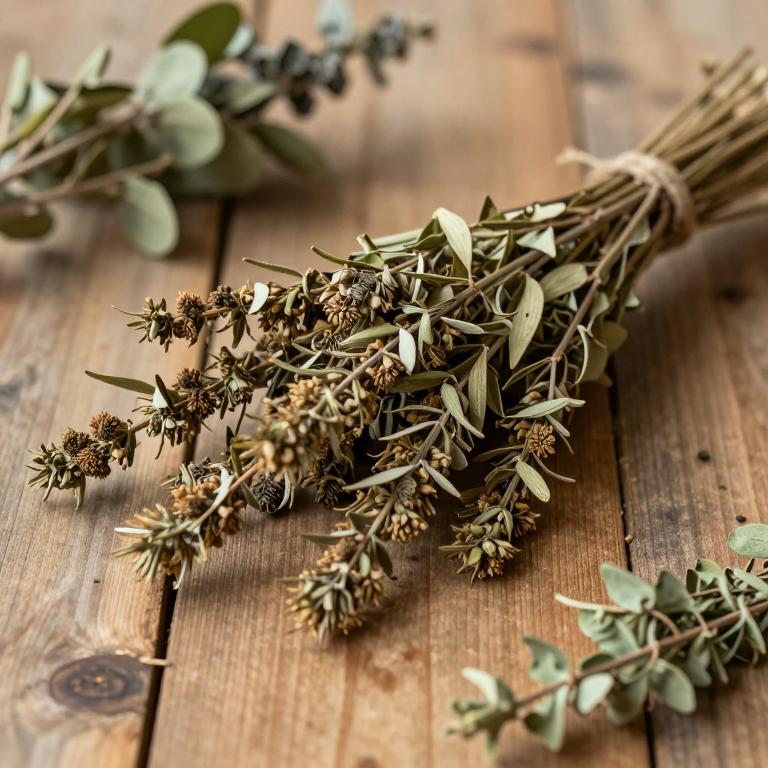
Names and Synonyms
Common Names
- Rough-barked Angophora
- Rough-barked Apple
Scientific Names
Accepted name
Angophora floribundaSynonyms
- Eucalyptus florida
- Angophora intermedia
- Angophora ochrophylla
- Acmena floribunda
Regional and Traditional Names
Spanish:
- Angophora ochrophylla
- Acmena floribunda
- Eucalyptus florida
- Metrosideros floribunda
- Angophora intermedia
Sources: Wikidata, Catalogue of Life
Taxonomical Classification
This plant belongs to the kingdom Plantae and is classified under the phylum Streptophyta within the class Equisetopsida. Following the subclass Magnoliidae, it is situated in the order Myrtales and the family Myrtaceae. Finally, it is identified under the genus Angophora.
| Rank | Classification |
|---|---|
| Kingdom | Plantae |
| Phylum | Streptophyta |
| Class | Equisetopsida |
| Subclass | Magnoliidae |
| Order | Myrtales |
| Family | Myrtaceae |
| Genus | Angophora |
Sources: The World Checklist of Vascular Plants (WCVP)
Distribution
This plant is a species native to the diverse landscapes of Australia. Its geographical range spans across several different states within the country. Specifically, it can be found growing in the regions of New South Wales. It is also distributed throughout parts of Queensland. Finally, its presence extends southward into the state of Victoria.
| Region | Area |
|---|---|
| Australia | New South Wales |
| Australia | Queensland |
| Australia | Victoria |
Sources: The World Checklist of Vascular Plants (WCVP)
Botanical Identification
Life history
The life history of Angophora floribunda is characterized by its status as a perennial plant, ensuring its long-term persistence within its ecosystem. As a phanerophyte, it maintains its photosynthetic organs on elevated branches, growing into a significant structural component of its habitat, while its classification as a nanophanerophyte further specifies its growth habit through its woody architecture. Throughout its existence, the species maintains an evergreen deciduousness, retaining its foliage year-round to maximize photosynthetic opportunities across varying seasonal conditions.
- Deciduousness :
- evergreen
- Life form :
- nanophanerophyte
- Life form :
- phanerophyte
- Lifecycle :
- perennial
Morphology
The morphology of Angophora floribunda is characterized by its robust growth form as a woody tree. It is a self-supporting plant that functions independently, lacking any parasitic or epiphytic tendencies, and is strictly terrestrial in its habitat. Reaching significant proportions, the plant exhibits a substantial stature with a height that typically averages around 18 m, though it can range from a minimum of 15 m to a maximum of 30 m.
- Aquatic :
- terrestrial
- Climber :
- self-supporting
- Epiphyte :
- terrestrial
- Growth form :
- tree
- Parasite :
- independent
- Plant height max:
- 30 m
- Plant height mean:
- 18 m
- Plant height min:
- 15 m
- Woodiness :
- woody
Physiology
The physiology of Angophora floribunda is characterized by a C3 photosynthetic pathway, a metabolic strategy typical of many woody species in its genus that allows for carbon fixation under moderate environmental conditions. Its vegetative structure features leaves that reach a maximum length of 9 cm and a maximum width of 3.5 cm, dimensions that facilitate efficient light interception for photosynthesis. Furthermore, the plant does not function as a nitrogen fixer, meaning it relies on the uptake of available nitrogen from the soil through its root system rather than through symbiotic relationships with nitrogen-fixing bacteria.
- Leaf length max:
- 9 cm
- Leaf width max:
- 3.5 cm
- Nitrogen fixer :
- no
- Photosynthetic pathway :
- C3
Reproduction
The reproduction of Angophora floribunda is driven by biotic pollination syndromes, specifically relying on a combination of insect-based and bee-mediated interactions to facilitate fertilization. This biological approach to pollen transfer ensures genetic diversity through targeted animal vectors. Following successful pollination, the plant produces seeds that exhibit notable variation in size; the seed mass ranges from a minimum of 0.00665 g to a maximum of 0.0222 g, with an average seed mass of approximately 0.013558325 g.
- Pollination syndrome :
- insect
- Pollination syndrome :
- bee
- Pollination syndrome :
- biotic
- Seed mass max:
- 0.0222 g
- Seed mass mean:
- 0.013558325 g
- Seed mass min:
- 0.00665 g
Sources: Global Inventory of Floras and Traits (GIFT)
Chemicals
Angophora floribunda has 1 reported phytochemicals identified across 0 scientific publications and several other databases. The most consistently reported chemicals include SAPONIN.
| Chemical | Supporting sources | Consensus |
|---|---|---|
| SAPONIN | 1 supporting sources | ★☆☆☆☆ |
SAPONIN
- Chemistry & biodiversity
Conditions
Angophora floribunda has 1 reported investigations on conditions identified across 0 scientific publications and several other databases. The most consistently reported conditions include pancreatic cancer.
| Condition | Supporting sources | Consensus |
|---|---|---|
| Pancreatic cancer | 1 supporting sources | ★☆☆☆☆ |
Pancreatic cancer
- Chemistry & biodiversity
Preparations
Angophora floribunda has 1 reported preparations identified across 0 scientific publications and several other databases. The most consistently reported preparations include extract.
| Preparation | Supporting sources | Consensus |
|---|---|---|
| Extract | 1 supporting sources | ★☆☆☆☆ |
Extract
- Chemistry & biodiversity