pubescent angelica
Angelica pubescens · Accepted scientific name
Scientific literature: Sparse (61 studies) · ★★☆☆☆
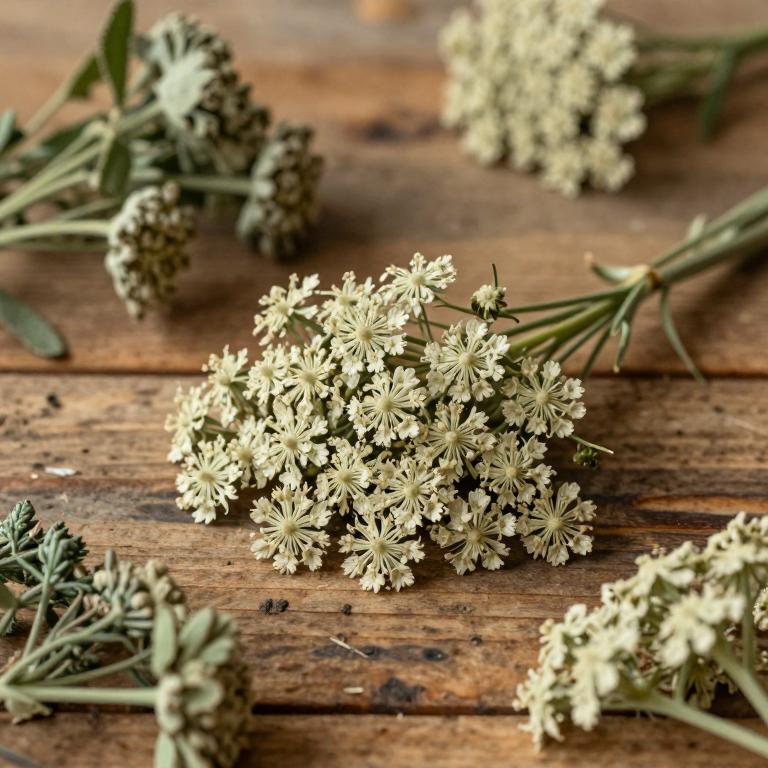
Pubescent Angelica, scientifically known as Angelica pubescens, is a perennial medicinal herb native to East Asia. Renowned in traditional medicine, it is highly valued for its therapeutic properties, particularly in supporting cardiovascular health, regulating hormones, and reducing inflammation. This potent botanical plays a vital role in holistic healing practices.
- Family
- Apiaceae
- Native range
- Asia-Temperate
- Parts used
- Root
- Common names
- Pubescent Angelica · Du Hou
- Scientific synonyms
- Angelica Schishiudo · Angelica Polyclada · 1 more
Names and Synonyms
Common Names
- pubescent angelica
- du hou
Scientific Names
Accepted name
Angelica pubescensSynonyms
- Angelica schishiudo
- Angelica polyclada
- Angelica myriostachys
Regional and Traditional Names
Spanish:
- Angelica polyclada
- Angelica schishiudo
- Shishiudo
- Angelica myriostachys
Sources: Wikidata, Catalogue of Life
Taxonomical Classification
This plant belongs to the kingdom Plantae and the phylum Streptophyta within the class Equisetopsida. It is further classified under the subclass Magnoliidae and the order Apiales, falling into the family Apiaceae. Ultimately, it is identified by its genus, Angelica.
| Rank | Classification |
|---|---|
| Kingdom | Plantae |
| Phylum | Streptophyta |
| Class | Equisetopsida |
| Subclass | Magnoliidae |
| Order | Apiales |
| Family | Apiaceae |
| Genus | Angelica |
Sources: The World Checklist of Vascular Plants (WCVP)
Distribution
This plant, Angelica pubescens, exhibits a specific geographical distribution across several regions of Eastern and Southeast Asia. Within Eastern Asia, it can be found growing in the natural landscapes of Japan. The species also extends its range to the island of Taiwan. Moving toward the Indo-China region, the plant is documented to inhabit Vietnam. These locations highlight the specific ecological niches where this medicinal species thrives.
| Region | Area |
|---|---|
| Eastern Asia | Japan |
| Eastern Asia | Taiwan |
| Indo-China | Vietnam |
Sources: The World Checklist of Vascular Plants (WCVP)
Botanical Identification
Life history
The life history of Angelica pubescens is characterized by its nature as a perennial plant, allowing it to persist through multiple growing seasons. As a long-lived species, it follows a complex developmental cycle that involves establishing a robust root system to support its perennial habit, ensuring survival through varying environmental conditions. Unlike annuals or biennials that complete their life cycle in a single or double season, this species maintains a continuous presence in its habitat, undergoing seasonal periods of vegetative growth and reproductive phases. This perennial lifestyle enables the plant to accumulate significant energy reserves, which it utilizes to produce large inflorescences and seeds, thereby contributing to its long-term population stability and reproductive success within its ecological niche.
- Lifecycle :
- perennial
Morphology
The morphology of Angelica pubescens is characterized by its growth form as a non-woody herb, specifically categorized as a forb. It is a self-supporting plant that does not exhibit climbing behaviors such as a liana or vine, nor does it require external support to maintain its structure. In terms of its ecological positioning and habitat preference, the species is terrestrial in nature, lacking any epiphytic or obligate aquatic tendencies, though it exists within a spectrum of habitat types that can range from terrestrial to semiaquatic environments. Furthermore, the plant is an independent organism, functioning without any parasitic relationship to its host or environment.
- Aquatic :
- terrestrial
- Climber :
- self-supporting
- Epiphyte :
- terrestrial
- Growth form :
- herb
- Parasite :
- independent
- Woodiness :
- non-woody
Reproduction
The reproduction of Angelica pubescens is characterized by the production of specialized seeds that play a critical role in its life cycle and dispersal mechanisms. Quantitative analysis of its reproductive output reveals a highly consistent seed morphology, with the seed mass exhibiting no variance across observed samples. The recorded seed mass mean is 0.00589 g, a value that is mirrored by both the seed mass maximum and the seed mass minimum at exactly 0.00589 g. This precise uniformity in seed mass suggests a highly stabilized reproductive strategy, ensuring that each individual unit produced for propagation maintains a standardized weight of 0.00589 g, which is essential for its ecological success and colonization patterns.
- Seed mass mean:
- 0.00589 g
Sources: Global Inventory of Floras and Traits (GIFT)
Plant Parts
Angelica pubescens has 1 reported plant parts identified across 2 scientific publications and several other databases that are studied for medicinal purposes. The most consistently reported plant part include root.
| Plant part | Supporting sources | Consensus |
|---|---|---|
| Root | 2 supporting sources | ★☆☆☆☆ |
Root
- Zhong yao cai = Zhongyaocai = Journal of Chinese medicinal materials
- Biomedical chromatography : BMC
Chemicals
Angelica pubescens has 27 reported phytochemicals identified across 2 scientific publications and several other databases. The most consistently reported chemicals include Osthole, Columbianadin, Columbianetin, 3-Carene, ALPHA-SELINENE.
| Chemical | Supporting sources | Consensus |
|---|---|---|
| Osthole | 7 supporting sources | ★★★★☆ |
| Columbianadin | 2 supporting sources | ★☆☆☆☆ |
| Columbianetin | 2 supporting sources | ★☆☆☆☆ |
| 3-Carene | 1 supporting sources | ★☆☆☆☆ |
| ALPHA-SELINENE | 1 supporting sources | ★☆☆☆☆ |
| BETA-PHELLANDRENE | 1 supporting sources | ★☆☆☆☆ |
| Bergapten | 1 supporting sources | ★☆☆☆☆ |
| Bergaptol | 1 supporting sources | ★☆☆☆☆ |
| CBN | 1 supporting sources | ★☆☆☆☆ |
| Columbianetin acetate | 1 supporting sources | ★☆☆☆☆ |
Osthole
- International journal of molecular medicine
- Zhongguo Zhong yao za zhi = Zhongguo zhongyao zazhi = China journal of Chinese materia medica
- General pharmacology
- Inflammopharmacology
- Medicinal chemistry research : an international journal for rapid communications on design and mechanisms of action of biologically active agents
View 2 additional sources
- Evidence-based complementary and alternative medicine : eCAM
- Yao xue xue bao = Acta pharmaceutica Sinica
Columbianadin
- Mediators of inflammation
- Yao xue xue bao = Acta pharmaceutica Sinica
Columbianetin
- The Plant journal : for cell and molecular biology
- Zhong yao cai = Zhongyaocai = Journal of Chinese medicinal materials
3-Carene
- Zhongguo Zhong yao za zhi = Zhongguo zhongyao zazhi = China journal of Chinese materia medica
ALPHA-SELINENE
- Zhongguo Zhong yao za zhi = Zhongguo zhongyao zazhi = China journal of Chinese materia medica
BETA-PHELLANDRENE
- Zhongguo Zhong yao za zhi = Zhongguo zhongyao zazhi = China journal of Chinese materia medica
Bergapten
- The Plant journal : for cell and molecular biology
Bergaptol
- The Plant journal : for cell and molecular biology
CBN
- Mediators of inflammation
Columbianetin acetate
- Yao xue xue bao = Acta pharmaceutica Sinica
Activities
Angelica pubescens has 10 reported activities identified across 2 scientific publications and several other databases. The most consistently reported activities include Neuroprotective, Antimicrobial, Osteogenic, Antiparasitic, Antitumor.
| Activity | Supporting sources | Consensus |
|---|---|---|
| Neuroprotective | 4 supporting sources | ★★☆☆☆ |
| Antimicrobial | 3 supporting sources | ★★☆☆☆ |
| Osteogenic | 3 supporting sources | ★★☆☆☆ |
| Antiparasitic | 2 supporting sources | ★☆☆☆☆ |
| Antitumor | 2 supporting sources | ★☆☆☆☆ |
| Analgesic | 1 supporting sources | ★☆☆☆☆ |
| Antiarthritic | 1 supporting sources | ★☆☆☆☆ |
| Anticancer | 1 supporting sources | ★☆☆☆☆ |
| Cardioprotective | 1 supporting sources | ★☆☆☆☆ |
| Hepatoprotective | 1 supporting sources | ★☆☆☆☆ |
Neuroprotective
- Mediators of inflammation
- International journal of molecular sciences
- Medicinal chemistry research : an international journal for rapid communications on design and mechanisms of action of biologically active agents
- Evidence-based complementary and alternative medicine : eCAM
Antimicrobial
- International journal of molecular sciences
- Medicinal chemistry research : an international journal for rapid communications on design and mechanisms of action of biologically active agents
- Evidence-based complementary and alternative medicine : eCAM
Osteogenic
- International journal of molecular sciences
- Medicinal chemistry research : an international journal for rapid communications on design and mechanisms of action of biologically active agents
- Evidence-based complementary and alternative medicine : eCAM
Antiparasitic
- International journal of molecular sciences
- Medicinal chemistry research : an international journal for rapid communications on design and mechanisms of action of biologically active agents
Antitumor
- Mediators of inflammation
- Medicinal chemistry research : an international journal for rapid communications on design and mechanisms of action of biologically active agents
Analgesic
- Mediators of inflammation
Antiarthritic
- Mediators of inflammation
Anticancer
- Evidence-based complementary and alternative medicine : eCAM
Cardioprotective
- International journal of molecular sciences
Hepatoprotective
- Evidence-based complementary and alternative medicine : eCAM
Conditions
Angelica pubescens has 5 reported investigations on conditions identified across 2 scientific publications and several other databases. The most consistently reported conditions include anxiety, edema, hyperalgesia, hypotension, inflammation.
| Condition | Supporting sources | Consensus |
|---|---|---|
| Anxiety | 1 supporting sources | ★☆☆☆☆ |
| Edema | 1 supporting sources | ★☆☆☆☆ |
| Hyperalgesia | 1 supporting sources | ★☆☆☆☆ |
| Hypotension | 1 supporting sources | ★☆☆☆☆ |
| Inflammation | 1 supporting sources | ★☆☆☆☆ |
Anxiety
- International journal of molecular sciences
Edema
- Journal of alternative and complementary medicine (New York, N.Y.)
Hyperalgesia
- Journal of alternative and complementary medicine (New York, N.Y.)
Hypotension
- General pharmacology
Inflammation
- Mediators of inflammation
Preparations
Angelica pubescens has 2 reported preparations identified across 2 scientific publications and several other databases. The most consistently reported preparations include CH(2)Cl(2)-soluble extract, Fresh roots.
| Preparation | Supporting sources | Consensus |
|---|---|---|
| Ch(2)cl(2)-soluble extract | 1 supporting sources | ★☆☆☆☆ |
| Fresh roots | 1 supporting sources | ★☆☆☆☆ |
Ch(2)cl(2)-soluble extract
- Bioorganic & medicinal chemistry letters
Fresh roots
- Zhong yao cai = Zhongyaocai = Journal of Chinese medicinal materials