Angelica lucida
Angelica lucida · Accepted scientific name
Scientific literature: Very Sparse (1 studies) · ★☆☆☆☆
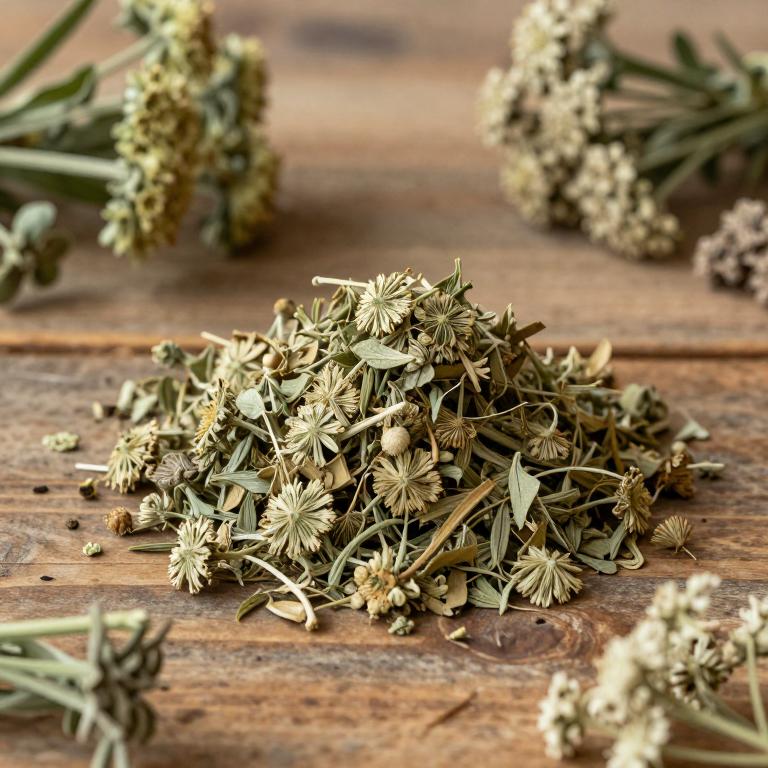
Angelica lucida, scientifically known as Angelica lucida, is a highly valued medicinal herb native to East Asia. Renowned in traditional medicine for its ability to nourish the blood and promote circulation, it is frequently used to treat anemia and menstrual irregularities, offering significant therapeutic benefits for overall vitality.
- Family
- Not available
- Native range
- Asia-Temperate
- Parts used
- Fruit
- Common names
- Not available
- Scientific synonyms
- Not available
Names and Synonyms
Scientific Names
Accepted name
Angelica lucidaDistribution
This plant is native to several specific regions within the Russian Far East. It can be found growing across the rugged landscapes of Kamchatka and Magadan. Additionally, its distribution extends to the coastal areas of Khabarovsk and the Primorye region. The species also inhabits the unique environment of the Kuril Islands. Together, these locations define the primary geographical range of Angelica lucida.
| Region | Area |
|---|---|
| Russian Far East | Kamchatka |
| Russian Far East | Khabarovsk |
| Russian Far East | Kuril Is. |
| Russian Far East | Magadan |
| Russian Far East | Primorye |
| Russian Far East | Sakhalin |
| Eastern Asia | Japan |
| Subarctic America | Aleutian Is. |
| Subarctic America | Alaska |
| Subarctic America | Northwest Territories |
Sources: The World Checklist of Vascular Plants (WCVP)
Botanical Identification
Life history
The life history of Angelica lucida is characterized by its status as a perennial species, allowing the plant to persist through multiple growing seasons. As a perennial, it does not complete its life cycle within a single year like annuals, nor does it follow the strict two-year pattern of biennials; instead, it establishes a stable root system that supports continuous vegetative growth and periodic reproductive efforts over several years. This long-term survival strategy enables the plant to accumulate sufficient energy reserves to withstand seasonal fluctuations and produce robust flowering structures when environmental conditions are optimal.
- Lifecycle :
- perennial
Morphology
The morphology of Angelica lucida is characterized by a growth form primarily classified as a herb and a forb, exhibiting a non-woody structure throughout its development. This plant functions as an independent organism, neither acting as a parasite nor as an epiphyte, maintaining a terrestrial existence within its habitat. In terms of its physical habit, it is a self-supporting species, categorized as both a self-supporting climber and a non-obligatory self-supporting structure, meaning it does not require external support to maintain its upright posture. Its environmental adaptation allows it to exist within a range of moisture conditions, spanning from terrestrial to semiaquatic and aquatic environments.
- Aquatic :
- terrestrial
- Climber :
- self-supporting
- Epiphyte :
- terrestrial
- Growth form :
- herb
- Growth form :
- forb
- Parasite :
- independent
- Woodiness :
- non-woody
Reproduction
The reproduction of Angelica lucida is characterized by its seed production, which exhibits highly consistent physical properties. Based on reproductive data, the seeds produced by this species are extremely uniform in size and weight. The seed mass shows no variance across observed samples, with a recorded mean, maximum, and minimum value all precisely measured at 0.00589 g. This lack of deviation in seed mass suggests a highly stabilized reproductive strategy, ensuring that each individual seed carries a consistent nutrient load and physical dimension for dispersal and subsequent germination.
- Seed mass mean:
- 0.00589 g
Sources: Global Inventory of Floras and Traits (GIFT)
Plant Parts
Angelica lucida has 1 reported plant parts identified across 1 scientific publications and several other databases that are studied for medicinal purposes. The most consistently reported plant part include fruit.
| Plant part | Supporting sources | Consensus |
|---|---|---|
| Fruit | 1 supporting sources | ★☆☆☆☆ |
Fruit
- Molecules (Basel, Switzerland)
Preparations
Angelica lucida has 1 reported preparations identified across 1 scientific publications and several other databases. The most consistently reported preparations include fruits.
| Preparation | Supporting sources | Consensus |
|---|---|---|
| Fruits | 1 supporting sources | ★☆☆☆☆ |
Fruits
- Molecules (Basel, Switzerland)