Angelica dahurica var. dahurica
Angelica dahurica var. dahurica · Accepted scientific name
Scientific literature: Very Sparse (6 studies) · ★☆☆☆☆
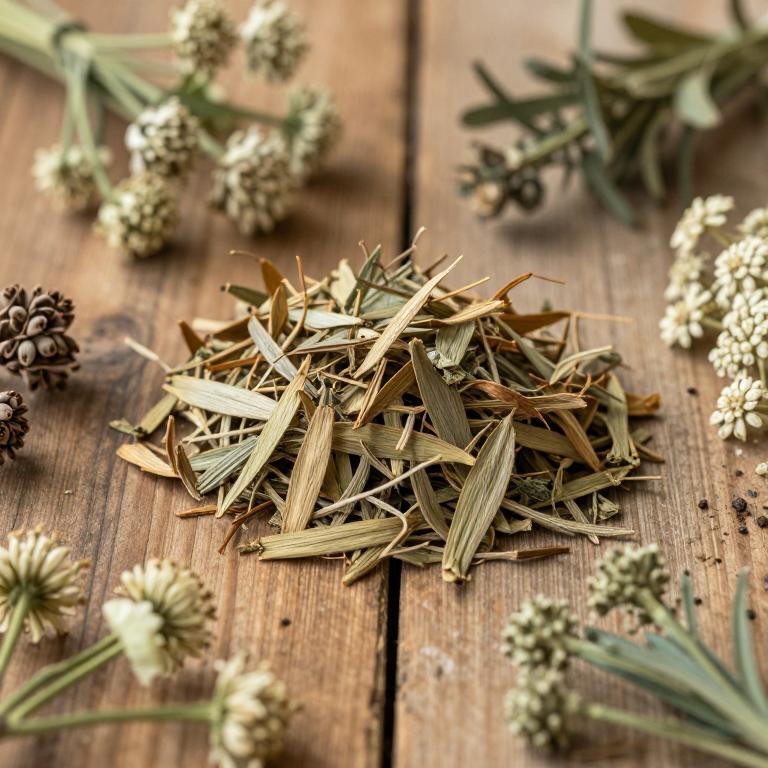
, scientifically known as Angelica dahurica var. dahurica, is a perennial herb highly valued in traditional East Asian medicine. Renowned for its aromatic roots, it is frequently utilized to treat skin conditions, reduce inflammation, and alleviate pain. This potent botanical serves as a vital component in various herbal formulations.
- Family
- Apiaceae
- Native range
- Asia-Temperate
- Parts used
- Root
- Common names
- Not available
- Scientific synonyms
- Procris Chinensis · Angelica Glabra · 8 more
Names and Synonyms
Scientific Names
Accepted name
Angelica dahurica var. dahuricaSynonyms
- Procris chinensis
- Angelica glabra
- Angelica dahurica var. pai-chi
- Angelica porphyrocaulis f. latisecta
- Dorstenia chinensis
- Dorstenia digitifolia
- Angelica macrocarpa
- Angelica porphyrocaulis
- Angelica pubescens var. glabra
- Angelica tschiliensis
Sources: Wikidata
Taxonomical Classification
This plant belongs to the kingdom Plantae within the phylum Streptophyta and the class Equisetopsida. Under the subclass Magnoliidae, it is classified in the order Apiales and the family Apiaceae. Finally, it is identified under the genus Angelica.
| Rank | Classification |
|---|---|
| Kingdom | Plantae |
| Phylum | Streptophyta |
| Class | Equisetopsida |
| Subclass | Magnoliidae |
| Order | Apiales |
| Family | Apiaceae |
| Genus | Angelica |
Sources: The World Checklist of Vascular Plants (WCVP)
Distribution
This plant exhibits a broad geographical distribution across the vast territories of Northern Asia. Within the region of Siberia, it can be found growing in Buryatiya and Chitа. Its presence also extends to the Irkutsk and Yakutiya regions of Siberia. Furthermore, the species is documented in the Russian Far East, specifically within the Amur area. Together, these locations highlight the plant's ability to thrive in diverse Siberian and Far Eastern habitats.
| Region | Area |
|---|---|
| Siberia | Buryatiya |
| Siberia | Chita |
| Siberia | Irkutsk |
| Siberia | Yakutiya |
| Russian Far East | Amur |
| Russian Far East | Khabarovsk |
| Russian Far East | Primorye |
| China | Inner Mongolia |
| China | Manchuria |
| China | China North-Central |
Sources: The World Checklist of Vascular Plants (WCVP)
Plant Parts
Angelica dahurica var. dahurica has 1 reported plant parts identified across 1 scientific publications and several other databases that are studied for medicinal purposes. The most consistently reported plant part include root.
| Plant part | Supporting sources | Consensus |
|---|---|---|
| Root | 1 supporting sources | ★☆☆☆☆ |
Root
- Journal of natural products
Chemicals
Angelica dahurica var. dahurica has 5 reported phytochemicals identified across 1 scientific publications and several other databases. The most consistently reported chemicals include Bergapten, Byakangelicin, Oxypeucedanin, Oxypeucedanin hydrate, Phellopterin.
| Chemical | Supporting sources | Consensus |
|---|---|---|
| Bergapten | 1 supporting sources | ★☆☆☆☆ |
| Byakangelicin | 1 supporting sources | ★☆☆☆☆ |
| Oxypeucedanin | 1 supporting sources | ★☆☆☆☆ |
| Oxypeucedanin hydrate | 1 supporting sources | ★☆☆☆☆ |
| Phellopterin | 1 supporting sources | ★☆☆☆☆ |
Bergapten
- Journal of natural products
Byakangelicin
- Journal of natural products
Oxypeucedanin
- Journal of natural products
Oxypeucedanin hydrate
- Journal of natural products
Phellopterin
- Journal of natural products
Preparations
Angelica dahurica var. dahurica has 1 reported preparations identified across 1 scientific publications and several other databases. The most consistently reported preparations include dried roots.
| Preparation | Supporting sources | Consensus |
|---|---|---|
| Dried roots | 1 supporting sources | ★☆☆☆☆ |
Dried roots
- Journal of natural products