Angelica cincta
Angelica cincta · Accepted scientific name
Scientific literature: Very Sparse (1 studies) · ★☆☆☆☆
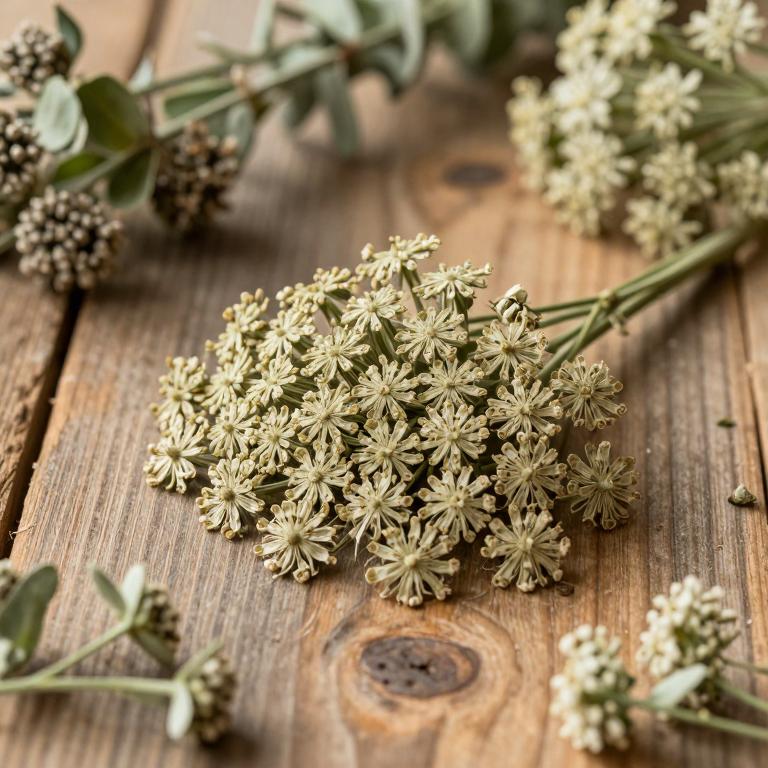
Angelica cincta, scientifically known as Angelica cincta, is a potent medicinal herb celebrated in traditional healing practices. Renowned for its aromatic properties, this plant offers diverse therapeutic benefits, ranging from digestive support to anti-inflammatory effects. Its unique chemical composition makes it a vital resource in holistic wellness and pharmacology.
- Family
- Not available
- Native range
- Asia-Temperate
- Parts used
- Root
- Common names
- Not available
- Scientific synonyms
- Not available
Names and Synonyms
Scientific Names
Accepted name
Angelica cinctaDistribution
This plant exhibits a broad geographical distribution spanning across several distinct regions. In the Russian Far East, it can be found growing in the Amur and Khabarovsk regions. Its presence extends further into the Russian Far East through the territories of Primorye and Sakhalin. Additionally, the species is documented within the South-Central part of China. These locations highlight the plant's ability to thrive in diverse East Asian habitats.
| Region | Area |
|---|---|
| Russian Far East | Amur |
| Russian Far East | Khabarovsk |
| Russian Far East | Primorye |
| Russian Far East | Sakhalin |
| China | China South-Central |
| China | Inner Mongolia |
| China | Manchuria |
| Eastern Asia | Japan |
| Eastern Asia | Korea |
Sources: The World Checklist of Vascular Plants (WCVP)
Botanical Identification
Ecology
The ecology of Angelica cinerea is characterized by its preference for diverse, semi-open environments, where it thrives within the transition zones of forest ecosystems, expansive meadows, and dense shrubberies. It establishes itself effectively in these habitats by utilizing the varied light availability and soil structures provided by the interplay between woodland canopies and open grassy spaces. In forest settings, it often occupies the dappled sunlight of the understory or edges, while in meadows and shrubberies, it benefits from the increased nutrient cycling and structural complexity of the vegetation. This versatility in habitat selection allows the species to occupy ecological niches that balance moisture retention with sufficient solar exposure, facilitating its growth and integration into these complex plant communities.
- Habitat :
- forest, meadows, shrubberies
Life history
The life history of Angelica cinte is characterized by its status as a perennial, meaning the plant lives for more than two years and undergoes repeated cycles of growth. Depending on environmental conditions and specific ecological niches, its development may exhibit variable patterns, sometimes transitioning through stages that resemble biennial behavior before establishing its long-term perennial nature. As a perennial species, it focuses on building robust root systems that allow it to survive dormant periods, subsequently re-emerging to complete its reproductive cycle over multiple seasons.
- Lifecycle :
- perennial
Morphology
The morphology of Angelica cinerea is characterized by its growth form as a non-woody herb and forb. The plant reaches a height ranging from a minimum of 0.8 m to a maximum of 2 m. As a non-woody species, it lacks significant lignification, maintaining a herbaceous structure throughout its development.
- Growth form :
- herb
- Growth form :
- forb
- Plant height max:
- 2 m
- Plant height min:
- 0.8 m
- Woodiness :
- non-woody
Physiology
The physiology of Angelica cinerea is characterized by a C3 photosynthetic pathway, which dictates its metabolic processes and carbon fixation efficiency. The morphological structure of its foliage is defined by leaves that exhibit a lobed margin and are entirely devoid of thorns or spines. These leaves vary in size, with a minimum length of 3 cm and a maximum length reaching up to 8 cm, maintaining a mean length of approximately 5.5 cm. In terms of lateral expansion, the leaf width ranges from a minimum of 1.5 cm to a maximum of 4 cm, providing a specific surface area optimized for its C3 carbon assimilation process.
- Leaf length max:
- 8 cm
- Leaf length mean:
- 5.5 cm
- Leaf length min:
- 3 cm
- Leaf margin :
- lobed
- Leaf spines :
- no
- Leaf thorns :
- no
- Leaf width max:
- 4 cm
- Leaf width min:
- 1.5 cm
- Photosynthetic pathway :
- C3
Reproduction
The reproduction of Angelica cinerea is characterized by a specific flowering window and the development of distinct fruit structures. The flowering period typically occurs during the month of August, though the timing can be variable across different seasons. Following pollination, the plant produces fruits that exhibit specific morphological dimensions. These fruits have a minimum length of 0.5 cm and a maximum length of 0.7 cm, with an average length of approximately 0.6 cm. In terms of width, the fruits range from a minimum of 0.3 cm to a maximum of 0.5 cm, maintaining a mean width of 0.4 cm.
- Flowering time :
- Aug
- Fruit length max:
- 0.7 cm
- Fruit length mean:
- 0.6 cm
- Fruit length min:
- 0.5 cm
- Fruit width max:
- 0.5 cm
- Fruit width mean:
- 0.4 cm
- Fruit width min:
- 0.3 cm
Sources: Global Inventory of Floras and Traits (GIFT)
Plant Parts
Angelica cincta has 1 reported plant parts identified across 1 scientific publications and several other databases that are studied for medicinal purposes. The most consistently reported plant part include root.
| Plant part | Supporting sources | Consensus |
|---|---|---|
| Root | 1 supporting sources | ★☆☆☆☆ |
Root
- Natural product research