Norwegian angelica
Angelica archangelica subsp. archangelica · Accepted scientific name
Scientific literature: Very Sparse (4 studies) · ★☆☆☆☆
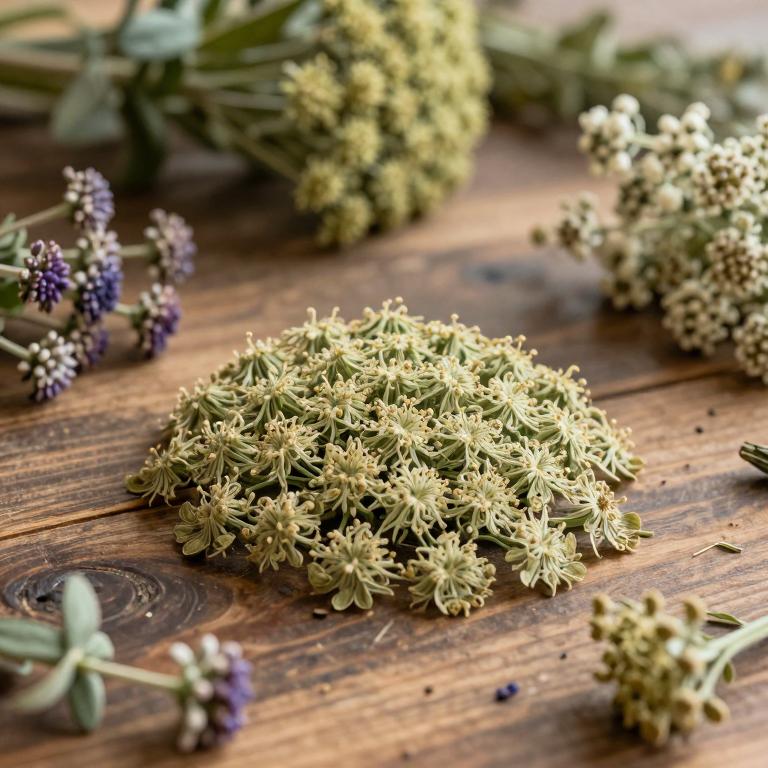
Norwegian angelicca, scientifically known as Angelica archangelica subsp. archangelica, is a majestic perennial herb prized for its aromatic roots and stems. Native to cool, damp climates, this botanical treasure has been utilized for centuries in traditional medicine to support digestive health, reduce inflammation, and promote overall holistic wellness.
- Family
- Apiaceae
- Native range
- Europe
- Parts used
- Fruit · Root
- Common names
- Norwegian Angelica · Garden Angelica
- Scientific synonyms
- Angelica Norwegica · Angelica Archangelica Var. Rwegica · 21 more
Names and Synonyms
Common Names
- Norwegian angelica
- garden angelica
Scientific Names
Accepted name
Angelica archangelica subsp. archangelicaSynonyms
- Angelica norwegica
- Angelica archangelica var. rwegica
- Archangelica officinalis var. littoralis
- Angelica commutata
- Archangelica officinalis var. silvestris
- Archangelica officinalis var. sativa
- Angelica archangelica var. sativa
- Angelica archangelica subsp. norwegica
- Angelica discocarpa
- Archangelica officinalis subsp. littoralis
- Archangelica commutata
- Archangelica discocarpa
- Archangelica norwegica
- Archangelica officinalis monstr. phyllomana
- Archangelica littoralis
- Archangelica spuria
- Archangelica sativa
- Archangelica slavica
- Angelica intermedia
- Angelica officinalis
- Angelica procera
- Angelica sativa
- Ligusticum angelica
Regional and Traditional Names
German:
- Gewöhnliche Arznei-Engelwurz
French:
- angélique de Norvège
Sources: Wikidata, Catalogue of Life
Taxonomical Classification
This plant belongs to the kingdom Plantae and the phylum Streptophyta, falling under the class Equisetopsida and subclass Magnoliidae. Within the order Apiales, it is a member of the Apiaceae family. It is further classified under the genus Angelica, specifically as the subspecies archangelica.
| Rank | Classification |
|---|---|
| Kingdom | Plantae |
| Phylum | Streptophyta |
| Class | Equisetopsida |
| Subclass | Magnoliidae |
| Order | Apiales |
| Family | Apiaceae |
| Genus | Angelica |
Sources: The World Checklist of Vascular Plants (WCVP)
Distribution
This plant is primarily distributed across various regions within Northern Europe. Its natural range includes the coastal and inland areas of Denmark and Finland. It can also be found growing in the unique landscapes of the Faroe Islands, known locally as Føroyar. Additionally, the species is present throughout the territories of Great Britain. Finally, its distribution extends to the northern reaches of Iceland.
| Region | Area |
|---|---|
| Northern Europe | Denmark |
| Northern Europe | Finland |
| Northern Europe | Føroyar |
| Northern Europe | Great Britain |
| Northern Europe | Iceland |
| Northern Europe | Ireland |
| Northern Europe | Sweden |
| Middle Europe | Belgium |
| Middle Europe | Czechia-Slovakia |
| Middle Europe | Germany |
Sources: The World Checklist of Vascular Plants (WCVP)
Plant Parts
Angelica archangelica subsp. archangelica has 2 reported plant parts identified across 2 scientific publications and several other databases that are studied for medicinal purposes. The most consistently reported plant part include fruit, root.
| Plant part | Supporting sources | Consensus |
|---|---|---|
| Fruit | 1 supporting sources | ★☆☆☆☆ |
| Root | 1 supporting sources | ★☆☆☆☆ |
Fruit
- Evidence-based complementary and alternative medicine : eCAM
Root
- European journal of histochemistry : EJH
Chemicals
Angelica archangelica subsp. archangelica has 1 reported phytochemicals identified across 2 scientific publications and several other databases. The most consistently reported chemicals include IMPERATORIN.
| Chemical | Supporting sources | Consensus |
|---|---|---|
| IMPERATORIN | 1 supporting sources | ★☆☆☆☆ |
IMPERATORIN
- Evidence-based complementary and alternative medicine : eCAM
Preparations
Angelica archangelica subsp. archangelica has 1 reported preparations identified across 2 scientific publications and several other databases. The most consistently reported preparations include fruits.
| Preparation | Supporting sources | Consensus |
|---|---|---|
| Fruits | 1 supporting sources | ★☆☆☆☆ |
Fruits
- Evidence-based complementary and alternative medicine : eCAM