windflower
Anemone · Accepted scientific name
Scientific literature: Very Sparse (5 studies) · ★☆☆☆☆
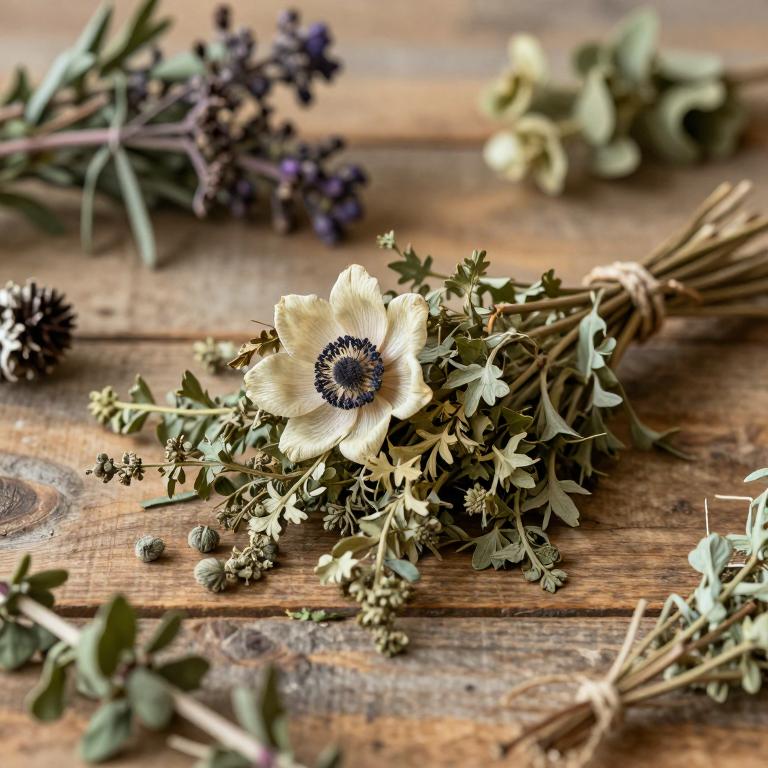
Windflower, scientifically known as Anemone, is a versatile genus of flowering plants celebrated for their delicate, radiant blooms. Beyond their aesthetic charm, many species hold significant roles in traditional herbalism. Used to treat various ailments, these resilient plants offer a fascinating intersection of natural beauty and ancient medicinal wisdom.
Names and Synonyms
Common Names
- windflower
- anemones and thimbleweeds
- windflowers
Scientific Names
Accepted name
AnemoneSynonyms
- Flammara
- Hartiana
- Pulsatilloides
- Anemonanthea
- Anemonoides
- Tamuria
- Oriba
- Arsenjevia
- Abalemis
Regional and Traditional Names
French:
- Anémone
Sources: Wikidata, Catalogue of Life
Taxonomical Classification
This plant belongs to the kingdom Plantae and the phylum Streptophyta, falling under the class Equisetopsida and subclass Magnoliidae. Within the order Ranunculales, it is classified under the family Ranunculaceae. Its specific taxonomic designation is within the genus Anemone.
| Rank | Classification |
|---|---|
| Kingdom | Plantae |
| Phylum | Streptophyta |
| Class | Equisetopsida |
| Subclass | Magnoliidae |
| Order | Ranunculales |
| Family | Ranunculaceae |
| Genus | Anemone |
Sources: The World Checklist of Vascular Plants (WCVP)
Distribution
This plant is primarily found across various regions of Northern Europe. Its natural habitat includes the coastal and inland landscapes of Denmark and Finland. You can also locate these medicinal flowers throughout the lush terrain of Great Britain. Furthermore, the species is well-distributed across the green landscapes of Ireland. Finally, it remains a common sight within the rugged environments of Norway.
| Region | Area |
|---|---|
| Northern Europe | Denmark |
| Northern Europe | Finland |
| Northern Europe | Great Britain |
| Northern Europe | Ireland |
| Northern Europe | Norway |
| Northern Europe | Sweden |
| Middle Europe | Austria |
| Middle Europe | Belgium |
| Middle Europe | Czechia-Slovakia |
| Middle Europe | Germany |
Sources: The World Checklist of Vascular Plants (WCVP)
Activities
Anemone has 3 reported activities identified across 0 scientific publications and several other databases. The most consistently reported activities include Anticancer, Antimicrobial, Antioxidant.
| Activity | Supporting sources | Consensus |
|---|---|---|
| Anticancer | 1 supporting sources | ★☆☆☆☆ |
| Antimicrobial | 1 supporting sources | ★☆☆☆☆ |
| Antioxidant | 1 supporting sources | ★☆☆☆☆ |
Anticancer
- Acta pharmaceutica Sinica. B
Antimicrobial
- Acta pharmaceutica Sinica. B
Antioxidant
- Acta pharmaceutica Sinica. B
Conditions
Anemone has 2 reported investigations on conditions identified across 0 scientific publications and several other databases. The most consistently reported conditions include cancer, rheumatoid arthritis.
| Condition | Supporting sources | Consensus |
|---|---|---|
| Cancer | 1 supporting sources | ★☆☆☆☆ |
| Rheumatoid arthritis | 1 supporting sources | ★☆☆☆☆ |
Cancer
- Acta pharmaceutica Sinica. B
Rheumatoid arthritis
- Zhongguo Zhong yao za zhi = Zhongguo zhongyao zazhi = China journal of Chinese materia medica
Preparations
Anemone has 1 reported preparations identified across 0 scientific publications and several other databases. The most consistently reported preparations include Anemone decoction.
| Preparation | Supporting sources | Consensus |
|---|---|---|
| Anemone decoction | 1 supporting sources | ★☆☆☆☆ |
Anemone decoction
- Zhongguo Zhong yao za zhi = Zhongguo zhongyao zazhi = China journal of Chinese materia medica