Simbi Tree
Androstachys johnsonii · Accepted scientific name
Scientific literature: Very Sparse (7 studies) · ★☆☆☆☆
Simbi Tree, scientifically known as Androstachys johnsonii, is a significant medicinal plant found within tropical forest ecosystems. Renowned for its diverse therapeutic properties, it is traditionally utilized by local communities to treat various ailments. This hardy species plays a vital role in ethnobotany and regional biodiversity conservation efforts.
- Family
- Picrodendraceae
- Native range
- Africa
- Parts used
- Leaf
- Common names
- Simbi Tree · Wild Quince · 5 more
- Scientific synonyms
- Weihea Subpeltata · Androstachys Subpeltata
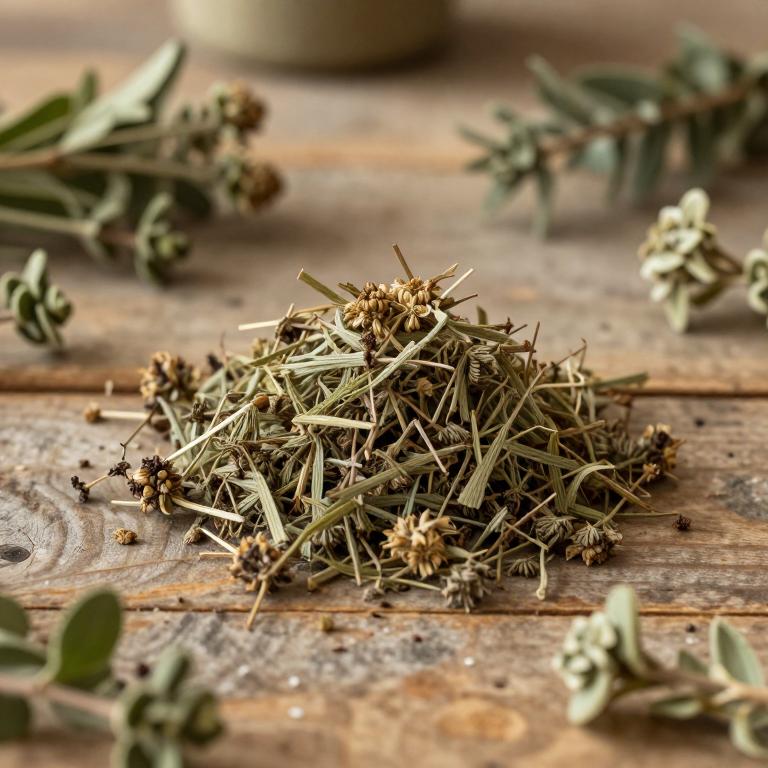
Names and Synonyms
Common Names
- Simbi Tree
- Wild Quince
- mecrusse
- mzimbeet
- Lebombo Spoon-Ironwood
- Lebombo-Ironwood
- Wild-Quince
Scientific Names
Accepted name
Androstachys johnsoniiSynonyms
- Weihea subpeltata
- Androstachys subpeltata
Regional and Traditional Names
German:
- Lebombo-Eisenholz
Sources: Wikidata, Catalogue of Life
Taxonomical Classification
This plant, Androstachys johnsonii, belongs to the kingdom Plantae and the phylum Streptophyta. It is classified under the class Equisetopsida and the subclass Magnoliidae within the order Malpighiales. Finally, it is a member of the family Picrodendraceae and the genus Androstachys.
| Rank | Classification |
|---|---|
| Kingdom | Plantae |
| Phylum | Streptophyta |
| Class | Equisetopsida |
| Subclass | Magnoliidae |
| Order | Malpighiales |
| Family | Picrodendraceae |
| Genus | Androstachys |
Sources: The World Checklist of Vascular Plants (WCVP)
Distribution
This plant exhibits a diverse range of habitats across several distinct regions. Within South Tropical Africa, its presence is specifically noted in Mozambique. Moving into Southern Africa, it can be found within the borders of Eswatini and throughout the Northern Provinces. Additionally, the species extends its reach into the Western Indian Ocean, specifically inhabiting Madagascar. This distribution highlights the plant's ability to thrive in multiple ecological zones across the continent and its adjacent islands.
| Region | Area |
|---|---|
| South Tropical Africa | Mozambique |
| Southern Africa | Eswatini |
| Southern Africa | Northern Provinces |
| Western Indian Ocean | Madagascar |
Sources: The World Checklist of Vascular Plants (WCVP)
Botanical Identification
Ecology
The ecology of Androstachys johnsonii is characterized by its adaptation to diverse topographical gradients within its native habitat, occupying a broad altitudinal spectrum. This species thrives across a significant vertical range, establishing itself in environments starting from low-lying areas at an elevation of 106 m AMSL and extending up to montane reaches of 1066 m AMSL. This wide elevational range suggests a high degree of ecological plasticity, allowing the plant to inhabit various microclimates and soil compositions found between these two extremes. Such distribution patterns typically indicate that the species can tolerate a variety of temperature regimes and moisture levels associated with different altitudinal zones, playing a vital role in the structural complexity of the forest ecosystems it inhabits.
- Elevational range max:
- 1066 m AMSL
- Elevational range min:
- 106 m AMSL
Life history
The life history of Androstachys johnsonii is characterized by its long-lived nature as a perennial species, allowing it to establish a stable presence within its ecological niche over many years. As a phanerophyte, its regenerative buds are located high above the ground on aerial stems or branches, a structural adaptation that supports its growth into a substantial woody form. This phanerophyte life form, categorized under both its primary growth habit and its structural classification, ensures that the plant can persist through various seasonal changes while maintaining its reproductive capacity throughout its extended lifespan.
- Life form :
- phanerophyte
- Lifecycle :
- perennial
Morphology
The morphology of Androstachys johnsonii is characterized by its growth form as a woody tree that functions as a self-supporting structure. As a terrestrial species, it does not exhibit aquatic or epiphytic tendencies, nor does it act as a parasite, maintaining an independent life cycle. The plant's stature varies significantly, with a recorded minimum height of 2 m and a maximum height reaching up to 20 m, though it maintains a mean height of approximately 25 m in certain environments. Unlike climbing vines or lianas, this species is entirely self-supporting and lacks any climbing habit.
- Aquatic :
- terrestrial
- Climber :
- self-supporting
- Epiphyte :
- terrestrial
- Growth form :
- tree
- Parasite :
- independent
- Plant height max:
- 20 m
- Plant height mean:
- 25 m
- Plant height min:
- 2 m
- Woodiness :
- woody
Physiology
The physiology of Androstachys johnsonii is characterized by a C3 photosynthetic pathway, which dictates its carbon fixation processes and metabolic efficiency under specific environmental conditions. As a plant utilizing the C3 pathway, it fixes carbon dioxide directly through the Calvin cycle, typically favoring environments with moderate temperatures and adequate moisture. Furthermore, this species does not function as a nitrogen fixer, meaning it lacks the symbiotic relationship with diazotrophic bacteria required to convert atmospheric nitrogen into bioavailable forms, and must instead rely on the uptake of nitrogenous compounds directly from the soil.
- Nitrogen fixer :
- no
- Photosynthetic pathway :
- C3
Reproduction
The reproduction of Androstachys johnsonii is characterized by specific reproductive mechanisms and seed morphology. In terms of pollination dynamics, the species exhibits a lack of self-pollination, as self-fertilization is documented as absent, suggesting a reliance on cross-pollination strategies to maintain genetic diversity. The production of seeds is highly uniform, with all recorded data indicating a consistent seed mass. The seed mass remains constant across all measurements, with a minimum, maximum, and mean value all fixed at 0.06108 g.
- Seed mass mean:
- 0.06108 g
- Self fertilization :
- absent
Sources: Global Inventory of Floras and Traits (GIFT)
Plant Parts
Androstachys johnsonii has 1 reported plant parts identified across 1 scientific publications and several other databases that are studied for medicinal purposes. The most consistently reported plant part include leaf.
| Plant part | Supporting sources | Consensus |
|---|---|---|
| Leaf | 1 supporting sources | ★☆☆☆☆ |
Leaf
- Molecules (Basel, Switzerland)
Chemicals
Androstachys johnsonii has 6 reported phytochemicals identified across 1 scientific publications and several other databases. The most consistently reported chemicals include Condensed Tannins, Flavonoids, Phenols, Saponins, Tannins.
| Chemical | Supporting sources | Consensus |
|---|---|---|
| Condensed Tannins | 1 supporting sources | ★☆☆☆☆ |
| Flavonoids | 1 supporting sources | ★☆☆☆☆ |
| Phenols | 1 supporting sources | ★☆☆☆☆ |
| Saponins | 1 supporting sources | ★☆☆☆☆ |
| Tannins | 1 supporting sources | ★☆☆☆☆ |
| Terpenoids | 1 supporting sources | ★☆☆☆☆ |
Condensed Tannins
- Molecules (Basel, Switzerland)
Flavonoids
- Molecules (Basel, Switzerland)
Phenols
- Molecules (Basel, Switzerland)
Saponins
- Molecules (Basel, Switzerland)
Tannins
- Molecules (Basel, Switzerland)
Terpenoids
- Molecules (Basel, Switzerland)
Preparations
Androstachys johnsonii has 1 reported preparations identified across 1 scientific publications and several other databases. The most consistently reported preparations include methanol and distilled water extracts.
| Preparation | Supporting sources | Consensus |
|---|---|---|
| Methanol and distilled water extracts | 1 supporting sources | ★☆☆☆☆ |
Methanol and distilled water extracts
- Molecules (Basel, Switzerland)