Androsace foliosa
Androsace foliosa · Accepted scientific name
Scientific literature: Very Sparse (3 studies) · ★☆☆☆☆
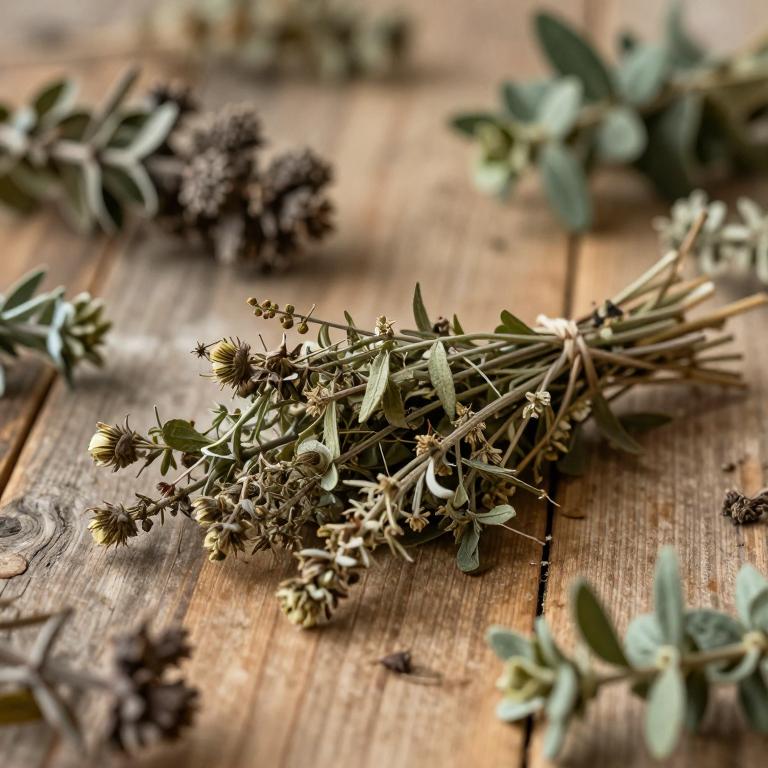
, scientifically known as Androsace folioosa, is a rare medicinal herb native to specific mountainous regions. Valued in traditional healing practices, this plant possesses unique bioactive compounds. Researchers are currently exploring its potential pharmacological properties, particularly for its antioxidant and anti-inflammatory effects, to uncover new therapeutic applications in medicine.
- Family
- Primulaceae
- Native range
- Asia-Tropical
- Parts used
- Leaf
- Common names
- Not available
- Scientific synonyms
- Androsace Sarmentosa Var. Foliosa
Names and Synonyms
Scientific Names
Accepted name
Androsace foliosaSynonyms
- Androsace sarmentosa var. foliosa
Sources: Wikidata, Catalogue of Life
Taxonomical Classification
This plant belongs to the kingdom Plantae and is classified within the phylum Streptophyta and class Equisetopsida. It falls under the subclass Magnoliidae and the order Ericales, specifically within the family Primulaceae. Finally, its taxonomic identity is defined by the genus Androsace.
| Rank | Classification |
|---|---|
| Kingdom | Plantae |
| Phylum | Streptophyta |
| Class | Equisetopsida |
| Subclass | Magnoliidae |
| Order | Ericales |
| Family | Primulaceae |
| Genus | Androsace |
Sources: The World Checklist of Vascular Plants (WCVP)
Distribution
This plant is native to specific regions within the Indian Subcontinent. Its presence is primarily recorded in the mountainous terrain of Pakistan. Additionally, it can be found growing throughout the West Himalaya range. These specific locations define its natural ecological boundaries. Consequently, its geographical distribution is concentrated within these distinct South Asian territories.
| Region | Area |
|---|---|
| Indian Subcontinent | Pakistan |
| Indian Subcontinent | West Himalaya |
Sources: The World Checklist of Vascular Plants (WCVP)
Botanical Identification
Life history
The life history of Androsace folioosa is characterized by a perennial lifecycle, allowing the plant to persist through multiple growing seasons. As a perennial species, it establishes a stable presence within its ecological niche, typically undergoing cycles of vegetative growth and seasonal dormancy. This long-lived habit enables the plant to invest energy into robust root systems and structural development, providing a competitive advantage in its specific habitat compared to shorter-lived species. Throughout its existence, the plant undergoes periodic reproductive phases, transitioning from vegetative expansion to the production of flowers and seeds, ensuring the continuation of its lineage across successive years.
- Lifecycle :
- annual
Morphology
The morphology of Androsace foliosa is characterized by its growth form as a herb, which lacks any woody tissue, making it a non-woody species. It functions as an independent organism rather than a parasite, maintaining its own biological processes without relying on a host. While it exhibits certain spreading tendencies, it is categorized as a self-supporting climber, meaning it does not rely on external structures for obligatory support but rather maintains its own structural integrity within its habitat.
- Climber :
- self-supporting
- Growth form :
- herb
- Parasite :
- independent
- Woodiness :
- non-woody
Reproduction
The reproduction of Androsace folioosa is characterized by a specific seasonal flowering period that occurs during the late spring and early summer months. The flowering cycle begins in May and reaches its conclusion in June, following a predictable phenological pattern. While the exact timing can be subject to environmental variables, the reproductive phase is concentrated within this narrow window, ensuring that the plant's reproductive efforts are synchronized with its specific ecological requirements.
- Flowering time :
- May
- Flowering time :
- Jun
Sources: Global Inventory of Floras and Traits (GIFT)
Plant Parts
Androsace foliosa has 1 reported plant parts identified across 1 scientific publications and several other databases that are studied for medicinal purposes. The most consistently reported plant part include leaf.
| Plant part | Supporting sources | Consensus |
|---|---|---|
| Leaf | 1 supporting sources | ★☆☆☆☆ |
Leaf
- Pakistan journal of pharmaceutical sciences
Chemicals
Androsace foliosa has 1 reported phytochemicals identified across 1 scientific publications and several other databases. The most consistently reported chemicals include n-Hexane.
| Chemical | Supporting sources | Consensus |
|---|---|---|
| n-Hexane | 1 supporting sources | ★☆☆☆☆ |
n-Hexane
- Pakistan journal of pharmaceutical sciences
Activities
Androsace foliosa has 1 reported activities identified across 1 scientific publications and several other databases. The most consistently reported activities include Abortifacient.
| Activity | Supporting sources | Consensus |
|---|---|---|
| Abortifacient | 1 supporting sources | ★☆☆☆☆ |
Abortifacient
- Pakistan journal of pharmaceutical sciences
Preparations
Androsace foliosa has 1 reported preparations identified across 1 scientific publications and several other databases. The most consistently reported preparations include n-hexane leaves extract.
| Preparation | Supporting sources | Consensus |
|---|---|---|
| N-hexane leaves extract | 1 supporting sources | ★☆☆☆☆ |
N-hexane leaves extract
- Pakistan journal of pharmaceutical sciences