Andrographis echioides
Andrographis echioides · Accepted scientific name
Scientific literature: Very Sparse (11 studies) · ★☆☆☆☆
scientifically known as Andrographis echioides, is a perennial herb belonging to the Acanthaceae family. Often found in tropical regions, this medicinal plant is valued in traditional medicine for its diverse therapeutic properties. It is primarily recognized for its potential anti-inflammatory, antimicrobial, and antioxidant activities in treating various ailments.
- Family
- Acanthaceae
- Native range
- Asia-Tropical
- Parts used
- Leaf
- Common names
- Not available
- Scientific synonyms
- Neesiella Echioides · Ruellia Malabarica · 5 more
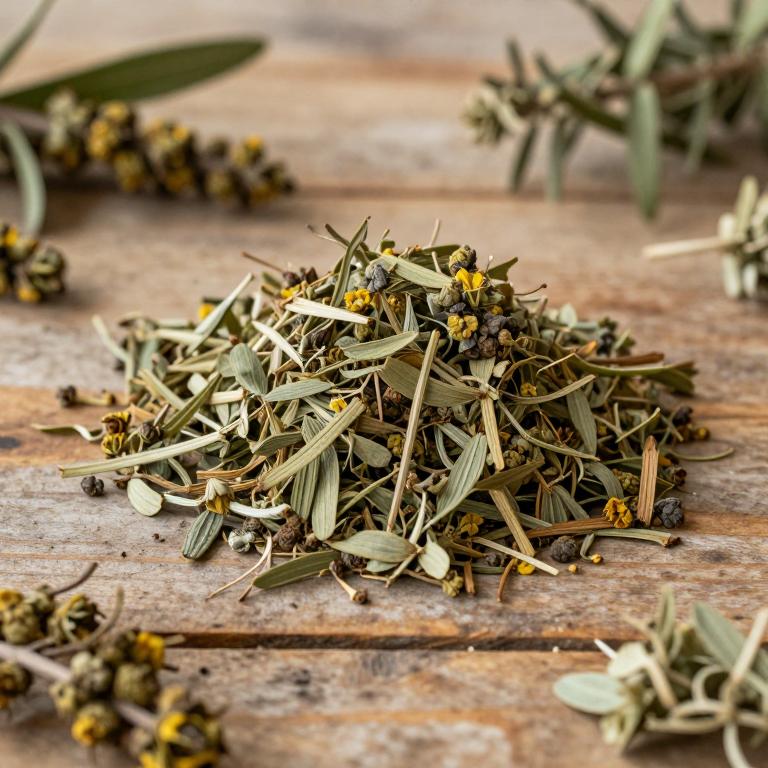
Names and Synonyms
Scientific Names
Accepted name
Andrographis echioidesSynonyms
- Neesiella echioides
- Ruellia malabarica
- Justicia echinoides
- Justicia echioides
- Erianthera echioides
- Erianthera lobelioides
- Indoneesiella echioides
Sources: Wikidata, Catalogue of Life
Taxonomical Classification
This plant belongs to the kingdom Plantae and the phylum Streptophyta, falling under the class Equisetopsida and subclass Magnoliidae. It is further classified within the order Lamiales and the family Acanthaceae. Finally, it is identified by its genus, Andrographis.
| Rank | Classification |
|---|---|
| Kingdom | Plantae |
| Phylum | Streptophyta |
| Class | Equisetopsida |
| Subclass | Magnoliidae |
| Order | Lamiales |
| Family | Acanthaceae |
| Genus | Andrographis |
Sources: The World Checklist of Vascular Plants (WCVP)
Distribution
This plant exhibits a broad geographical distribution that spans multiple regions across different continents. Within the Indian Subcontinent, it can be found growing in Bangladesh, India, and Sri Lanka. Its presence is also noted in the specific ecological zone of the West Himalaya. Moving away from Asia, the species has been documented in the Southeastern United States, specifically in Virginia. This wide-ranging habitat demonstrates the plant's ability to adapt to diverse environments.
| Region | Area |
|---|---|
| Indian Subcontinent | Bangladesh |
| Indian Subcontinent | India |
| Indian Subcontinent | Sri Lanka |
| Indian Subcontinent | West Himalaya |
| Southeastern U.S.A. | Virginia |
Sources: The World Checklist of Vascular Plants (WCVP)
Botanical Identification
Life history
The life history of Andrographis echioides is characterized by an annual lifecycle, meaning the plant completes its entire biological process—from germination to seed production—within a single growing season. As an annual species, it typically germinates following seasonal rains, focusing its metabolic energy on rapid vegetative growth to establish a robust structure. During its development, the plant transitions from its seedling stage to a flowering stage, where it produces inflorescences that facilitate sexual reproduction. Once pollination occurs, the plant shifts its resources toward seed maturation and dispersal. Following the successful release of its seeds into the environment, the parent plant completes its life cycle and dies, leaving the next generation to emerge from the soil during the subsequent favorable growing period.
- Lifecycle :
- annual
Morphology
The morphology of Andrographis echioides is characterized by its growth form as a non-woody herb and forb, functioning as a self-supporting plant rather than a climber or liana. It is an independent species that does not exhibit parasitic behavior and is strictly terrestrial in its habitat, lacking any aquatic, semiaquatic, or epiphytic tendencies. The plant's structure is entirely non-woody, maintaining a soft, herbaceous consistency throughout its development.
- Aquatic :
- terrestrial
- Climber :
- self-supporting
- Epiphyte :
- terrestrial
- Growth form :
- herb
- Growth form :
- forb
- Parasite :
- independent
- Woodiness :
- non-woody
Sources: Global Inventory of Floras and Traits (GIFT)
Plant Parts
Andrographis echioides has 1 reported plant parts identified across 1 scientific publications and several other databases that are studied for medicinal purposes. The most consistently reported plant part include leaf.
| Plant part | Supporting sources | Consensus |
|---|---|---|
| Leaf | 1 supporting sources | ★☆☆☆☆ |
Leaf
- Scientific reports
Chemicals
Andrographis echioides has 3 reported phytochemicals identified across 1 scientific publications and several other databases. The most consistently reported chemicals include Androechin, Decanoic acid, Echioidinin 5-O-glucoside.
| Chemical | Supporting sources | Consensus |
|---|---|---|
| Androechin | 1 supporting sources | ★☆☆☆☆ |
| Decanoic acid | 1 supporting sources | ★☆☆☆☆ |
| Echioidinin 5-O-glucoside | 1 supporting sources | ★☆☆☆☆ |
Androechin
- Journal of Asian natural products research
Decanoic acid
- Scientific reports
Echioidinin 5-O-glucoside
- Journal of Asian natural products research
Activities
Andrographis echioides has 5 reported activities identified across 1 scientific publications and several other databases. The most consistently reported activities include Antiangiogenic, Antimicrobial, Antiproliferative, Antipyretic, Hepatoprotective.
| Activity | Supporting sources | Consensus |
|---|---|---|
| Antiangiogenic | 1 supporting sources | ★☆☆☆☆ |
| Antimicrobial | 1 supporting sources | ★☆☆☆☆ |
| Antiproliferative | 1 supporting sources | ★☆☆☆☆ |
| Antipyretic | 1 supporting sources | ★☆☆☆☆ |
| Hepatoprotective | 1 supporting sources | ★☆☆☆☆ |
Antiangiogenic
- Journal of cancer research and therapeutics
Antimicrobial
- Journal of cancer research and therapeutics
Antiproliferative
- Journal of cancer research and therapeutics
Antipyretic
- Journal of cancer research and therapeutics
Hepatoprotective
- Journal of cancer research and therapeutics
Conditions
Andrographis echioides has 1 reported investigations on conditions identified across 1 scientific publications and several other databases. The most consistently reported conditions include antipyretic.
| Condition | Supporting sources | Consensus |
|---|---|---|
| Antipyretic | 1 supporting sources | ★☆☆☆☆ |
Antipyretic
- Journal of cancer research and therapeutics
Preparations
Andrographis echioides has 2 reported preparations identified across 1 scientific publications and several other databases. The most consistently reported preparations include ethanolic extracts, leaf extracts.
| Preparation | Supporting sources | Consensus |
|---|---|---|
| Ethanolic extracts | 1 supporting sources | ★☆☆☆☆ |
| Leaf extracts | 1 supporting sources | ★☆☆☆☆ |
Ethanolic extracts
- Journal of cancer research and therapeutics
Leaf extracts
- Scientific reports