Italian alkanet
Anchusa azurea · Accepted scientific name
Scientific literature: Very Sparse (9 studies) · ★☆☆☆☆
Italian alkanet, scientifically known as Anchusa azurea, is a striking perennial herb celebrated for its vibrant, sky-blue flowers. Belonging to the Boraginaceae family, this hardy plant thrives in sunny, well-drained soils. Beyond its ornamental appeal, it holds traditional significance in herbal medicine and serves as a vital nectar source.
- Family
- Boraginaceae
- Native range
- Europe
- Parts used
- Not available
- Common names
- Italian Alkanet · Italian Bugloss · 4 more
- Scientific synonyms
- Anchusa Italica Var. Azurea
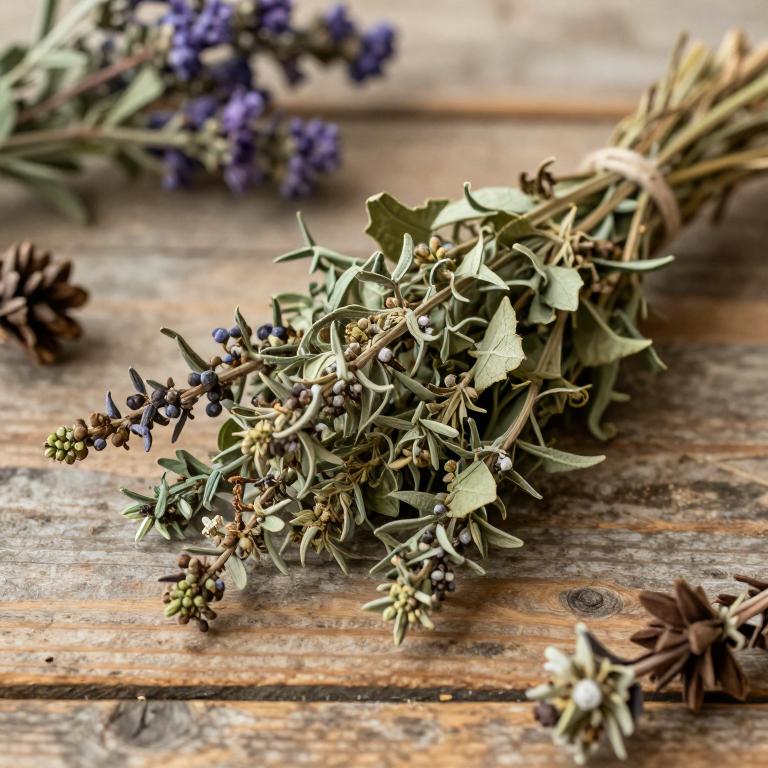
Names and Synonyms
Common Names
- Italian alkanet
- Italian bugloss
- garden alkanet
- garden anchusa
- garden bugloss
- large blue alkanet
Scientific Names
Accepted name
Anchusa azureaSynonyms
- Anchusa italica var. azurea
Regional and Traditional Names
Spanish:
- Tabaco silvestre
- Anchusa italica var. angustifolia
- Asperon barbudo
- Lenguaza real
- Anchusa italica var azurea
- Alcaluz
- Buglossum amoenum
- Buglossum elatum
- Asperon encarnado
- Anchusa paniculata
- Asperón barbudo
- Lenguaza negra
- Diablos
- Mielera
- Lenguabuey
- Leguaza moruna
German:
- Anchusa italica
- Italienische Ochsenzunge
- italienische Ochsenzunge
French:
- Buglosse d'Italie
- Anchusa italica
- buglosse d'Italie
Sources: Wikidata, Catalogue of Life
Taxonomical Classification
This plant belongs to the kingdom Plantae and the phylum Streptophyta. Within the class Equisetopsida and subclass Magnoliidae, it is categorized under the order Boraginales and the family Boraginaceae. Finally, it is classified under the genus Anchusa.
| Rank | Classification |
|---|---|
| Kingdom | Plantae |
| Phylum | Streptophyta |
| Class | Equisetopsida |
| Subclass | Magnoliidae |
| Order | Boraginales |
| Family | Boraginaceae |
| Genus | Anchusa |
Sources: The World Checklist of Vascular Plants (WCVP)
Distribution
This plant exhibits a specific geographical distribution primarily concentrated across the European continent. In Northern Europe, its presence can be documented within Great Britain. Moving into Middle Europe, the species is found spanning several different nations. Specifically, it inhabits regions including Austria, Belgium, and Germany. Additionally, its range extends through the territories of Czechia and Slovakia.
| Region | Area |
|---|---|
| Northern Europe | Great Britain |
| Middle Europe | Austria |
| Middle Europe | Belgium |
| Middle Europe | Czechia-Slovakia |
| Middle Europe | Germany |
| Middle Europe | Hungary |
| Middle Europe | Switzerland |
| Southwestern Europe | Baleares |
| Southwestern Europe | Corse |
| Southwestern Europe | France |
Sources: The World Checklist of Vascular Plants (WCVP)
Botanical Identification
Ecology
The ecology of Anchusa azurea is characterized by its broad adaptability to varying topographical settings, spanning a significant altitudinal gradient from sea level (0 m AMSL) up to elevations of 2400 m AMSL. This wide elevational range allows the species to occupy diverse montane and lowland niches. While it is naturally found in various wild environments, it is also frequently integrated into anthropogenic landscapes, specifically thriving within garden habitats where managed soil conditions and moisture levels support its growth.
- Elevational range max:
- 2400 m AMSL
- Elevational range min:
- 0 m AMSL
- Habitat :
- garden
Life history
The life history of Anchusa azurea is characterized by its classification as a perennial plant, allowing it to persist through multiple growing seasons. In terms of its structural survival strategy, it functions as a hemicryptophyte, a life form where the perennating buds are located at the soil surface, protected by leaf litter or the substrate during unfavorable periods. This biological framework enables the species to maintain a stable presence within its ecological niche, utilizing its perennial nature to establish robust root systems and ensure long-term survival and regrowth.
- Life form :
- hemicryptophyte
- Lifecycle :
- perennial
Morphology
The morphology of Anchusa azurea is characterized by its growth form as a non-woody herb and forb. This terrestrial plant is strictly independent, functioning neither as a parasite nor an epiphyte. It exhibits a self-supporting climbing habit, meaning it does not require external structures for support, and maintains an erect shoot orientation. In terms of stature, the plant displays significant variability in height, with a minimum height of 0.2 m, a mean height of 0.89 m, and a maximum height reaching up to 1.5 m.
- Aquatic :
- terrestrial
- Climber :
- self-supporting
- Epiphyte :
- terrestrial
- Growth form :
- herb
- Growth form :
- forb
- Parasite :
- independent
- Plant height max:
- 1.5 m
- Plant height mean:
- 0.89 m
- Plant height min:
- 0.2 m
- Shoot orientation :
- erect
- Woodiness :
- non-woody
Physiology
The physiology of Anchusa azurea is characterized by a C3 photosynthetic pathway, which dictates its metabolic efficiency and carbon fixation processes. The plant exhibits significant morphological variation in its foliage, with leaf forms primarily described as elliptic. The leaves demonstrate a diverse range of dimensions, featuring a mean leaf length of 20 cm (ranging from a minimum of 10 cm to a maximum of 40 cm) and a mean width of 5.5 cm, which fluctuates between a minimum of 3 cm and a maximum of 6 cm. These dimensions contribute to a mean leaf size of approximately 36.1168 cm². Furthermore, the plant maintains a mean Specific Leaf Area (SLA) of 190.4 cm²/g, reflecting its resource allocation strategies and leaf thickness in relation to its photosynthetic capacity.
- Leaf form :
- elliptic
- Leaf length max:
- 40 cm
- Leaf length mean:
- 20 cm
- Leaf length min:
- 10 cm
- Leaf size mean:
- 36.1168 cm²
- Leaf width max:
- 6 cm
- Leaf width mean:
- 5.5 cm
- Leaf width min:
- 3 cm
- Photosynthetic pathway :
- C3
- Specific Leaf Area (SLA) mean:
- 190.4 cm²/g
Reproduction
The reproduction of Anchusa azurea is characterized by a biotic pollination syndrome, specifically relying on insects for successful fertilization, as self-fertilization is notably absent. The plant produces vibrant blue flowers that typically measure between 0.65 cm and 0.8 cm in length, with a width ranging from 1 cm to 1.6 cm. The flowering season begins in April and extends through August. Following pollination, the plant develops brown, indehiscent fruits categorized as achenes. These fruits typically have a mean length of 0.6 cm (ranging up to a maximum of 0.7 cm) and a maximum width of 0.3 cm. The resulting seeds exhibit a mean mass of approximately 0.0174 g, with individual seed masses varying from a minimum of 0.0022 g to a maximum of 0.02846 g. Dispersal of the seeds is primarily zoochorous, involving animal vectors, with specific evidence of myrmecocory, where ants assist in the dispersal process.
- Dehiscence :
- indehiscent
- Dispersal syndrome :
- zoochorous
- Dispersal syndrome :
- myrmecochorous
- Flower colour :
- blue
- Flower length max:
- 0.8 cm
- Flower length min:
- 0.65 cm
- Flower width max:
- 1.6 cm
- Flower width min:
- 1 cm
- Flowering time :
- Apr
- Flowering time :
- Aug
- Fruit colour :
- brown
- Fruit length max:
- 0.7 cm
- Fruit length mean:
- 0.6 cm
- Fruit type :
- achene
- Fruit width max:
- 0.3 cm
- Pollination syndrome :
- insect
- Pollination syndrome :
- biotic
- Seed mass max:
- 0.02846 g
- Seed mass mean:
- 0.0174066665 g
- Seed mass min:
- 0.0022 g
- Self fertilization :
- absent
Sources: Global Inventory of Floras and Traits (GIFT)
Chemicals
Anchusa azurea has 3 reported phytochemicals identified across 0 scientific publications and several other databases. The most consistently reported chemicals include Flavonoids, Fatty acids, polyphenols.
| Chemical | Supporting sources | Consensus |
|---|---|---|
| Flavonoids | 2 supporting sources | ★☆☆☆☆ |
| Fatty acids | 1 supporting sources | ★☆☆☆☆ |
| polyphenols | 1 supporting sources | ★☆☆☆☆ |
Flavonoids
- Anti-inflammatory & anti-allergy agents in medicinal chemistry
- Burns : journal of the International Society for Burn Injuries
Fatty acids
- Burns : journal of the International Society for Burn Injuries
polyphenols
- Anti-inflammatory & anti-allergy agents in medicinal chemistry
Activities
Anchusa azurea has 1 reported activities identified across 0 scientific publications and several other databases. The most consistently reported activities include Antioxidant.
| Activity | Supporting sources | Consensus |
|---|---|---|
| Antioxidant | 1 supporting sources | ★☆☆☆☆ |
Antioxidant
- Burns : journal of the International Society for Burn Injuries
Conditions
Anchusa azurea has 1 reported investigations on conditions identified across 0 scientific publications and several other databases. The most consistently reported conditions include hemolysis.
| Condition | Supporting sources | Consensus |
|---|---|---|
| Hemolysis | 1 supporting sources | ★☆☆☆☆ |
Hemolysis
- Anti-inflammatory & anti-allergy agents in medicinal chemistry
Preparations
Anchusa azurea has 1 reported preparations identified across 0 scientific publications and several other databases. The most consistently reported preparations include methanolic extract.
| Preparation | Supporting sources | Consensus |
|---|---|---|
| Methanolic extract | 1 supporting sources | ★☆☆☆☆ |
Methanolic extract
- Burns : journal of the International Society for Burn Injuries