Jericho-rose
Anastatica hierochuntica · Accepted scientific name
Scientific literature: Very Extensive (338 studies) · ★★★★★
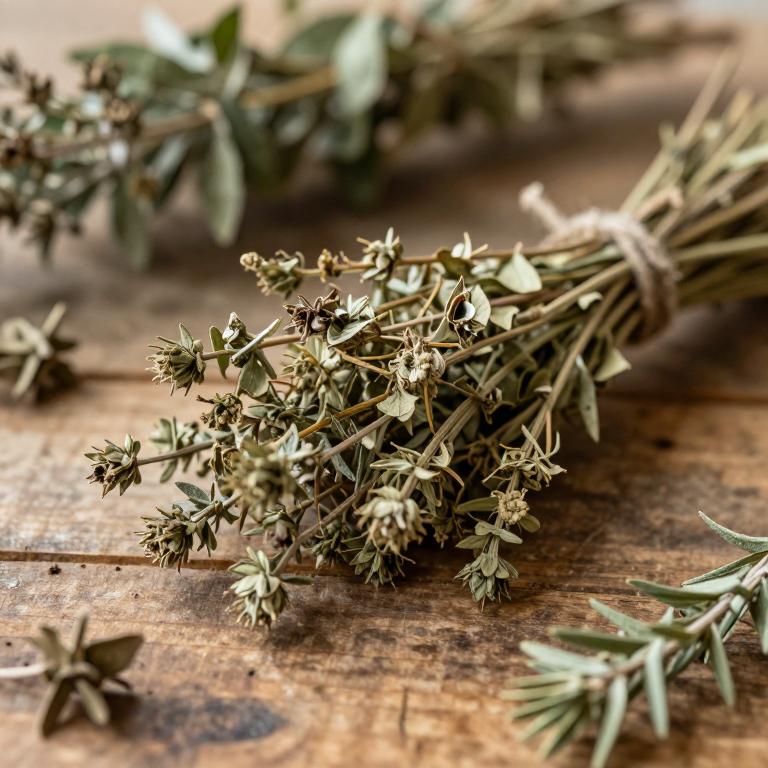
Jericho-rose, scientifically known as Anastatica hierochuntiica, is a unique desert plant renowned for its remarkable ability to survive extreme drought. Often called the "Resurrection Plant," it can remain dormant for years, unfurling its leaves instantly upon contact with water, showcasing an extraordinary evolutionary adaptation to arid environments.
- Family
- Brassicaceae
- Native range
- Africa
- Parts used
- Fruit · Leaf
- Common names
- Jericho-Rose · Rose-Of-Jericho · 1 more
- Scientific synonyms
- Myagrum Hierochunticum
Names and Synonyms
Common Names
- Jericho-rose
- rose-of-Jericho
- true rose of Jericho
Scientific Names
Accepted name
Anastatica hierochunticaSynonyms
- Myagrum hierochunticum
Regional and Traditional Names
Spanish:
- Rosa de Jerico
- Rosa de Jericó
- Rosa de Jericó
German:
- Echte Rose von Jericho
- Wüstenrose
Sources: Wikidata, Catalogue of Life
Taxonomical Classification
This plant belongs to the kingdom Plantae and is classified within the phylum Streptophyta and the class Equisetopsida. It falls under the subclass Magnoliidae and the order Brassicales, specifically within the family Brassicaceae. Ultimately, its taxonomic identity is defined by its placement in the genus Anastatica.
| Rank | Classification |
|---|---|
| Kingdom | Plantae |
| Phylum | Streptophyta |
| Class | Equisetopsida |
| Subclass | Magnoliidae |
| Order | Brassicales |
| Family | Brassicaceae |
| Genus | Anastatica |
Sources: The World Checklist of Vascular Plants (WCVP)
Distribution
This plant, known as Anastatica hierochuntica, is primarily found across the arid landscapes of Northern Africa. Its distribution is notably widespread, stretching through the vast territories of Algeria and Egypt. In addition to these regions, the species can be found growing in the natural habitats of Libya. The plant's presence also extends to the western reaches of the continent, specifically within Morocco. Finally, its geographical range encompasses the northern coastal areas of Tunisia, making it a key feature of the local desert flora.
| Region | Area |
|---|---|
| Northern Africa | Algeria |
| Northern Africa | Egypt |
| Northern Africa | Libya |
| Northern Africa | Morocco |
| Northern Africa | Tunisia |
| Northern Africa | Western Sahara |
| Macaronesia | Canary Is. |
| West Tropical Africa | Mali |
| West Tropical Africa | Mauritania |
| Northeast Tropical Africa | Eritrea |
Sources: The World Checklist of Vascular Plants (WCVP)
Botanical Identification
Life history
The life history of Anastatica hierochuntica is characterized by an annual lifecycle, meaning it completes its entire developmental process from germination to seed production within a single growing season. As a desert-adapted species, its survival is intricately tied to ephemeral moisture availability in arid environments. The cycle begins when seasonal rains trigger seed germination in the sandy soil, leading to a rapid vegetative growth phase. During this period, the plant develops its structural components to take advantage of the brief window of hydration. As the plant matures, it transitions into its reproductive stage, producing flowers that facilitate pollination. Following successful fertilization, the plant focuses its energy on seed development. A unique aspect of its life history occurs during the senescence phase; as the plant dies and dries out, the entire structure undergoes a physiological transformation into a "resurrection" form, where the dried woody remains curl inward to protect the seeds. This protective mechanism ensures that the seeds are shielded from extreme heat and desiccation until the next significant rainfall triggers the next generation, effectively resetting the annual cycle.
- Lifecycle :
- annual
Morphology
The morphology of Anastatica hierochuntica is characterized by its growth form as a non-woody herb, functioning as an independent organism that does not rely on parasitic or epiphytic lifestyles, maintaining a terrestrial existence. The plant features a non-woody structure with an ascending shoot orientation, and it is self-supporting rather than acting as a climber, liana, or vine. The shoots exhibit a measurable length, typically ranging from a minimum of 3 cm to a maximum of 20 cm.
- Aquatic :
- terrestrial
- Climber :
- self-supporting
- Epiphyte :
- terrestrial
- Growth form :
- herb
- Parasite :
- independent
- Shoot length max:
- 20 cm
- Shoot length min:
- 3 cm
- Shoot orientation :
- ascending
- Woodiness :
- non-woody
Physiology
The physiological structure of Anastatica hierochuntica is characterized by specialized vegetative adaptations that facilitate survival in arid environments, particularly through its distinct foliage morphology. The leaves exhibit an obovate form, a shape that optimizes surface area and light interception while managing transpiration rates. These leaves reach a maximum length of 3.5 cm and a maximum width of 1.5 cm, dimensions that contribute to the plant's ability to maintain metabolic functions under intense solar radiation. This specific leaf architecture, combined with its compact growth habit, allows the plant to regulate moisture retention and gas exchange effectively within its ecological niche.
- Leaf form :
- obovate
- Leaf length max:
- 3.5 cm
- Leaf width max:
- 1.5 cm
Reproduction
The reproduction of Anastatica hierochuntica is characterized by a specific phenological window and specialized morphological traits. The flowering period typically begins in February and concludes in April, though the timing can be variable. The plant produces fruits that are relatively small, measuring between 0.5 cm and 0.6 cm in length and ranging from 0.3 cm to 0.4 cm in width. These fruits are indehiscent, meaning they do not split open at maturity to release their contents. The seeds contained within are extremely lightweight, with a consistent mean, minimum, and maximum mass of 0.0012 g. Regarding the movement of progeny, the species utilizes a hydrochorous dispersal syndrome, relying on water for the distribution of its seeds.
- Dehiscence :
- indehiscent
- Dispersal syndrome :
- hydrochorous
- Flowering time :
- Feb
- Flowering time :
- Apr
- Fruit length max:
- 0.6 cm
- Fruit length min:
- 0.5 cm
- Fruit width max:
- 0.4 cm
- Fruit width min:
- 0.3 cm
- Seed mass mean:
- 0.0012 g
Sources: Global Inventory of Floras and Traits (GIFT)
Plant Parts
Anastatica hierochuntica has 4 reported plant parts identified across 5 scientific publications and several other databases that are studied for medicinal purposes. The most consistently reported plant part include fruit, leaf, root, stem.
| Plant part | Supporting sources | Consensus |
|---|---|---|
| Fruit | 2 supporting sources | ★☆☆☆☆ |
| Leaf | 1 supporting sources | ★☆☆☆☆ |
| Root | 1 supporting sources | ★☆☆☆☆ |
| Stem | 1 supporting sources | ★☆☆☆☆ |
Fruit
- Scientific reports
- BMC complementary and alternative medicine
Leaf
- Scientific reports
Root
- Scientific reports
Stem
- Scientific reports
Chemicals
Anastatica hierochuntica has 36 reported phytochemicals identified across 5 scientific publications and several other databases. The most consistently reported chemicals include Flavonoids, quercetin, ANASTATIN A, ANASTATIN B, BETA-SITOSTEROL.
| Chemical | Supporting sources | Consensus |
|---|---|---|
| Flavonoids | 3 supporting sources | ★★☆☆☆ |
| quercetin | 2 supporting sources | ★☆☆☆☆ |
| ANASTATIN A | 1 supporting sources | ★☆☆☆☆ |
| ANASTATIN B | 1 supporting sources | ★☆☆☆☆ |
| BETA-SITOSTEROL | 1 supporting sources | ★☆☆☆☆ |
| CHLOROGENIC ACID | 1 supporting sources | ★☆☆☆☆ |
| Flavonoid | 1 supporting sources | ★☆☆☆☆ |
| Glucoiberin | 1 supporting sources | ★☆☆☆☆ |
| Kaempferol 7-glucoside | 1 supporting sources | ★☆☆☆☆ |
| Lignans | 1 supporting sources | ★☆☆☆☆ |
Flavonoids
- Dr. Duke
- Nutrients
- Scientific reports
quercetin
- Dr. Duke
- RSC advances
ANASTATIN A
- RSC advances
ANASTATIN B
- RSC advances
BETA-SITOSTEROL
- Dr. Duke
CHLOROGENIC ACID
- Scientific reports
Flavonoid
- Scientific reports
Glucoiberin
- Dr. Duke
Kaempferol 7-glucoside
- Dr. Duke
Lignans
- Scientific reports
Activities
Anastatica hierochuntica has 288 reported activities identified across 5 scientific publications and several other databases. The most consistently reported activities include Hepatoprotective, 11B-HSD-Inhibitor, 5-HT-Inhibitor, 5-Lipoxygenase-Inhibitor, ATPase-Inhibitor.
| Activity | Supporting sources | Consensus |
|---|---|---|
| Hepatoprotective | 2 supporting sources | ★☆☆☆☆ |
| 11B-HSD-Inhibitor | 1 supporting sources | ★☆☆☆☆ |
| 5-HT-Inhibitor | 1 supporting sources | ★☆☆☆☆ |
| 5-Lipoxygenase-Inhibitor | 1 supporting sources | ★☆☆☆☆ |
| ATPase-Inhibitor | 1 supporting sources | ★☆☆☆☆ |
| Acetylcholinergic | 1 supporting sources | ★☆☆☆☆ |
| Aggregant | 1 supporting sources | ★☆☆☆☆ |
| Aldehyde-Oxidase-Inhibitor | 1 supporting sources | ★☆☆☆☆ |
| Aldose-Reductase-Inhibitor | 1 supporting sources | ★☆☆☆☆ |
| Allelochemic | 1 supporting sources | ★☆☆☆☆ |
Hepatoprotective
- Dr. Duke
- Bioorganic & medicinal chemistry letters
11B-HSD-Inhibitor
- Dr. Duke
5-HT-Inhibitor
- Dr. Duke
5-Lipoxygenase-Inhibitor
- Dr. Duke
ATPase-Inhibitor
- Dr. Duke
Acetylcholinergic
- Dr. Duke
Aggregant
- Dr. Duke
Aldehyde-Oxidase-Inhibitor
- Dr. Duke
Aldose-Reductase-Inhibitor
- Dr. Duke
Allelochemic
- Dr. Duke
Conditions
Anastatica hierochuntica has 3 reported investigations on conditions identified across 5 scientific publications and several other databases. The most consistently reported conditions include SARS-CoV-2, infection, oxidative stress.
| Condition | Supporting sources | Consensus |
|---|---|---|
| Sars-cov-2 | 2 supporting sources | ★☆☆☆☆ |
| Infection | 1 supporting sources | ★☆☆☆☆ |
| Oxidative stress | 1 supporting sources | ★☆☆☆☆ |
Sars-cov-2
- RSC advances
- Molecules (Basel, Switzerland)
Infection
- Biomedicine & pharmacotherapy = Biomedecine & pharmacotherapie
Oxidative stress
- Nutrients
Preparations
Anastatica hierochuntica has 6 reported preparations identified across 5 scientific publications and several other databases. The most consistently reported preparations include Aqueous extracts, Ethanolic extracts, FB fractions, aqueous extract, fruits.
| Preparation | Supporting sources | Consensus |
|---|---|---|
| Aqueous extracts | 1 supporting sources | ★☆☆☆☆ |
| Ethanolic extracts | 1 supporting sources | ★☆☆☆☆ |
| Fb fractions | 1 supporting sources | ★☆☆☆☆ |
| Aqueous extract | 1 supporting sources | ★☆☆☆☆ |
| Fruits | 1 supporting sources | ★☆☆☆☆ |
| Methanolic extract | 1 supporting sources | ★☆☆☆☆ |
Aqueous extracts
- Nutrients
Ethanolic extracts
- Nutrients
Fb fractions
- Journal of medicinal food
Aqueous extract
- Experimental biology and medicine (Maywood, N.J.)
Fruits
- BMC complementary and alternative medicine
Methanolic extract
- Bioorganic & medicinal chemistry letters