Anaphalis margaritacea subsp. margaritacea
Anaphalis margaritacea subsp. margaritacea · Accepted scientific name
Scientific literature: Very Sparse (0 studies) · ★☆☆☆☆
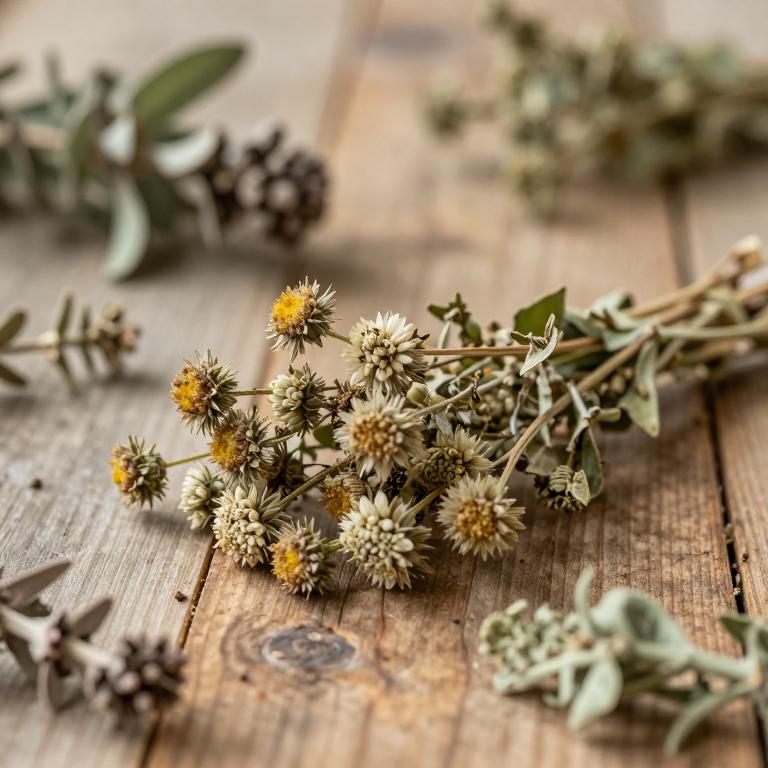
Anaphalis margaritacea subsp. margaritacea is a perennial herb recognized for its distinct white, papery flower clusters. In various traditional medicinal practices, this specific subspecies is utilized for its therapeutic potential. It is particularly noted for its application in managing various respiratory infections. To harness its biological properties, practitioners often utilize crude extracts derived from the plant. This botanical specimen continues to be a subject of interest for those exploring natural remedies for pulmonary ailments.
- Synonyms
- Anaphalis Margaritacea F. Arachnoidea · Anaphalis Angustifolia · 30 more
- Common names
- Not available
- Family
- Asteraceae
- Distribution
- Not available
- Plant Parts
- Not available
Classification
Common Names
Anaphalis margaritacea subsp. margaritacea is a distinctive plant recognized by several different local identifiers. In certain regions, it is affectionately referred to by the common name ヤマハコ. It is also frequently identified by the name 山母子, showcasing the diverse ways people categorize this species. These varying names highlight the plant's cultural and linguistic significance within its natural habitat. Understanding these different designations helps enthusiasts better connect with the unique identity of this subspecies.
Sources: Catalogue of Life (COL)
Synonyms
Anaphalis margaritacea subsp. margaritacea is a taxonomically complex plant that is associated with several botanical synonyms. It is frequently identified in scientific literature under the name Anaphalis angustifolia. Researchers also recognize the plant through its connection to Anaphalis cinnamomea, including the specific variety Anaphalis cinnamomea var. angustior. Furthermore, the subspecies encompasses different forms such as Anaphalis margaritacea f. anochlora and Anaphalis margaritacea f. arachnoidea. Understanding these various nomenclatural relationships is essential for accurate botanical identification and study.
Sources: The World Checklist of Vascular Plants (WCVP)
Taxonomy
Anaphalis margaritacea subsp. margaritacea is a unique botanical specimen belonging to the vast kingdom Plantae. Within this diverse kingdom, it is classified under the class Equisetopsida. Its specific lineage continues through the order Asterales, showcasing its evolutionary connections. This subspecies is further nested within the prominent family Asteraceae, a group known for its complex floral structures. Ultimately, it is identified by its distinct genus, Anaphalis, which defines its specific biological identity.
| Rank | Classification |
|---|---|
| Kingdom | Plantae |
| Phylum | Streptophyta |
| Class | Equisetopsida |
| Subclass | Magnoliidae |
| Order | Asterales |
| Family | Asteraceae |
| Genus | Anaphalis |
Sources: The World Checklist of Vascular Plants (WCVP)
Distribution
Geographic Regions
Anaphalis margaritacea subsp. margaritacea is a specialized plant species found throughout the Asia-Temperate region. Its presence is most notable across various parts of China, including the North-Central, South-Central, and Southeast territories. The subspecies also thrives in the unique high-altitude environments of Qinghai. Furthermore, its distribution extends into the rugged landscapes of Tibet. This widespread range highlights the botanical diversity found within these specific Asian habitats.
Sources: The World Checklist of Vascular Plants (WCVP)
Identification
Biological Activities
Compounds
Conditions
Anaphalis margaritacea subsp. margaritacea is recognized in Mexican traditional medicine for its use in treating respiratory infections. This plant's medicinal value is part of a broader group of species evaluated for their potential antimicrobial properties. Scientific testing of various crude extracts reveals that many such plants can inhibit pathogens like Staphylococcus aureus and Streptococcus pneumoniae. Specifically, research into these traditional remedies focuses on determining minimal inhibitory concentrations to combat respiratory diseases. Therefore, the application of this subspecies serves as a botanical approach to addressing various microbial infections.
Preparations
Anaphalis margaritacea subsp. margaritacea is prepared as crude extracts for the purpose of evaluating potential antimicrobial activity. These extracts, which include hexanic, chloroformic, and methanolic variations, are utilized in the study of traditional Mexican medicine for respiratory diseases. Researchers prepare these substances to test their efficacy against various pathogens such as Staphylococcus aureus and Escherichia coli. By transforming the plant into crude extracts, the minimal inhibitory concentration can be precisely determined through dilution assays. This specific preparation method allows for the assessment of how the plant's components interact with different microorganisms.