Ananas comosus var. comosus
Ananas comosus var. comosus · Accepted scientific name
Scientific literature: Very Sparse (0 studies) · ★☆☆☆☆
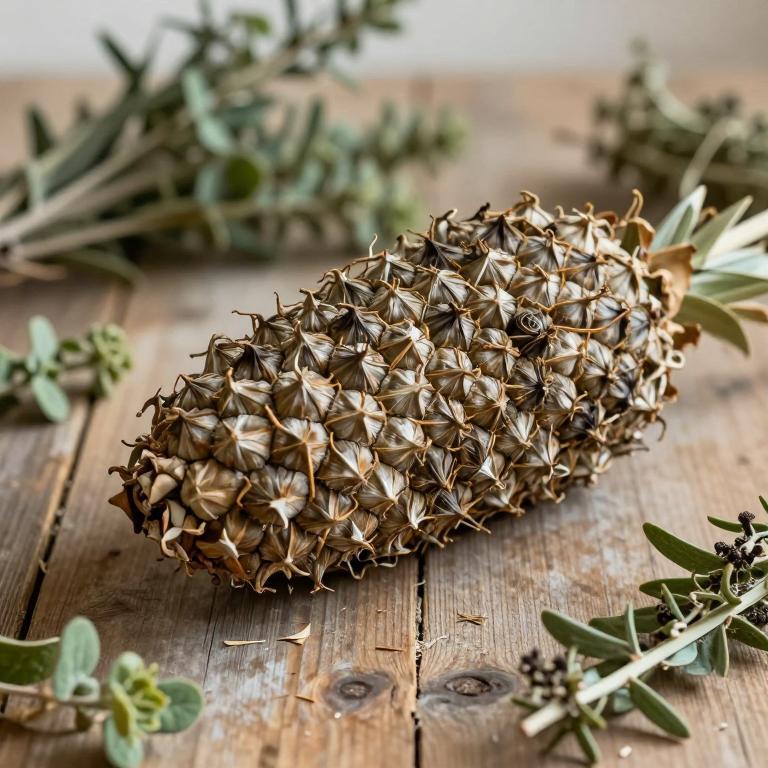
Ananas comosus var. comosus, commonly known as the sugarloaf pineapple, is a distinctive tropical perennial celebrated for its sweet and succulent fruit. This cultivar is characterized by its robust growth habit and a dense rosette of long, sword-shaped leaves. The leaves are notably stiff and often feature sharp, serrated edges that serve as a natural defense mechanism. Beyond their structural role, these verdant leaves play a crucial part in the plant's ability to capture moisture in its native environment. Understanding the anatomy of these leaves is essential for anyone looking to cultivate this iconic bromeliad successfully.
- Synonyms
- Ananas Monstrosus · Ananas Porteanus · 64 more
- Common names
- Not available
- Family
- Bromeliaceae
- Distribution
- Not available
- Plant Parts
- Leaf
Classification
Common Names
Ananas comosus var. comosus is a versatile plant known by several distinct common names depending on its variety and use. It is widely recognized by its traditional names, such as Abacaxi ou Ananás and simply Ananas. Depending on its specific characteristics, it may also be referred to as the Ivory Pineapple or the Piña enana. Furthermore, its aesthetic appeal often leads people to call it the Piña ornamental. These diverse names highlight the plant's importance in both culinary and decorative contexts.
Sources: Catalogue of Life (COL)
Synonyms
Ananas comosus var. comosus is a complex botanical subject characterized by a wide array of recognized synonyms. This specific variety is closely linked to Ananas bracamorensis as well as several variations of Ananas bracteatus, including the hondurensis and paraguariensis types. Taxonomic literature also identifies the plant under the form Ananas comosus f. lucidus. Furthermore, it is frequently categorized by the synonym Ananas comosus f. sativus in various scientific contexts. Understanding these diverse nomenclature relationships is essential for accurate botanical identification.
Sources: The World Checklist of Vascular Plants (WCVP)
Taxonomy
Ananas comosus var. comosus belongs to the vast kingdom Plantae, representing a diverse group of multicellular organisms. Within this kingdom, it is classified under the class Equisetopsida, showcasing its fundamental evolutionary lineage. This specific variety is further organized into the order Poales, linking it to a wide array of monocot plants. Moving down the taxonomic hierarchy, it is a member of the genus Ananas, which distinguishes its unique morphological traits. Finally, it finds its botanical home within the family Bromeliaceae, a group renowned for its fascinating and specialized growth habits.
| Rank | Classification |
|---|---|
| Kingdom | Plantae |
| Phylum | Streptophyta |
| Class | Equisetopsida |
| Subclass | Magnoliidae |
| Order | Poales |
| Family | Bromeliaceae |
| Genus | Ananas |
Sources: The World Checklist of Vascular Plants (WCVP)
Distribution
Geographic Regions
Ananas comosus var. comosus maintains a significant presence across the diverse landscapes of the African continent. This variety is widely distributed throughout South Tropical Africa, with notable populations found in Angola and Mozambique. Its reach also extends deep into West Tropical Africa, where it thrives in various ecological niches. Specifically, the plant is established in the Gambia as well as throughout Guinea and Guinea-Bissau. Together, these regional occurrences highlight the extensive geographic footprint of this particular cultivar.
Sources: The World Checklist of Vascular Plants (WCVP)
Identification
Biological Activities
Compounds
Conditions
Ananas comosus var. comosus, referred to in the study as Ananas sativus, demonstrates effective anthelmintic activity against both Haemonchus contortus and Paramphistomum cervi. The hydroalcoholic leaf extracts of this plant successfully induced paralysis and death in both the nematode H. contortus and the trematode P. cervi. Similarly, the aqueous extracts of the leaves were shown to treat these parasites by significantly reducing their survival time. These results were statistically significant across various concentrations, proving the plant's potential as a therapeutic tool. Ultimately, the leaf extracts of A. sativus displayed favorable medicinal properties for managing these specific worm infections.
Preparations
Parts used
Ananas comosus var. comosus, also referred to in research as Ananas sativus, possesses leaves that exhibit significant medicinal potential. Recent in-vitro studies have specifically evaluated the anthelmintic properties of extracts derived from these leaves against various parasites. The research demonstrates that both aqueous and hydroalcoholic leaf extracts can effectively induce paralysis and death in worms such as Paramphistomum cervi and Haemonchus contortus. Notably, the hydroalcoholic extract showed particularly favorable results across different concentrations tested during the study. These findings highlight the leaf as a promising source for developing new plant-based therapeutic tools against worm infections.