Yopo
Anadenanthera peregrina · Accepted scientific name
Scientific literature: Sparse (63 studies) · ★★☆☆☆
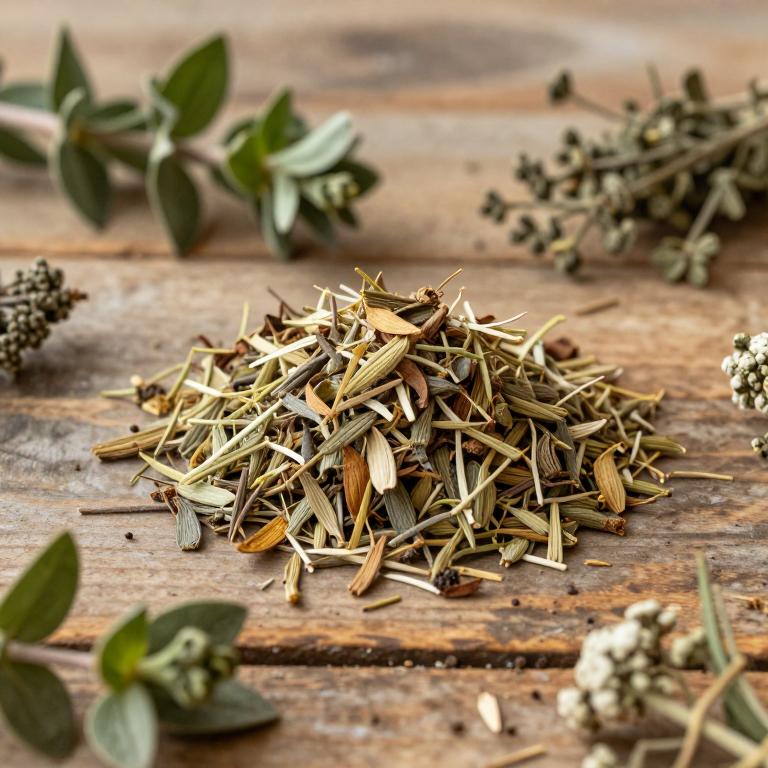
Yopo, scientifically known as Anadenanthera peregrina, is a powerful tropical tree native to South America. Renowned for its hallucinogenic seeds, it has been used for centuries by indigenous cultures in sacred rituals. This potent botanical contains potent alkaloids, serving as a significant element in traditional spiritual and medicinal practices.
Names and Synonyms
Common Names
- cohoba
- cohoba-tree
- cohoba tree
Scientific Names
Accepted name
Anadenanthera peregrinaSynonyms
- Niopa peregrina
- Piptadenia peregrina
- Acacia peregrina
- Mimosa niopo
- Inga niopo
- Mimosa acacioides
- Acacia trichophylloides
- Acacia angustiloba
- Piptadenia niopo
- Acacia niopo
Regional and Traditional Names
Spanish:
- Piptadenia niopo
- Acacia peregrina
- Mopo
- Mimosa parvifolia
- Yopo
- Inga niopo
- Mimosa peregrina
- Parica
- Mimosa niopo
- Acacia angustiloba
- Nopo
- Niopa peregrina
- Piptademia peregrina
- Mimosa parviflora
- Piptademia niopo
- Mimosa acacioides
- candelón
- cojoba
- yopo
- Candelón de teta
German:
- Niopo
- Acacia peregrina
- Mimosa parvifolia
- Yopo
- Inga niopo
- Mimosa peregrina
- Mimosa niopo
- Acacia angustiloba
- Peptadenia peregrina
- Niopa peregrina
- Anadenanthera colubrina
- Piptadenia peregrina
- Piptadenia nipo
- Mimosa acacioides
- Acacia microphylla
French:
- Yopo
- Piptadenia peregrina
- Yupa
- Yopa
- Kohobba
- Cohoba
- Oo-koo-hé
- Cebil
- Bois écorce
Sources: Wikidata, Catalogue of Life
Taxonomical Classification
This plant belongs to the kingdom Plantae and the phylum Streptophyta, falling under the class Equisetopsida and subclass Magnoliidae. Within the order Fabales, it is classified under the family Fabaceae. It is further identified by the genus Anadenanthera, specifically as the species Anadenanthera peregrina.
| Rank | Classification |
|---|---|
| Kingdom | Plantae |
| Phylum | Streptophyta |
| Class | Equisetopsida |
| Subclass | Magnoliidae |
| Order | Fabales |
| Family | Fabaceae |
| Genus | Anadenanthera |
Sources: The World Checklist of Vascular Plants (WCVP)
Distribution
This plant exhibits a wide-ranging presence across several distinct island territories. Within the Middle Atlantic Ocean, it can be found growing on the remote island of St. Helena. Its distribution extends significantly into the Caribbean region, where it is established in the Dominican Republic and Haiti. Furthermore, the species is documented throughout the Leeward Islands. Finally, its geographical reach includes the territory of Puerto Rico.
| Region | Area |
|---|---|
| Middle Atlantic Ocean | St.Helena |
| Caribbean | Dominican Republic |
| Caribbean | Haiti |
| Caribbean | Leeward Is. |
| Caribbean | Puerto Rico |
| Caribbean | Trinidad-Tobago |
| Caribbean | Windward Is. |
| Northern South America | French Guiana |
| Northern South America | Guyana |
| Northern South America | Suriname |
Sources: The World Checklist of Vascular Plants (WCVP)
Botanical Identification
Ecology
The ecology of Anadenanthera peregrina is characterized by its presence within the Cerrado biome, where it thrives in specific environmental conditions. This species is distributed across a wide altitudinal gradient, occupying habitats ranging from sea level up to a maximum elevation of 770 m AMSL.
- Elevational range max:
- 770 m AMSL
- Elevational range min:
- 0 m AMSL
- Habitat :
- Cerrado
Life history
The life history of Anadenanthera peregrina is characterized by its status as a perennial species, allowing it to establish long-term presence within its ecosystem through multiple growing seasons. Throughout its development, the plant exhibits a deciduous growth pattern, meaning it undergoes a seasonal shedding of its foliage, typically in response to environmental stressors or seasonal shifts in moisture and temperature. This cyclical process of leaf senescence and regrowth is a defining feature of its biological rhythm, enabling the plant to manage its resources effectively over its extended lifespan.
- Deciduousness :
- deciduous
- Lifecycle :
- perennial
Morphology
The morphology of Anadenanthera peregrina is characterized by its significant stature and robust structural development. This woody species exhibits a growth form that can transition between a shrub and a tree, with a substantial plant height that reaches a mean and maximum of approximately 25 meters. It functions as a self-supporting plant, lacking the climbing habits of vines or lianas, and is classified as an independent organism rather than a parasite. In terms of its ecological niche and habit, the plant is strictly terrestrial, neither acting as an epiphyte nor occupying aquatic or semiaquatic environments.
- Aquatic :
- terrestrial
- Climber :
- self-supporting
- Epiphyte :
- terrestrial
- Growth form :
- tree
- Growth form :
- shrub
- Parasite :
- independent
- Plant height mean:
- 25 m
- Woodiness :
- woody
Physiology
The physiology of Anadenanthera peregrina is characterized by a specialized metabolic framework designed for efficient growth in tropical environments. The plant utilizes a C3 photosynthetic pathway, which involves the direct fixation of atmospheric carbon dioxide through the Calvin cycle, a mechanism typical of many woody leguminous species. Furthermore, Anadenanthera peregrina functions as a nitrogen fixer; through a symbiotic relationship with rhizobial bacteria located within its root nodules, it possesses the ability to convert atmospheric nitrogen into bioavailable forms, thereby enhancing its nutrient uptake and supporting its development in nitrogen-limited soils.
- Nitrogen fixer :
- yes
- Photosynthetic pathway :
- C3
Reproduction
The reproduction of Anadenanthera peregrina is driven by biotic pollination syndromes, ensuring the genetic transfer necessary for its lifecycle. The process is primarily facilitated through biotic mechanisms, where living organisms serve as the essential vectors for pollen movement. Specifically, the plant exhibits a pollination syndrome involving insects, which act as the primary agents in the reproductive cycle. Within this insect-mediated framework, bees play a specialized and crucial role, acting as key pollinators that visit the flowers to facilitate fertilization. This reliance on biological vectors, particularly the interaction with bees and various other insects, underscores the plant's dependence on specific animal interactions to achieve successful pollination and subsequent seed production.
- Pollination syndrome :
- insect
- Pollination syndrome :
- bee
- Pollination syndrome :
- biotic
Sources: Global Inventory of Floras and Traits (GIFT)
Plant Parts
Anadenanthera peregrina has 1 reported plant parts identified across 1 scientific publications and several other databases that are studied for medicinal purposes. The most consistently reported plant part include stem.
| Plant part | Supporting sources | Consensus |
|---|---|---|
| Stem | 1 supporting sources | ★☆☆☆☆ |
Stem
- Brazilian journal of biology = Revista brasleira de biologia
Chemicals
Anadenanthera peregrina has 19 reported phytochemicals identified across 1 scientific publications and several other databases. The most consistently reported chemicals include 5-Methoxy-N,N-dimethyltryptamine, 5-Methoxy-N-methyltryptamine, Bufotenine, Bufotenine oxide, CATECHIN.
| Chemical | Supporting sources | Consensus |
|---|---|---|
| 5-Methoxy-N,N-dimethyltryptamine | 1 supporting sources | ★☆☆☆☆ |
| 5-Methoxy-N-methyltryptamine | 1 supporting sources | ★☆☆☆☆ |
| Bufotenine | 1 supporting sources | ★☆☆☆☆ |
| Bufotenine oxide | 1 supporting sources | ★☆☆☆☆ |
| CATECHIN | 1 supporting sources | ★☆☆☆☆ |
| Cardiac Glycosides | 1 supporting sources | ★☆☆☆☆ |
| Condensed Tannins | 1 supporting sources | ★☆☆☆☆ |
| Coumarins | 1 supporting sources | ★☆☆☆☆ |
| Epicatechin | 1 supporting sources | ★☆☆☆☆ |
| Flavonoids | 1 supporting sources | ★☆☆☆☆ |
5-Methoxy-N,N-dimethyltryptamine
- Dr. Duke
5-Methoxy-N-methyltryptamine
- Dr. Duke
Bufotenine
- Dr. Duke
Bufotenine oxide
- Dr. Duke
CATECHIN
- Brazilian journal of biology = Revista brasleira de biologia
Cardiac Glycosides
- Brazilian journal of biology = Revista brasleira de biologia
Condensed Tannins
- Brazilian journal of biology = Revista brasleira de biologia
Coumarins
- Brazilian journal of biology = Revista brasleira de biologia
Epicatechin
- Brazilian journal of biology = Revista brasleira de biologia
Flavonoids
- Brazilian journal of biology = Revista brasleira de biologia
Activities
Anadenanthera peregrina has 40 reported activities identified across 1 scientific publications and several other databases. The most consistently reported activities include Antioxidant, Allelochemic, Allergenic, Antialzheimeran?, Antibacterial.
| Activity | Supporting sources | Consensus |
|---|---|---|
| Antioxidant | 2 supporting sources | ★☆☆☆☆ |
| Allelochemic | 1 supporting sources | ★☆☆☆☆ |
| Allergenic | 1 supporting sources | ★☆☆☆☆ |
| Antialzheimeran? | 1 supporting sources | ★☆☆☆☆ |
| Antibacterial | 1 supporting sources | ★☆☆☆☆ |
| Anticancer (Breast) | 1 supporting sources | ★☆☆☆☆ |
| Anticholinesterase | 1 supporting sources | ★☆☆☆☆ |
| Antifeedant | 1 supporting sources | ★☆☆☆☆ |
| Antigonadotropic | 1 supporting sources | ★☆☆☆☆ |
| Antiinflammatory | 1 supporting sources | ★☆☆☆☆ |
Antioxidant
- Dr. Duke
- Brazilian journal of biology = Revista brasleira de biologia
Allelochemic
- Dr. Duke
Allergenic
- Dr. Duke
Antialzheimeran?
- Dr. Duke
Antibacterial
- Brazilian journal of biology = Revista brasleira de biologia
Anticancer (Breast)
- Dr. Duke
Anticholinesterase
- Dr. Duke
Antifeedant
- Dr. Duke
Antigonadotropic
- Dr. Duke
Antiinflammatory
- Dr. Duke
Conditions
Anadenanthera peregrina has 2 reported investigations on conditions identified across 1 scientific publications and several other databases. The most consistently reported conditions include Escherichia coli, Staphylococcus aureus.
| Condition | Supporting sources | Consensus |
|---|---|---|
| Escherichia coli | 1 supporting sources | ★☆☆☆☆ |
| Staphylococcus aureus | 1 supporting sources | ★☆☆☆☆ |
Escherichia coli
- Brazilian journal of biology = Revista brasleira de biologia
Staphylococcus aureus
- Brazilian journal of biology = Revista brasleira de biologia