Anadenanthera macrocarpa
Anadenanthera macrocarpa · Accepted scientific name
Scientific literature: Very Sparse (21 studies) · ★☆☆☆☆
, scientifically known as Anadenanthera macrocarpa, is a significant medicinal tree native to tropical regions. Renowned for its bioactive compounds, it has been utilized in traditional healing practices to treat various ailments. Understanding its chemical properties is essential for exploring its potential therapeutic applications in modern pharmacology and natural medicine.
- Family
- Fabaceae
- Native range
- Southern America
- Parts used
- Leaf · Seed
- Common names
- Not available
- Scientific synonyms
- Mimosa Grata · Piptadenia Cebil · 15 more
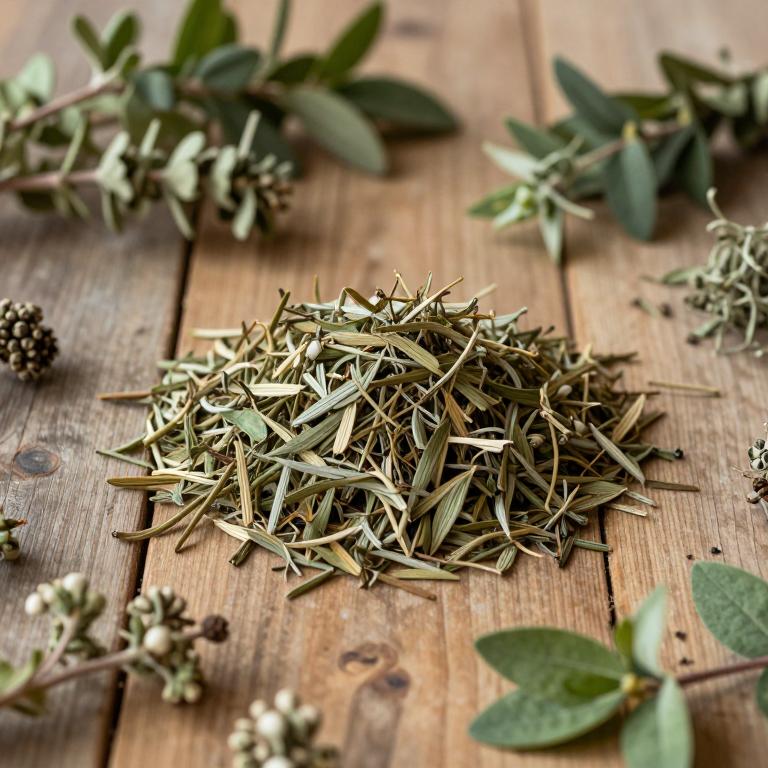
Names and Synonyms
Scientific Names
Accepted name
Anadenanthera macrocarpaSynonyms
- Mimosa grata
- Piptadenia cebil
- Piptadenia grata
- Acacia grata
- Acacia cebil
- Piptadenia hassleriana
- Piptadenia microphylla
- Piptadenia hassleriana var. fruticosa
- Piptadenia macrocarpa
- Piptadenia macrocarpa var. vestita
- Piptadenia macrocarpa f. puberula
- Anadenanthera colubrina var. glabra
- Piptadenia macrocarpa var. plurifoliata
- Piptadenia macrocarpa var. cebil
- Piptadenia macrocarpa f. rupestris
- Piptadenia macrocarpa f. microcarpa
- Anadenanthera colubrina var. cebil
Sources: Wikidata, Catalogue of Life
Taxonomical Classification
This plant belongs to the kingdom Plantae and is classified under the phylum Streptophyta within the class Equisetopsida. As a member of the subclass Magnoliidae and the order Fabales, it is further nested within the family Fabaceae. Finally, its specific taxonomic identity is defined by the genus Anadenanthera.
| Rank | Classification |
|---|---|
| Kingdom | Plantae |
| Phylum | Streptophyta |
| Class | Equisetopsida |
| Subclass | Magnoliidae |
| Order | Fabales |
| Family | Fabaceae |
| Genus | Anadenanthera |
Sources: The World Checklist of Vascular Plants (WCVP)
Distribution
This plant is primarily found within the diverse landscapes of Western South America. Specifically, its distribution extends through the countries of Bolivia, Ecuador, and Peru. In addition to these western regions, the species also inhabits parts of Brazil. Within the Brazilian territory, it can be located in both the Northeast and the West-Central areas. Consequently, its geographical range spans a significant portion of the South American continent.
| Region | Area |
|---|---|
| Western South America | Bolivia |
| Western South America | Ecuador |
| Western South America | Peru |
| Brazil | Brazil West-Central |
| Brazil | Brazil Northeast |
| Brazil | Brazil Southeast |
| Brazil | Brazil South |
| Southern South America | Argentina Northeast |
| Southern South America | Argentina Northwest |
| Southern South America | Paraguay |
Sources: The World Checklist of Vascular Plants (WCVP)
Plant Parts
Anadenanthera macrocarpa has 2 reported plant parts identified across 2 scientific publications and several other databases that are studied for medicinal purposes. The most consistently reported plant part include leaf, seed.
| Plant part | Supporting sources | Consensus |
|---|---|---|
| Leaf | 1 supporting sources | ★☆☆☆☆ |
| Seed | 1 supporting sources | ★☆☆☆☆ |
Leaf
- Mini reviews in medicinal chemistry
Seed
- Plants (Basel, Switzerland)
Chemicals
Anadenanthera macrocarpa has 8 reported phytochemicals identified across 2 scientific publications and several other databases. The most consistently reported chemicals include Flavonoids, Hyperoside, Proanthocyanidins, Saponins, Steroids.
| Chemical | Supporting sources | Consensus |
|---|---|---|
| Flavonoids | 1 supporting sources | ★☆☆☆☆ |
| Hyperoside | 1 supporting sources | ★☆☆☆☆ |
| Proanthocyanidins | 1 supporting sources | ★☆☆☆☆ |
| Saponins | 1 supporting sources | ★☆☆☆☆ |
| Steroids | 1 supporting sources | ★☆☆☆☆ |
| Triterpenes | 1 supporting sources | ★☆☆☆☆ |
| p-Hydroxybenzoic acid | 1 supporting sources | ★☆☆☆☆ |
| quercetin | 1 supporting sources | ★☆☆☆☆ |
Flavonoids
- Mini reviews in medicinal chemistry
Hyperoside
- Biomolecules
Proanthocyanidins
- Biomolecules
Saponins
- Mini reviews in medicinal chemistry
Steroids
- Mini reviews in medicinal chemistry
Triterpenes
- Mini reviews in medicinal chemistry
p-Hydroxybenzoic acid
- Biomolecules
quercetin
- Mini reviews in medicinal chemistry
Activities
Anadenanthera macrocarpa has 8 reported activities identified across 2 scientific publications and several other databases. The most consistently reported activities include Antioxidant, Antifungal, Antimicrobial, Antinociceptive, Cardiotoxic.
| Activity | Supporting sources | Consensus |
|---|---|---|
| Antioxidant | 3 supporting sources | ★★☆☆☆ |
| Antifungal | 1 supporting sources | ★☆☆☆☆ |
| Antimicrobial | 1 supporting sources | ★☆☆☆☆ |
| Antinociceptive | 1 supporting sources | ★☆☆☆☆ |
| Cardiotoxic | 1 supporting sources | ★☆☆☆☆ |
| Free-Radical Scavenging | 1 supporting sources | ★☆☆☆☆ |
| Neurotoxic | 1 supporting sources | ★☆☆☆☆ |
| Psychoactive | 1 supporting sources | ★☆☆☆☆ |
Antioxidant
- Journal of ethnopharmacology
- Mini reviews in medicinal chemistry
- Biomolecules
Antifungal
- Mini reviews in medicinal chemistry
Antimicrobial
- Mini reviews in medicinal chemistry
Antinociceptive
- Mini reviews in medicinal chemistry
Cardiotoxic
- Mini reviews in medicinal chemistry
Free-Radical Scavenging
- Journal of ethnopharmacology
Neurotoxic
- Mini reviews in medicinal chemistry
Psychoactive
- Mini reviews in medicinal chemistry
Preparations
Anadenanthera macrocarpa has 1 reported preparations identified across 2 scientific publications and several other databases. The most consistently reported preparations include extracts of the bark and leaves.
| Preparation | Supporting sources | Consensus |
|---|---|---|
| Extracts of the bark and leaves | 1 supporting sources | ★☆☆☆☆ |
Extracts of the bark and leaves
- Mini reviews in medicinal chemistry