Anacyclus radiatus
Anacyclus radiatus · Accepted scientific name
Scientific literature: Very Sparse (12 studies) · ★☆☆☆☆
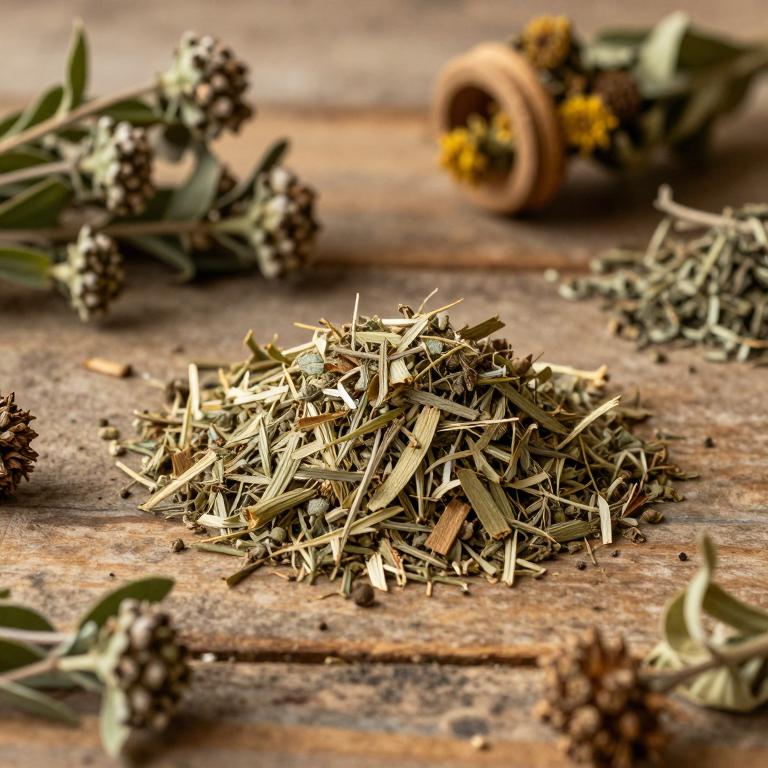
Anacyclus radiatus, scientifically known as Anacyclus radiatus, is a remarkable medicinal plant prized for its potent therapeutic properties. Found in diverse ecological niches, it contains unique bioactive compounds used traditionally to treat inflammation and promote cellular healing. Understanding its botanical characteristics is essential for exploring its significant pharmacological potential.
- Family
- Asteraceae
- Native range
- Europe
- Parts used
- Not available
- Common names
- Not available
- Scientific synonyms
- Chamaemelum Radiatum · Matricaria Valentina · 1 more
Names and Synonyms
Scientific Names
Accepted name
Anacyclus radiatusSynonyms
- Chamaemelum radiatum
- Matricaria valentina
- Anthemis valentina
Regional and Traditional Names
German:
- Gelber Bertram
- Gelber Bertram
French:
- Anacycle radié
Sources: Wikidata, Catalogue of Life
Taxonomical Classification
This plant belongs to the kingdom Plantae and is classified within the phylum Streptophyta and the class Equisetopsida. It is further organized under the subclass Magnoliidae and the order Asterales, falling specifically within the family Asteraceae. Ultimately, its taxonomic identity is defined by its membership in the genus Anacyclus.
| Rank | Classification |
|---|---|
| Kingdom | Plantae |
| Phylum | Streptophyta |
| Class | Equisetopsida |
| Subclass | Magnoliidae |
| Order | Asterales |
| Family | Asteraceae |
| Genus | Anacyclus |
Sources: The World Checklist of Vascular Plants (WCVP)
Distribution
This plant exhibits a diverse presence across several European regions. In Middle Europe, its distribution is specifically noted in Germany. Moving toward the Mediterranean, it can be found throughout various parts of Southwestern Europe. This includes its occurrence in France, Portugal, and Spain. Additionally, the species is located on the island of Corse.
| Region | Area |
|---|---|
| Middle Europe | Germany |
| Southwestern Europe | Corse |
| Southwestern Europe | France |
| Southwestern Europe | Portugal |
| Southwestern Europe | Spain |
| Southeastern Europe | Albania |
| Southeastern Europe | Italy |
| Southeastern Europe | Sicilia |
| Northern Africa | Algeria |
| Northern Africa | Libya |
Sources: The World Checklist of Vascular Plants (WCVP)
Botanical Identification
Ecology
The ecology of Anacyclus radiatus is characterized by its ability to colonize a diverse range of altitudinal gradients, establishing itself across a broad vertical span. It thrives within an elevational range starting from sea level (0 m AMSL) and extending up to a maximum altitude of 1000 m AMSL. This distribution suggests an adaptability to various environmental conditions, from lowland coastal or valley regions to mid-elevation slopes, allowing the species to occupy various niches within its native landscape.
- Elevational range max:
- 1000 m AMSL
- Elevational range min:
- 0 m AMSL
Life history
The life history of Anacyclus radiatus is characterized by an annual lifecycle, meaning it completes its entire developmental process—from germination and vegetative growth to flowering and seed production—within a single growing season. Functioning as a therophyte, the plant survives unfavorable environmental conditions by existing primarily in the form of seeds, which remain dormant until the onset of favorable seasonal cues. During its active phase, it focuses its energy on rapid maturation to ensure reproductive success before the end of its annual cycle.
- Life form :
- therophyte
- Lifecycle :
- annual
Morphology
The morphology of Anacyclus radiatus is characterized by its growth form as a non-woody herb that exhibits a versatile habitat range, capable of thriving in aquatic, semiaquatic, or terrestrial environments. As a terrestrial species, it functions as an independent organism rather than a parasite or epiphyte. The plant maintains a relatively small stature, with a height ranging from a minimum of 0.05 m to a maximum of 0.6 m. Its structural development is defined by an erect shoot orientation, and it is classified as a self-supporting plant, meaning it does not require external structures for climbing.
- Aquatic :
- terrestrial
- Climber :
- self-supporting
- Epiphyte :
- terrestrial
- Growth form :
- herb
- Parasite :
- independent
- Plant height max:
- 0.6 m
- Plant height min:
- 0.05 m
- Shoot orientation :
- erect
- Woodiness :
- non-woody
Physiology
The physiology of Anacyclus radiatus is characterized by a specific vegetative architecture that facilitates efficient light interception and nutrient distribution. The plant exhibits a distinct leaf form that is pinnatisect, featuring deep incisions that reach toward the midrib, a morphological adaptation that likely optimizes gas exchange and thermal regulation by increasing the surface-area-to-volume ratio. This complex leaf structure is organized through an alternate leaf arrangement, where each leaf emerges at a different level along the stem, ensuring that the foliage is distributed in a manner that minimizes self-shading and maximizes the photosynthetic capacity of the organism.
- Leaf arrangement :
- alternate
- Leaf form :
- pinnatisect
Reproduction
The reproduction of Anacyclus radiatus is characterized by a specific seasonal flowering cycle and distinct fruit morphology. The flowering period typically begins in February and extends through June, though the timing can be variable. During this stage, the plant produces flowers that feature a white coloration and vary in width, ranging from a minimum of 1.5 cm to a maximum of 4 cm. Following pollination, the plant develops an achene as its fruit type. These fruits are notably indehiscent, meaning they do not split open at maturity to release their seeds, ensuring the dispersal mechanism is tied to the integrity of the fruit structure.
- Dehiscence :
- indehiscent
- Flower colour :
- white
- Flower width max:
- 4 cm
- Flower width min:
- 1.5 cm
- Flowering time :
- Feb
- Flowering time :
- Jun
- Fruit type :
- achene
Sources: Global Inventory of Floras and Traits (GIFT)
Chemicals
Anacyclus radiatus has 7 reported phytochemicals identified across 0 scientific publications and several other databases. The most consistently reported chemicals include CHLOROGENIC ACID, CHLOROPHYLL, Carotenoids, Flavonoids, RUTIN.
| Chemical | Supporting sources | Consensus |
|---|---|---|
| CHLOROGENIC ACID | 1 supporting sources | ★☆☆☆☆ |
| CHLOROPHYLL | 1 supporting sources | ★☆☆☆☆ |
| Carotenoids | 1 supporting sources | ★☆☆☆☆ |
| Flavonoids | 1 supporting sources | ★☆☆☆☆ |
| RUTIN | 1 supporting sources | ★☆☆☆☆ |
| Tannins | 1 supporting sources | ★☆☆☆☆ |
| polyphenols | 1 supporting sources | ★☆☆☆☆ |
CHLOROGENIC ACID
- Molecules (Basel, Switzerland)
CHLOROPHYLL
- Molecules (Basel, Switzerland)
Carotenoids
- Molecules (Basel, Switzerland)
Flavonoids
- Molecules (Basel, Switzerland)
RUTIN
- Molecules (Basel, Switzerland)
Tannins
- Molecules (Basel, Switzerland)
polyphenols
- Molecules (Basel, Switzerland)
Activities
Anacyclus radiatus has 3 reported activities identified across 0 scientific publications and several other databases. The most consistently reported activities include Antibacterial, Antioxidant, Hypoglycemic.
| Activity | Supporting sources | Consensus |
|---|---|---|
| Antibacterial | 1 supporting sources | ★☆☆☆☆ |
| Antioxidant | 1 supporting sources | ★☆☆☆☆ |
| Hypoglycemic | 1 supporting sources | ★☆☆☆☆ |
Antibacterial
- Molecules (Basel, Switzerland)
Antioxidant
- Molecules (Basel, Switzerland)
Hypoglycemic
- Molecules (Basel, Switzerland)
Conditions
Anacyclus radiatus has 1 reported investigations on conditions identified across 0 scientific publications and several other databases. The most consistently reported conditions include hypoglycemic.
| Condition | Supporting sources | Consensus |
|---|---|---|
| Hypoglycemic | 1 supporting sources | ★☆☆☆☆ |
Hypoglycemic
- Molecules (Basel, Switzerland)